What's new this year
Year 3 is the start of Key Stage 2, which runs to Year 6. For some children it means a move to a separate junior school; for others it's a new corridor and a few more responsibilities. Children are expected to work more independently, write at greater length and use written methods in maths. A foreign language, such as French or Spanish, becomes part of the curriculum from Key Stage 2.
There are no national tests in Year 3, which makes it a good year to settle into the new routines.
Maths in Year 3
- Place value in three-digit numbers, and counting in 4s, 8s, 50s and 100s.
- Adding and subtracting numbers with up to three digits using the column method.
- The 3, 4 and 8 times tables, and multiplying a two-digit number by a one-digit number.
- Fractions: tenths, fractions of amounts, simple equivalent fractions, and adding fractions with the same denominator.
- Telling the time on an analogue clock (including Roman numerals), using 12- and 24-hour clocks, money and perimeter.
- Right angles, parallel and perpendicular lines, and bar charts.
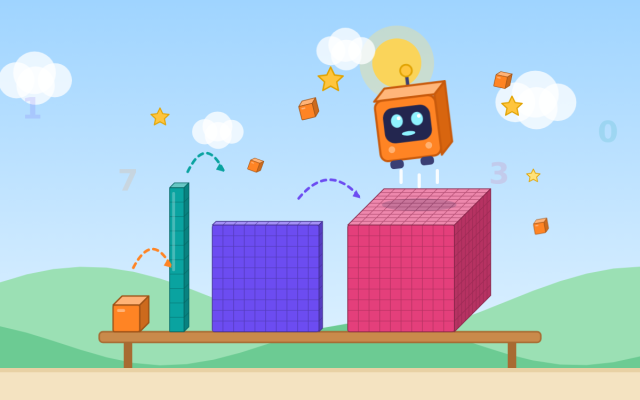
Place Value: Build Numbers to 1,000 with Digit the Robot
Learn place value with hundreds, tens and ones to 1,000. Turn ones into tens in a block machine, build number…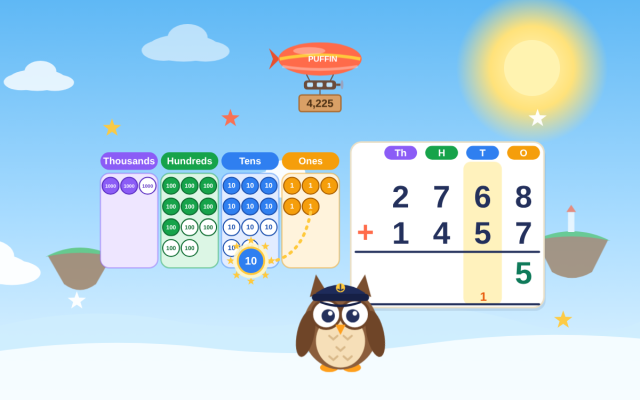
Column Addition and Subtraction: A Sky Harbour Adventure
Learn column addition and subtraction with up to 4 digits, exchanging, estimating and checking, by helping To…
Year 3 Multiplication and Division: Pip's Times Market
Learn Year 3 multiplication and division, from times-table facts to written methods, by baking, sharing and s…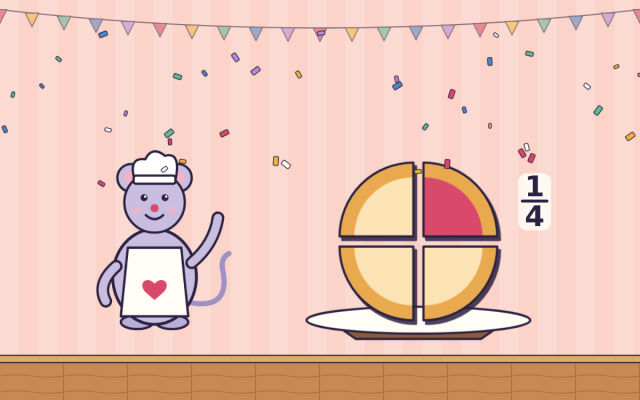
Year 3 Fractions: Bake and Share with Pip the Baker
Learn Year 3 fractions by cutting pies, snapping chocolate into tenths, comparing slices and adding fractions…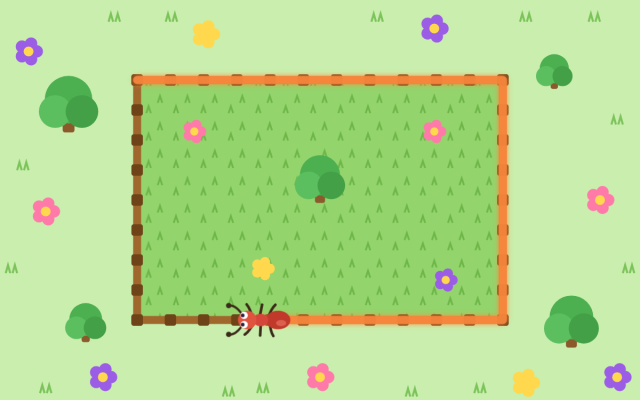
Perimeter of Shapes: Walk All the Way Around with Pip
Learn how to find the perimeter of shapes by counting grid edges, measuring sides with a ruler and adding len…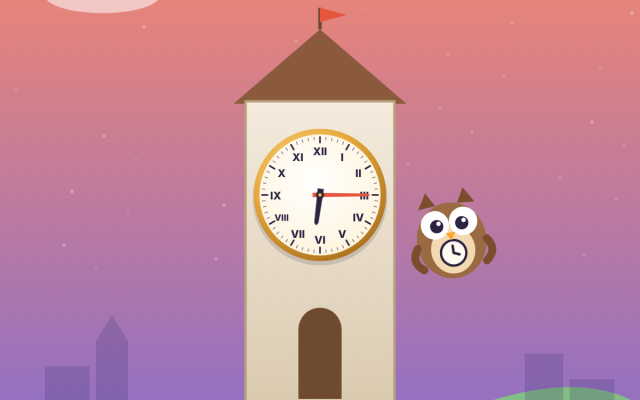
Telling the Time: A Clock Town Adventure with Tock the Owl
Learn telling the time on Roman numeral, 12-hour and 24-hour clocks, then set clock hands, sort am and pm and…English in Year 3
- Reading: a wider range of books, using a dictionary, predicting, working out how characters feel, and finding information in non-fiction.
- Writing: grouping ideas into paragraphs and using headings in non-fiction.
- Grammar: conjunctions (when, before, after, so, because), prepositions, adverbs, the present perfect ("she has gone") and choosing "a" or "an".
- Punctuation: inverted commas (speech marks) for direct speech.
- Spelling and handwriting: prefixes, word families and the Year 3 and 4 statutory word list, plus joined handwriting.
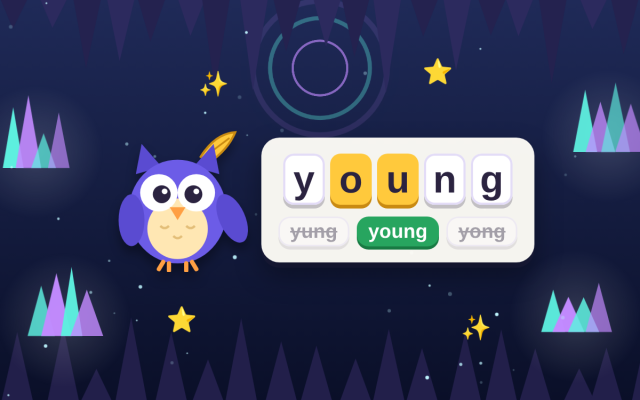
Year 3 Spelling Words: A Spellwood Quest with Quill
Learn Year 3 spelling words and why each is spelt that way by tapping letters, building words and typing them…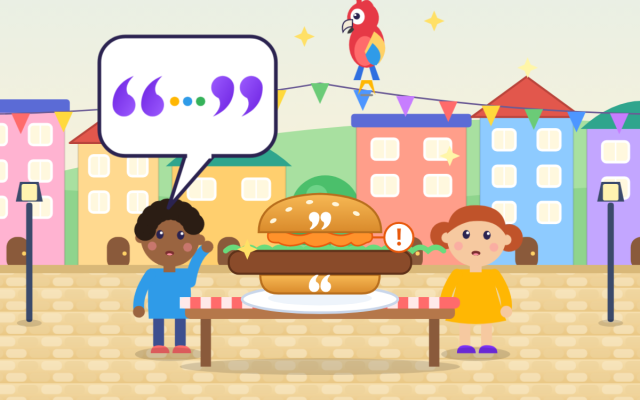
Speech Marks: Catch the Words with Pip the Parrot
Learn how to use speech marks (inverted commas) to show what people say, by catching characters' words, traci…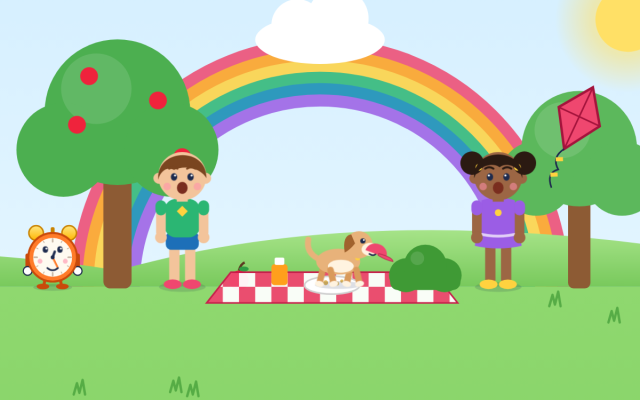
Present Perfect Tense: A Time Detective Game with Max
Learn when to say 'has gone' and when to say 'went' with the present perfect tense, then solve time mysteries…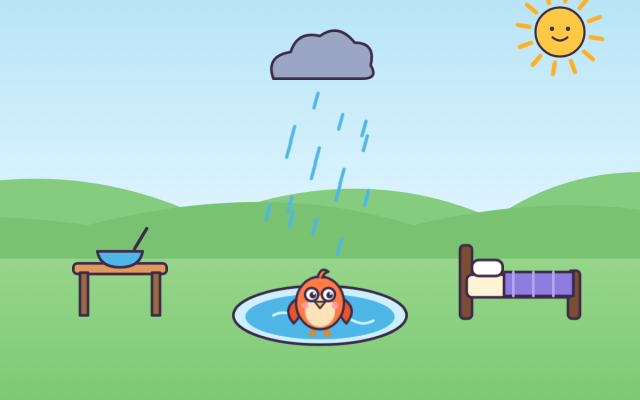
Prepositions and Conjunctions: A Busy Day with Pip
Learn prepositions and conjunctions for time, place and cause, then help Pip the robin and Mo the kitten buil…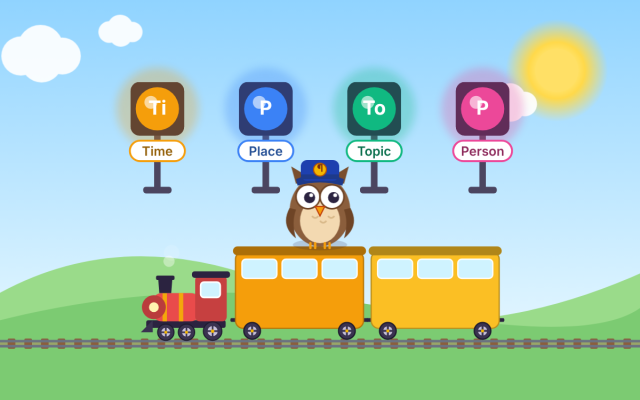
Writing Paragraphs: Ride the Paragraph Express with Cleo
Learn how writing paragraphs works: group sentences by idea, spot when to start a new one, order them and lin…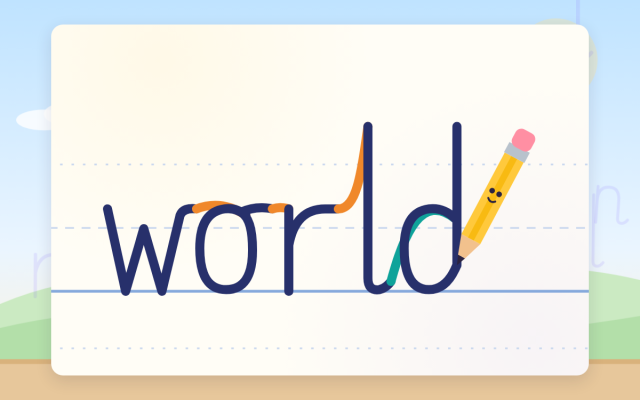
Joined Handwriting: Learn the Joins with Loopy the Pencil
Learn joined handwriting with diagonal and horizontal joins, which letters stay unjoined and how to write nea…Science and other subjects
Year 3 science covers plants (the job of each part and how seeds form and spread), animals including humans (nutrition, skeletons and muscles), rocks, fossils and soil, light and shadows, and forces and magnets. History and geography topics vary by school, for example the Stone Age to the Iron Age, volcanoes or rivers.
This year's topics, subject by subject
The roadmaps below show the order in which topics usually build up through Year 3, subject by subject. Schools teach in different orders, so treat them as a guide to what's coming rather than a timetable.
Maths 17 topics, 7 coming soon
- Place value (Year 3)
- Mental adding and subtracting (Years 2–3)
- Adding and subtracting (Year 3) coming soon
- Word problems: adding and subtracting (Year 3) coming soon
- Times tables (Year 3) coming soon
- Multiplication and division (Year 3)
- Word problems: multiplication and division (Year 3) coming soon
- Measuring (Year 3)
- Perimeter (Year 3)
- Word problems: money and measures (Year 3) coming soon
- Fractions (Year 3)
- Tenths (Year 3) coming soon
- Adding and subtracting fractions (Year 3) coming soon
- Telling the time (Year 3)
- Angles (Year 3)
- Properties of shapes (Year 3)
- Charts and tables (Year 3)
English 41 topics, 25 coming soon
- Joined handwriting (Years 3–4)
- Spelling patterns (Years 3–4)
- Sounds spelt ou, ei, eigh and ey (Years 3–4) coming soon
- Words from Greek, French and Latin: ch, gue, que and sc (Years 3–4) coming soon
- Prefixes and suffixes (Years 3–4)
- Word families (Year 3) coming soon
- Homophones (Years 3–4) coming soon
- Statutory spelling words (Years 3–4)
- Must-know spellings (Year 3)
- Using a dictionary (Years 3–4) coming soon
- Must-know vocabulary (Year 3) coming soon
- A or an? (Year 3)
- Adverbs (Year 3)
- Prepositions and conjunctions (Year 3)
- Present perfect tense (Year 3)
- Dictation: listen and write (Years 3–4) coming soon
- Writing great sentences (Year 3) coming soon
- Finding information: retrieval (Years 3–4) coming soon
- Words in context (Years 3–4) coming soon
- Predicting from clues in the text (KS2) coming soon
- Reading detective: inference coming soon
- Summarising (Years 3–4) coming soon
- How texts are built (Years 3–4) coming soon
- Myths and legends coming soon
- Speaking with confidence
- Thinking like a writer (Year 3)
- Writing paragraphs (Year 3)
- Writing stories (Year 3) coming soon
- Speech marks (Year 3)
- Write your own story (Years 3–4) coming soon
- Performing and acting coming soon
- Writing a playscript (KS2) coming soon
- Diaries and recounts (Years 3–4) coming soon
- Writing a report (Years 3–4) coming soon
- Explanation texts (Years 3–4) coming soon
- Writing clear instructions (Years 3–4)
- Letters and emails (Years 3–4)
- Poetic tricks (Years 3–4) coming soon
- Write a poem coming soon
- Editing your writing (Years 3–4) coming soon
- Making your writing amazing (Year 3)
Science 18 topics, 10 coming soon
- Asking questions and fair tests (Years 3–4) coming soon
- Recording results: tables and bar charts (Years 3–4) coming soon
- Plant parts and what plants need (Year 3) coming soon
- Water transport in plants
- Pollination and seed dispersal
- Bees and pollinators coming soon
- Birds around us coming soon
- Food and nutrition (Year 3)
- Skeletons and muscles
- Ocean life coming soon
- Fossils
- Dinosaurs coming soon
- Light and shadows
- Sun safety coming soon
- Moving on different surfaces (Year 3)
- Floating and sinking coming soon
- Magnets
- Life on the space station coming soon
History 8 topics, 4 coming soon
- Thinking like a historian (KS2) coming soon
- Britain from the Stone Age to the Iron Age
- The wheel and early inventions coming soon
- Ancient Sumer coming soon
- Ancient Egypt
- The Indus Valley
- The Shang Dynasty
- Local history study (KS2) coming soon
Earth & Geography 8 topics, 3 coming soon
- Using atlases, globes and digital maps (KS2) coming soon
- Map symbols and keys (KS2) coming soon
- UK counties, cities and regions (KS2) coming soon
- Towns, cities and villages
- Rocks
- How soils form
- Volcanoes
- Earthquakes
Technology 9 topics, 7 coming soon
- Inside a computer
- Tools and techniques for accurate making (KS2) coming soon
- Staying safe online: the basics (Years 3–4) coming soon
- Sequences and loops
- The design process coming soon
- How a bicycle works coming soon
- Choosing and using software coming soon
- Textiles and sewing coming soon
- Cooking savoury dishes (KS2) coming soon
Schools teach topics in different orders, so use this as a guide. Open the roadmaps, pick the school year, and follow the steps.
How you can help at home
- Keep reading together, even if your child reads alone. Talk about why characters act as they do.
- Practise the 4 and 8 times tables by doubling: 3 × 4 = 12, so 3 × 8 = 24.
- Have an analogue clock somewhere you both see it. Our guide on telling the time takes it step by step.
- Ask your child to show you how they do a column sum. Explaining it helps them, and it shows you the school's method.
- Pick five words from the Year 3 and 4 list each week and spot them in books.
 TapLearn