What you'll learn
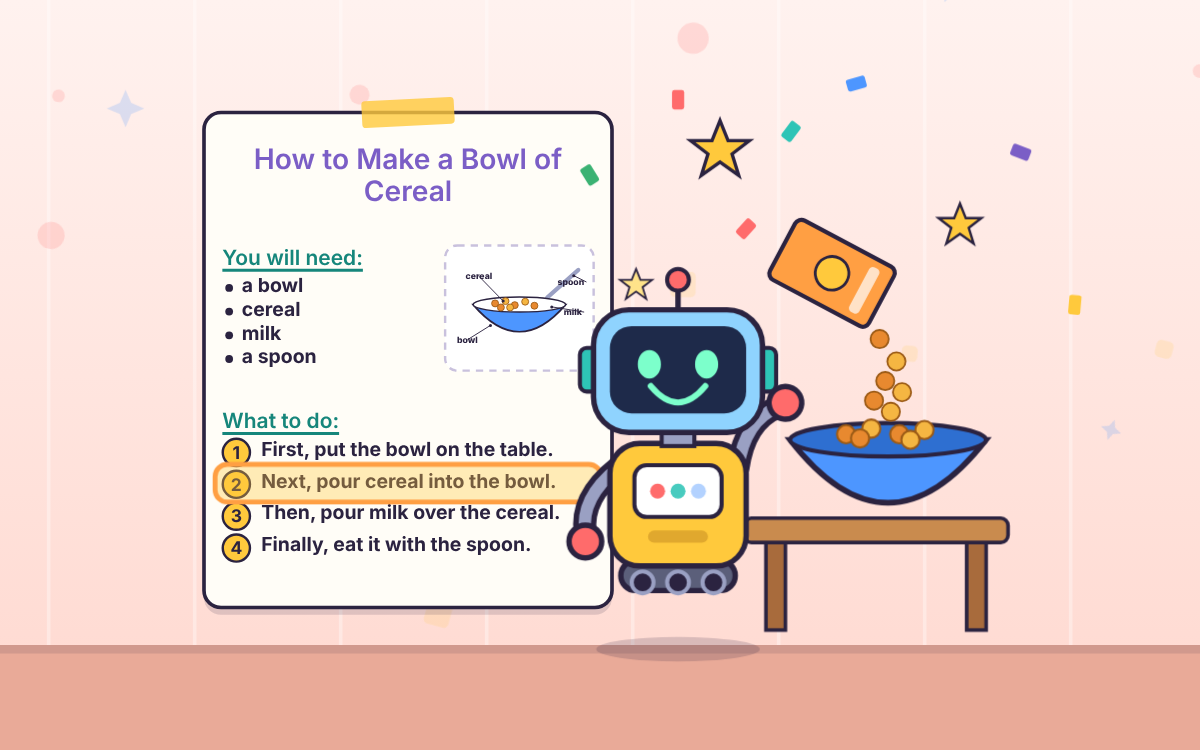
- The features of instructions: title, equipment list, numbered steps and diagram
- How command verbs, also called bossy or imperative verbs, start each step
- How time words like first, next, then and finally show order
- How headings and sub-headings organise non-fiction into clear sections
- Why each numbered step should contain just one action
- How to plan, write and test instructions so a reader can follow them
Chapter by chapter
- Studying instructions: title, list, steps and diagram Free to try
Years 3–4 english · 1
- Command words: the bossy verbs that start each step
Years 3–4 english · 1
- Time words: putting steps in order with first, next, then, finally
Years 3–4 english · 1
- Headings, sub-headings, numbered steps and diagrams
Years 3–4 english · 2
- Plan, organise and test your own instructions
Years 3–4 english · 1 Years 3–4 english · 2
- Instruction expert quiz (10 questions)
What the chapters cover in the national curriculum in England:
- Years 3–4 english: Plan their writing by: discussing writing similar to that which they are planning to write in order to understand and learn from its structure, vocabulary and grammar
- Years 3–4 english: Draft and write by: in non-narrative material, using simple organisational devices
About this adventure
Writing Instructions is an interactive game that teaches children aged 7–9 how to write clear instructions, matching the Year 3 and 4 English curriculum in England. Players help Bolt, a robot who follows every instruction exactly, so muddled or badly ordered steps go comically wrong.
Children first study model texts, such as a jam sandwich recipe, to see how good instructions are built. They meet command verbs (bossy words like cut and pour that start each step), time words that show the order, and organisational devices: a heading, sub-headings such as 'You will need' and 'What to do', numbered steps and labelled diagrams. Along the way they drag steps into order, sort cards under sub-headings and cut long steps into short ones.
To finish, they plan and build their own set of instructions and watch Bolt try to follow them.
Questions and answers
What are the features of instructions?
Instructions usually have a title saying what you will make or do, a list of things you need, numbered steps in order, command words, time words and often a labelled diagram. Sub-headings such as 'You will need' and 'What to do' split them into sections.
What is a bossy verb in instructions?
A bossy verb, also called a command or imperative verb, tells the reader exactly what to do, such as cut, mix or pour. In instructions it usually begins each step, sometimes straight after a time word like 'First'.
Why do instructions use time words like first, next and finally?
Time words show the order of the steps, so the reader always knows what comes next. 'First' begins the instructions, words like 'next' and 'then' link the middle steps, and 'finally' marks the last one.
What age is this instructions game for?
It is made for children aged 7 to 9, in Years 3 and 4, and follows the English national curriculum for non-fiction writing. A narrator reads out each task, so children who are still building reading confidence can join in too.
What is in the game and how long does it take?
The game has five chapters and a 10-question final quiz, and takes about 45 minutes to play all the way through. Children can start any chapter from the workshop menu, and each one takes roughly 8 to 10 minutes.
More to explore
See all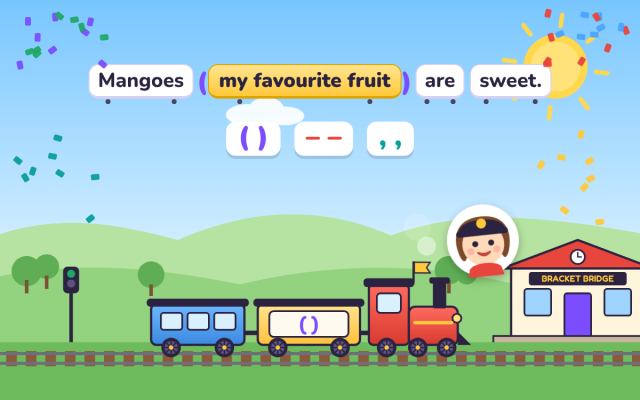
Parenthesis: Brackets, Dashes and Commas on a Word Train
Learn how to use parenthesis with brackets, dashes and commas, then add extra information to sentences by cou…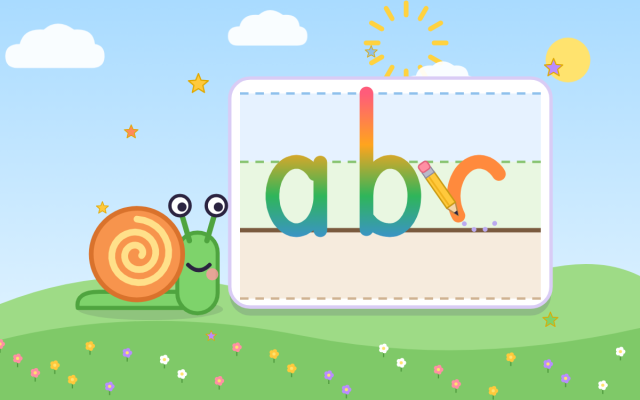
Letter Formation: Trace and Write with Squiggle the Snail
Learn letter formation: where each letter starts and which way to go. Trace, then write lower-case and capita…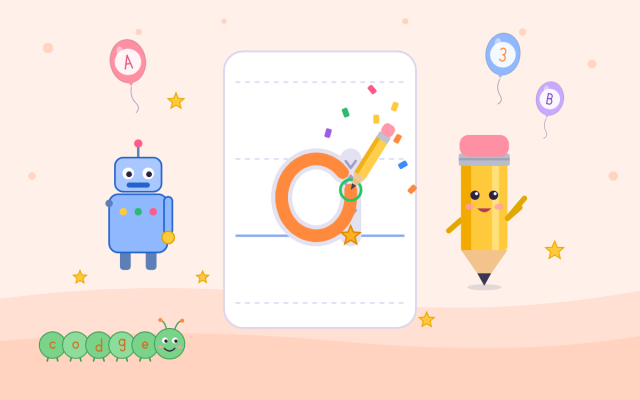
Year 1 Handwriting: Trace Letters and Digits with Poppy
Learn Year 1 handwriting: hold a pencil well, start each letter in the right place and form capitals and digi…
Joined Handwriting: Learn the Joins with Loopy the Pencil
Learn joined handwriting with diagonal and horizontal joins, which letters stay unjoined and how to write nea…
Figurative Language: Paint Word Pictures with Quill
Learn figurative language: spot similes, metaphors and personification, then explain their effect on the read…
Perfect Tense: Solve Time Cases with Tock the Owl
Learn the perfect tense, from has finished to had seen, and use it to show time, cause and links between para…
Determiners for Year 4: Ride the Determiner Express
Learn what determiners are, from a, an and the to my, some and every, by building word trains and spotting de…
 TapLearn