What you'll learn
- Choose precise verbs and adjectives instead of plain words like went and nice
- Start sentences with when, where and how openers followed by a comma
- Join ideas with conjunctions such as because, but, so and when
- Use short sentences for drama and split up run-on sentences
- Add expanded noun phrases, sense details and show-not-tell clues
- Check capital letters, end punctuation, a or an, and homophones
What's inside
- Wow Words
- Super Starts
- Short and Long
- Paint a Picture
- Super Checker
- Story Showcase (10 questions)
About this adventure
Improve Your Writing is an interactive game that teaches children aged 7–9 how to make their writing more interesting to read, matched to the Year 3 English curriculum.
Guided by Scribble, a talking pencil, players swap plain verbs like "went" for precise ones and watch a scene change, give sentences fronted openers that say when, where or how, and glue ideas together with conjunctions such as because, but and so. They build expanded noun phrases, add details for all five senses and practise "show, don't tell".
The last chapter turns players into proofreaders who hunt for missing capital letters, choose between a and an, and pick the right homophone. A final 10-question showcase checks everything, then invites them to write and check a sentence of their own.
Questions and answers
How can my child make their writing more interesting?
Children can make writing more interesting by choosing exact words, starting sentences in different ways and mixing short and long sentences. Adding details that help readers see, hear or feel a scene also brings writing to life.
What are wow words in primary school writing?
Wow words are precise, vivid words that replace plain ones, such as crept or raced instead of went. The best choice is the word that fits the meaning, not simply the longest or fanciest word available.
What does show, don't tell mean for kids?
Show, don't tell means giving clues about a feeling instead of naming it. Rather than writing "Sam was scared", a writer might say "Sam's knees shook and his heart thumped", so the reader works out the feeling.
What age is this writing game for?
The game is designed for children aged 7 to 9 and follows the Year 3 English curriculum in England. Younger readers may enjoy it with an adult, and Year 4 pupils can use it as revision.
What does the game include and how long does it take?
It includes an optional sentence-basics warm-up, five interactive chapters and a 10-question final showcase with a write-your-own sentence bonus. Playing everything takes about 35 minutes, and chapters can be played separately in any order.
More to explore
See all
Writing Paragraphs: Ride the Paragraph Express with Cleo
Learn how writing paragraphs works: group sentences by idea, spot when to start a new one, order them and lin…
Writing Sentences: All Aboard the Sentence Express
Learn the skills of writing sentences that are clear and correct by building word trains, fixing capitals and…
The Writing Process: Think Like a Writer with Quill
Learn the writing process step by step: gather ideas, think about your reader, plan the order, write correctl…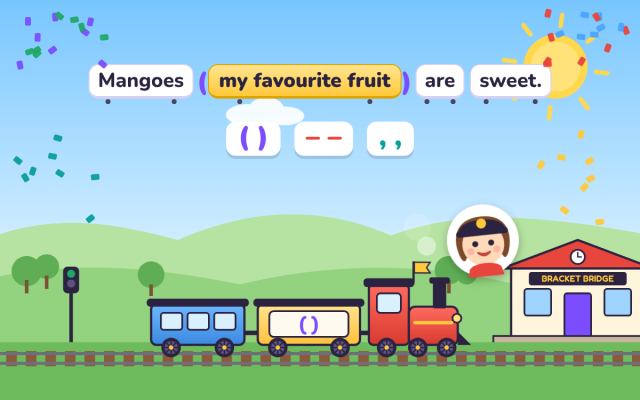
Parenthesis: Brackets, Dashes and Commas on a Word Train
Learn how to use parenthesis with brackets, dashes and commas, then add extra information to sentences by cou…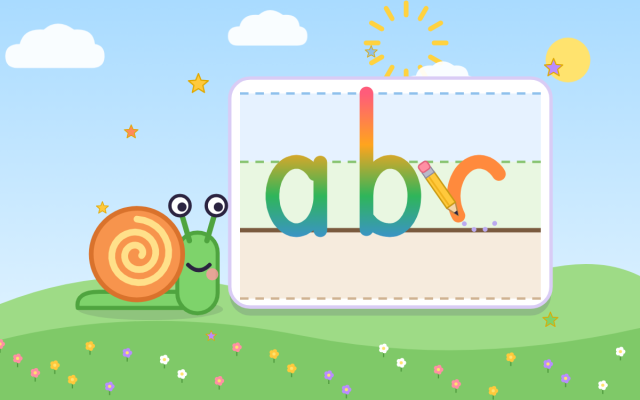
Letter Formation: Trace and Write with Squiggle the Snail
Learn letter formation: where each letter starts and which way to go. Trace, then write lower-case and capita…
Year 1 Handwriting: Trace Letters and Digits with Poppy
Learn Year 1 handwriting: hold a pencil well, start each letter in the right place and form capitals and digi…
Joined Handwriting: Learn the Joins with Loopy the Pencil
Learn joined handwriting with diagonal and horizontal joins, which letters stay unjoined and how to write nea…
 TapLearn