What you'll learn
- Write a fact family of four facts, like 3 × 4 = 12
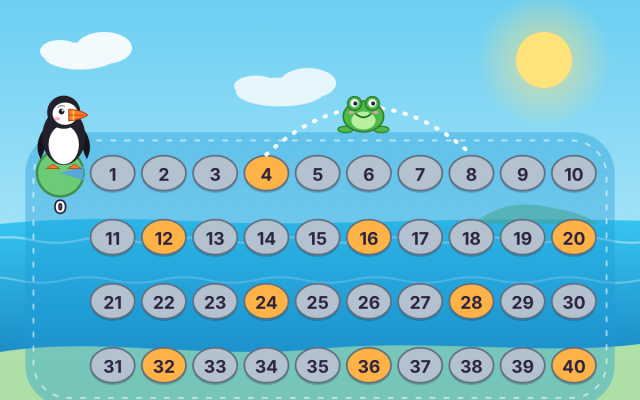
- Use doubling and known facts to work out facts like 3 × 40
- Multiply a 2-digit number mentally by partitioning into tens and ones
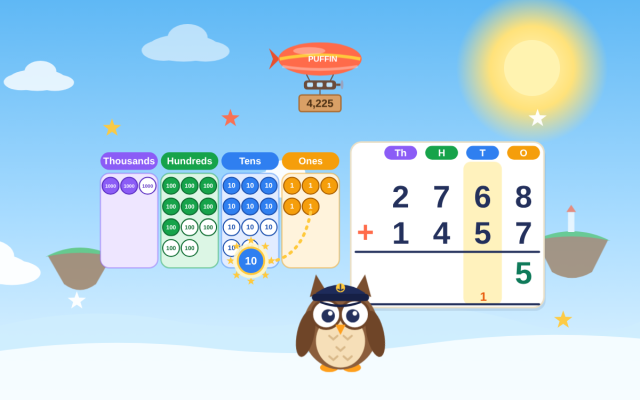
- Use the column method, exchanging 10 ones for a ten
- Divide 2-digit numbers by sharing tens, then ones, and check by multiplying
- Solve missing-number, scaling and correspondence word problems
Chapter by chapter
- Writing multiplication and division statements Free to try
Year 3 maths · 1
- Using times-table facts: doubling and multiplying tens
Year 3 maths · 1
- Multiplying two-digit by one-digit numbers mentally (partitioning)
Year 3 maths · 1
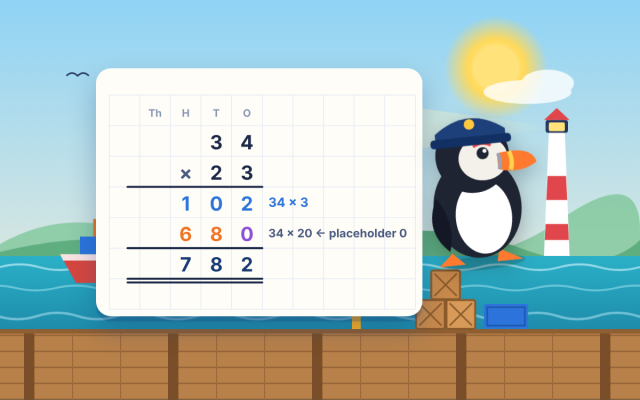
- Written method: multiplying two-digit by one-digit numbers in columns
Year 3 maths · 1
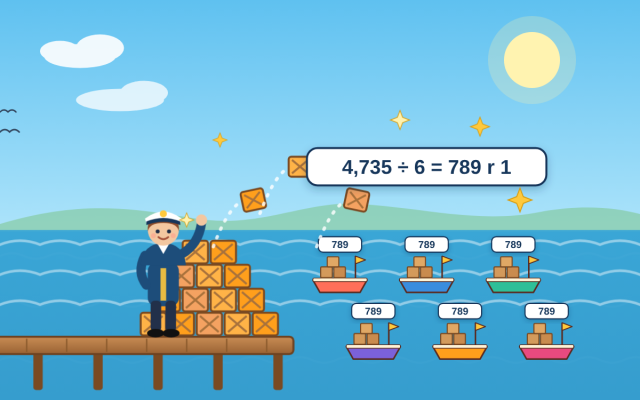
- Dividing two-digit numbers by one-digit numbers
Year 3 maths · 1
- Missing number problems with multiplication and division
Year 3 maths · 2
- Scaling problems: times as many, times as tall
Year 3 maths · 2
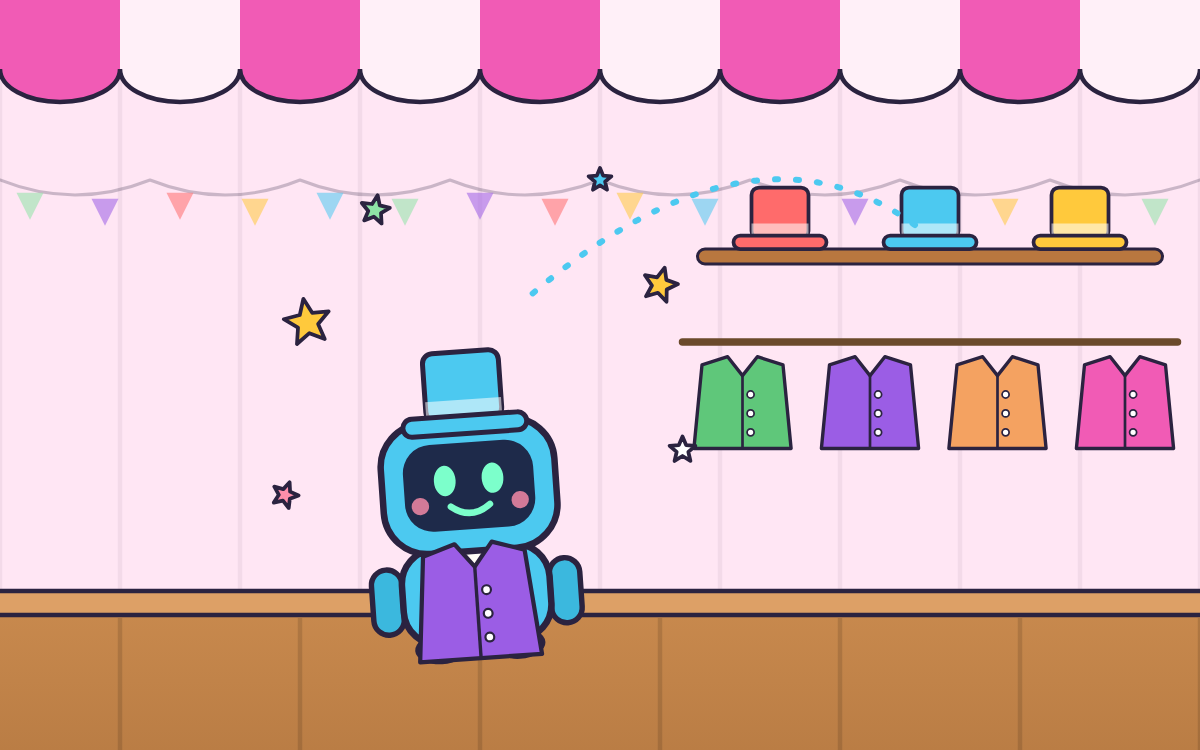
- Correspondence problems: 3 hats and 4 coats make 12 outfits
Year 3 maths · 2
- Master Challenge (10 questions)
What the chapters cover in the national curriculum in England:
- Year 3 maths: Write and calculate mathematical statements for multiplication and division using the multiplication tables that they know, including for two-digit numbers times one-digit numbers, using mental and progressing to formal written methods
- Year 3 maths: Solve problems, including missing number problems, involving multiplication and division, including positive integer scaling problems and correspondence problems in which n objects are connected to m objects
About this adventure
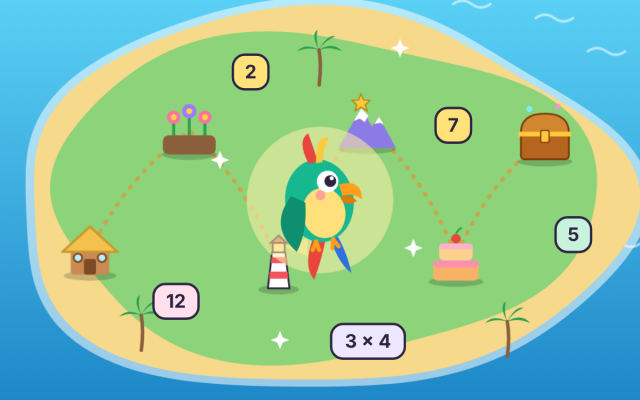
Times Market is an interactive maths game that teaches children aged 7–9 Year 3 multiplication and division, matching the national curriculum in England. Players write and work out times and divide facts, multiply 2-digit numbers by 1-digit numbers, and solve missing-number, scaling and correspondence problems.
At each stall, Pip the robot guides the child through hands-on scenes: baking rows of cupcakes to make an array, bundling 10 ones into a ten, sharing cookies into jars and dressing Pip in different hats and coats. Key ideas include the fact family, partitioning a number into tens and ones, exchanging in the column method, and the inverse, which means division undoes multiplication.
Every step is spoken aloud with captions. Practice questions use a number keypad, with a hint after a wrong try, and a 10-question Master Challenge checks everything at the end.
Questions and answers
How do you multiply a 2-digit number by a 1-digit number in Year 3?
Split the 2-digit number into tens and ones, multiply each part, then add the answers. For 23 × 3, work out 20 × 3 = 60 and 3 × 3 = 9, then add them to get 69. This is called partitioning.
What is a correspondence problem in maths?
A correspondence problem is one where every item in one group is matched with every item in another group. For example, 3 hats and 4 coats make 3 × 4 = 12 different outfits, so children multiply rather than add the two numbers.
What does 'times as many' mean in a scaling problem?
'Times as many' means you multiply the starting amount. If Sam has 5 stickers and Mia has 4 times as many, Mia has 5 × 4 = 20 stickers, not 5 + 4. Children often add by mistake, so the game shows both side by side.
What age is this multiplication and division game for?
It is made for children aged 7 to 8 in Year 3, following the national curriculum in England. It also works well for 9-year-olds who want to revise times-table facts, written methods and word problems before moving on.
What does Times Market include and how long does it take?
Times Market has 8 chapters, each with an animated intro, guided activities and practice questions, plus a 10-question final challenge. Playing everything takes about an hour, and children can start any chapter from the market map.

 TapLearn