Light and Shadows: A Light Lab Adventure with Lumi
Learn about light and shadows: why we need light to see, how it reflects, and why shadows change size, by steering mirrors and measuring shadows.
- Ages 7–9
- About 40 min
- Easy start
- Light & Sound
Learn about light and shadows: why we need light to see, how it reflects, and why shadows change size, by steering mirrors and measuring shadows.
Year 3 science · 1
Year 3 science · 2
Year 3 science · 3
Year 3 science · 4
What the chapters cover in the national curriculum in England:
Light and Shadows is an interactive science game that teaches children aged 7–9 how we see with light, how light reflects off surfaces, and how shadows form and change size, matching Year 3 science in England.
Guided by Lumi the firefly, players switch off a lamp to discover that dark means no light at all, hunt for toys with a torch and peep into a closed box. They turn mirrors to bounce a beam onto a gem, test which surfaces reflect the most light, and watch cat's eyes on a road shine only when the car's headlights are on.
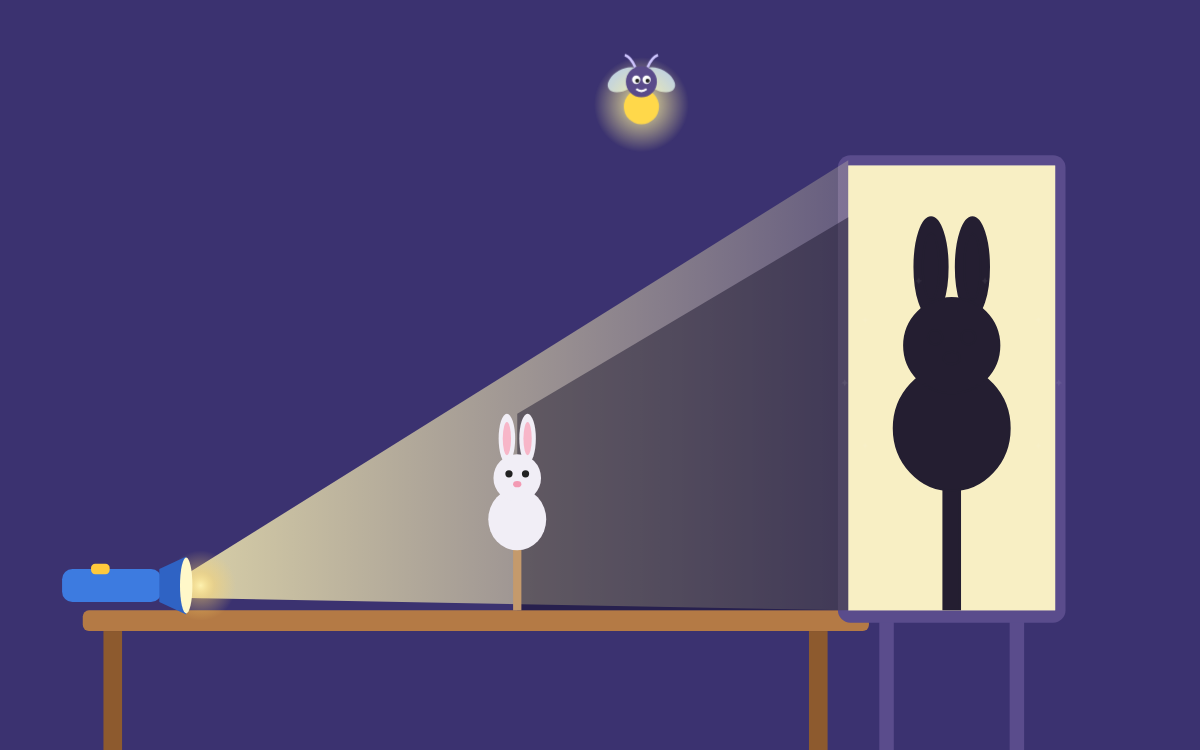
To explore shadows, they place objects in a torch beam and sort materials as transparent (lets light through), translucent (lets some through) or opaque (blocks it). Then they measure a dragon puppet's shadow on a squared screen, record results in a table and spot the pattern: the closer the light, the bigger the shadow.
A shadow forms when an opaque object blocks light from a light source, so no light reaches the surface behind it. That is why a shadow is a dark shape with the object's outline but no colours or details, and it falls on the side away from the light.
A shadow gets bigger when the light source moves closer to the object, and smaller when the light moves further away. Outside, shadows are long in the morning and evening when the Sun is low, and short around midday when it is high in the sky.
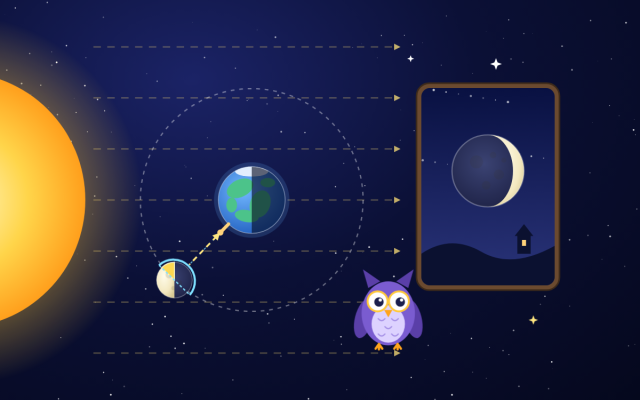
No, the Moon is not a light source because it does not make its own light. We see it because it reflects light from the Sun, in the same way that a mirror or a bike reflector only shines when light falls on it.
The game is designed for children aged 7 to 9 and follows the Year 3 light topic in the national curriculum for England. Older children can also use it to refresh the basics before they study light again in Year 6.
It has four chapters, each with an animated introduction and recap, plus a 10-question Light Detective challenge at the end. Playing everything takes about 40 minutes, and children can start any chapter from the map and carry on where they left off.
 TapLearn
Getting it ready…
Great work on chapter 1! To open the next chapters, ask a grown-up to take a look.
To play this game, ask a grown-up to take a look. There are lots of free games you can play right now too!
Create a free family account and your child can play every chapter of every game for 7 days, with no card needed. Their progress is kept. After that, the free plan is free for ever, and membership is £6.99 a month if you'd like to keep every chapter.
That's all the learning time for today. Great work! Flip will be ready to play again tomorrow.