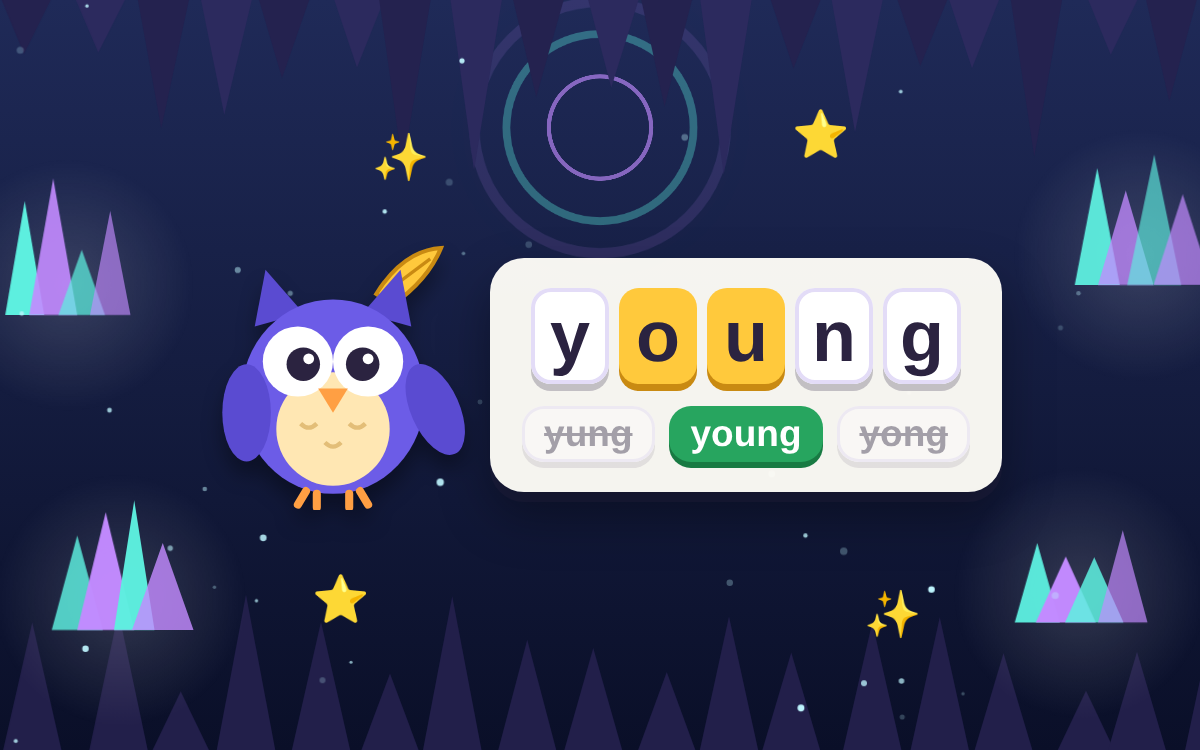
Year 3 Spelling Words: A Spellwood Quest with Quill
Learn Year 3 spelling words and why each is spelt that way by tapping letters, building words and typing them from memory in Spellwood.
- Ages 7–9
- About 45 min
- Some thinking
- Phonics & Spelling
Learn Year 3 spelling words and why each is spelt that way by tapping letters, building words and typing them from memory in Spellwood.
Year 3 Spelling Words is an interactive game that teaches children aged 7–9 to spell the must-know words and spelling rules from the Year 3 and 4 national curriculum, by understanding why each word is spelt the way it is.
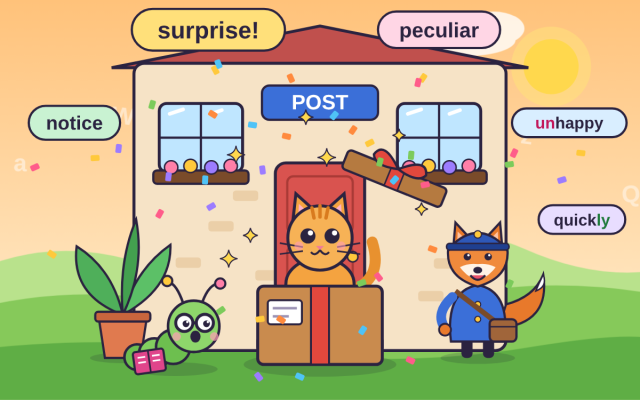
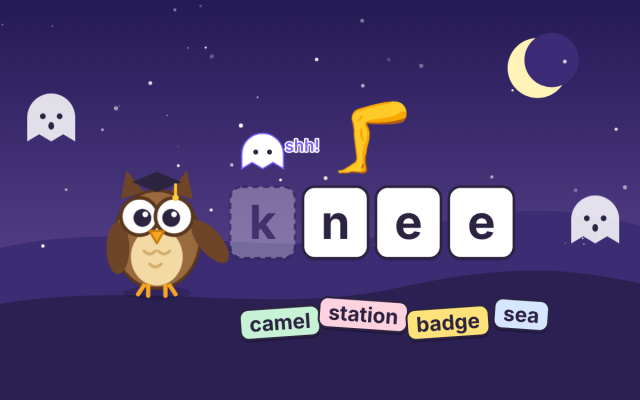
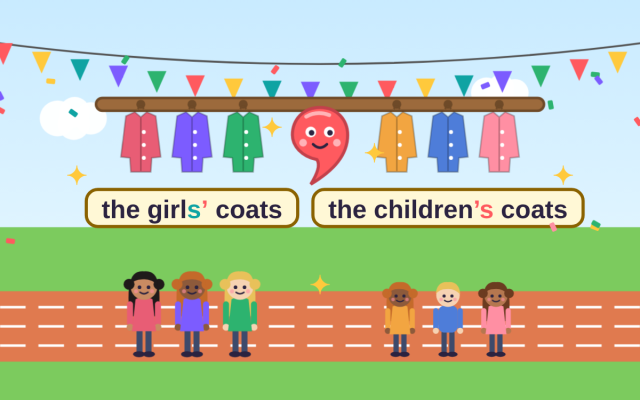
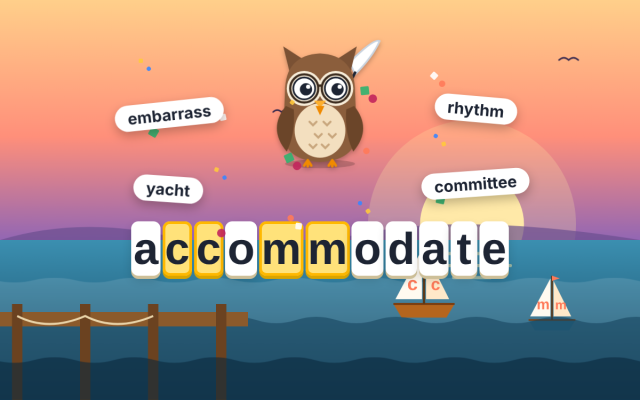
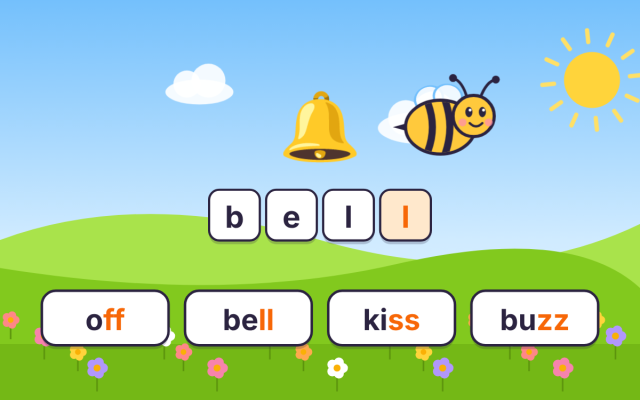
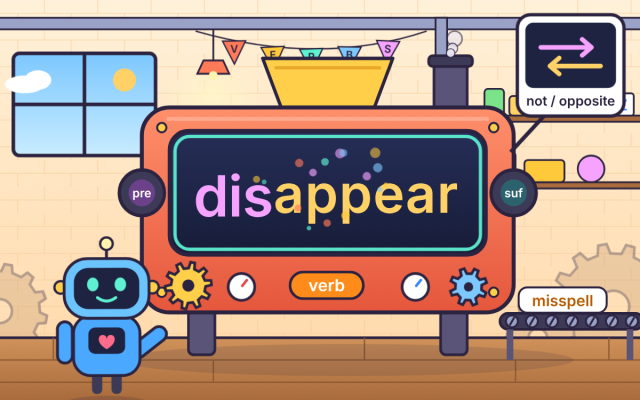
Guided by Quill the owl, children tap the letters that make a sound, stick prefixes onto root words, feed words into a suffix machine and clap syllables to find the stressed beat. They meet key ideas such as root words, prefixes and suffixes (word parts added to the front or end), homophones (words that sound the same but mean different things) and silent letters.
Every instruction is spoken aloud with short captions. Children then type words from memory using look, say, cover, write, check, and a Word Vault holds all 100 statutory words with a tip for each.
In England, the national curriculum gives one statutory list of 100 words for Years 3 and 4 together, including believe, February, island and separate, to be secure by the end of Year 4. Year 3 children also learn rules for prefixes, suffixes and homophones.
Homophones are words that sound the same but have different meanings and spellings, like hear and here, or piece and peace. You pick the right one by thinking about the meaning, and tricks help: you hear with your ear.
Double the last consonant when the final syllable is stressed and ends in one vowel then one consonant, so forget becomes forgetting and begin becomes beginning. If the stress comes earlier, as in garden, just add -ing: gardening.
It is made for children aged 7 to 9, in Year 3 or Year 4, and also suits older children revising tricky words. Every instruction is read aloud, which helps children who are still building reading confidence.
It has five chapters, an optional warm-up of Year 2 ideas, a 12-question final challenge and a Word Vault with all 100 statutory words. Playing everything takes about 45 minutes, and the vault works well in short daily sessions.
 TapLearn
Getting it ready…
Great work on chapter 1! To open the next chapters, ask a grown-up to take a look.
To play this game, ask a grown-up to take a look. There are lots of free games you can play right now too!
Create a free family account and your child can play every chapter of every game for 7 days, with no card needed. Their progress is kept. After that, the free plan is free for ever, and membership is £6.99 a month if you'd like to keep every chapter.
That's all the learning time for today. Great work! Flip will be ready to play again tomorrow.