What's new this year
Year 2 completes Key Stage 1. The big shift is in reading: most children move from working out each word to reading smoothly enough to think about what the text means.
The national Key Stage 1 tests (often called Year 2 SATs) have been optional since 2023/24. Some schools still use them in May 2027 to help judge progress; many don't. Either way, you'll hear how your child is doing in their end-of-year report. Children who didn't meet the phonics standard in Year 1 retake the phonics check in the week of 14 to 18 June 2027.
Maths in Year 2
- Place value in two-digit numbers (tens and ones), and comparing numbers to 100 using <, > and =.
- Knowing addition and subtraction facts to 20 quickly, and adding and subtracting two-digit numbers.
- The 2, 5 and 10 times tables, odd and even numbers, and early multiplication and division.
- Fractions: half, a third, a quarter and three quarters of shapes and amounts.
- Money in pounds and pence including change, telling the time to five minutes, and measuring in cm, m, kg, g and litres.
- Properties of shapes (sides, corners, faces), and reading pictograms, tally charts and simple tables.
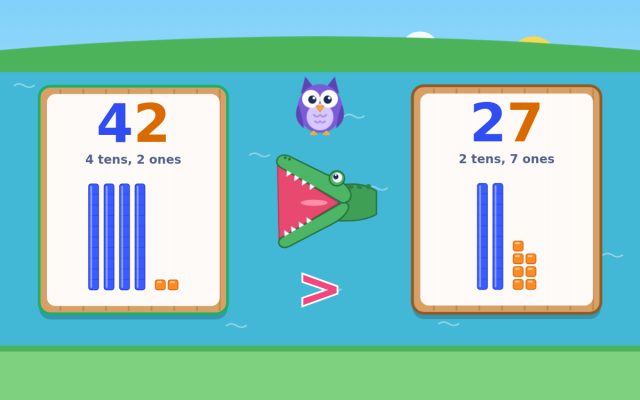
Place Value: Tens and Ones Adventure with Ollie the Owl
Learn place value with tens and ones: bundle cubes into tens, build and split numbers to 100, and compare the…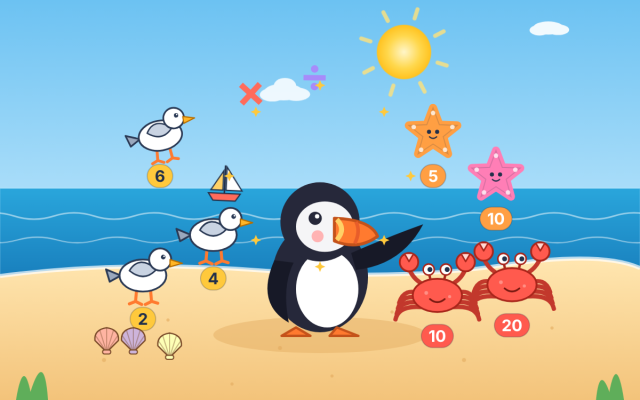
2, 5 and 10 Times Tables: A Beach Adventure with Pip
Learn the 2, 5 and 10 times tables, their division facts and odd and even numbers by calling seagulls, crabs…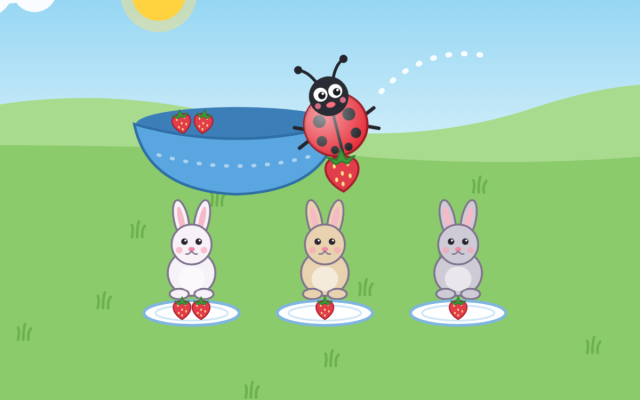
Multiplication and Division: Share, Group and Grow a Garden
Learn multiplication and division with equal groups, sharing, grouping and arrays, then help Dotty the ladybi…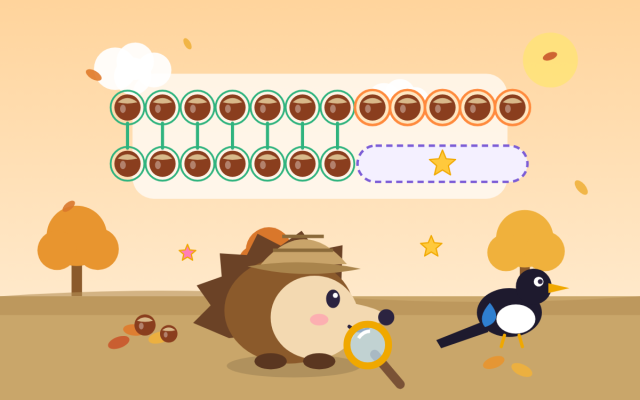
Addition and Subtraction Word Problems: Crack the Case
Learn to solve addition and subtraction word problems by tapping number clues, building bar models and checki…
Telling the Time: Fix the Clocks of Time Town with Koo
Learn all about telling the time: read clocks to five minutes, quarter past and quarter to, draw the hands an…
Tally Charts and Pictograms: A Data Park Detective Game
Learn to read and make tally charts and pictograms, then sort pond animals, build block diagrams and compare…English in Year 2
- Reading: phonics continues until decoding is secure, then the focus turns to fluency and talking about the order of events, characters and favourite words.
- Writing: statements, questions, exclamations and commands, and joining ideas with words like when, if, that and because.
- Grammar: expanded noun phrases ("the big blue butterfly") and keeping past and present tense consistent, including "was running".
- Punctuation: commas in lists and apostrophes for missing letters (can't) and belonging (the dog's bone).
- Spelling and handwriting: common exception words, homophones, suffixes like -ment, -ness, -ful and -less, and starting to join letters.
Year 2 Phonics: Blend, Read and Spell on Word Island
Learn Year 2 phonics: blend new words, try alternative sounds, read long words and suffixes, and spell with n…
Year 2 Common Exception Words: An Island Word Hunt
Learn to read and spell the Year 2 common exception words by spotting each tricky part, waking silent letters…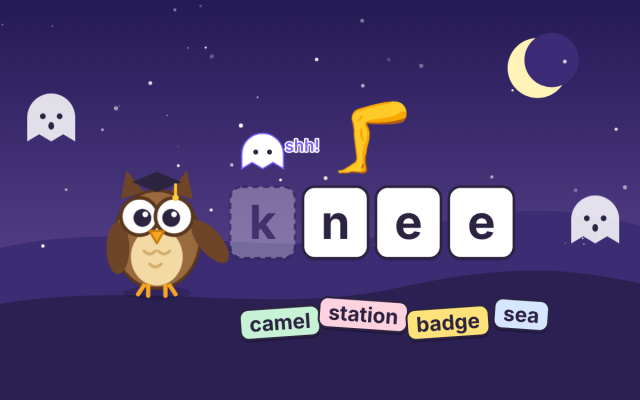
Year 2 Spelling Rules: Explore Spelling Village with Quill
Learn the Year 2 spelling rules, from silent letters to -tion and homophones, by sorting, building and fixing…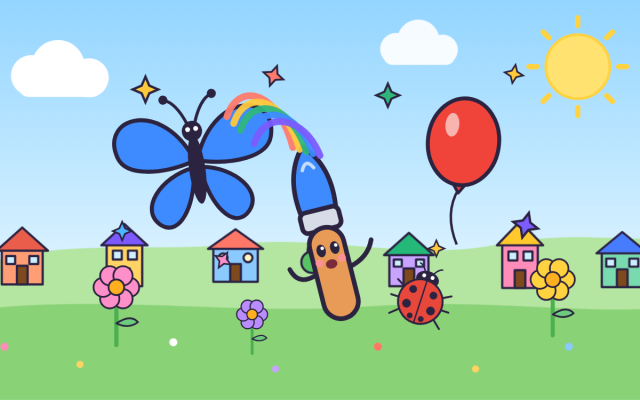
Expanded Noun Phrases: Paint Picture Town with Words
Learn how expanded noun phrases describe and specify, like the blue butterfly, by dragging describing words t…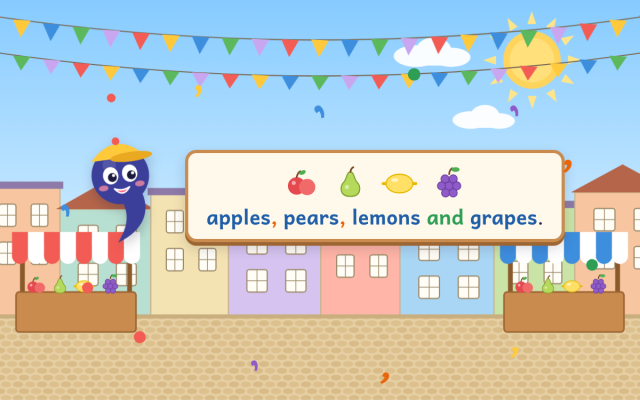
Commas in a List: A Market Adventure with Kit the Comma
Learn how to use commas in a list, with 'and' before the last item. Fill baskets, fix market signs and write…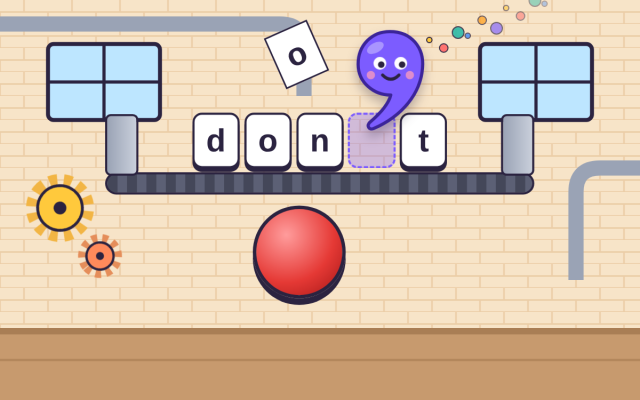
Apostrophes: Missing Letters and Belonging with Posy
Learn how apostrophes show missing letters (can't, I'll) and belonging (the girl's book) by squashing words,…Science and other subjects
Year 2 science covers living things and their habitats, how plants grow from seeds and bulbs, what animals and humans need to survive and stay healthy, and choosing materials for a job. In history and geography schools pick their own topics, for example the Great Fire of London, Florence Nightingale and Mary Seacole, or the world's continents and oceans.
This year's topics, subject by subject
The roadmaps below show the order in which topics usually build up through Year 2, subject by subject. Schools teach in different orders, so treat them as a guide to what's coming rather than a timetable.
Maths 17 topics, 6 coming soon
- Place value (Year 2)
- Comparing and ordering numbers
- Patterns and sequences (Year 2) coming soon
- Adding and subtracting (Year 2) coming soon
- Mental adding and subtracting (Years 2–3)
- Word problems: adding and subtracting (Year 2)
- Word problems: money (Year 2) coming soon
- Times tables (Year 2)
- Odd and even numbers
- Multiplication and division (Year 2)
- Word problems: multiplication and division (Year 2)
- Fractions (Year 2) coming soon
- Measuring (Year 2) coming soon
- Telling the time (Year 2)
- 2D and 3D shapes (Year 2)
- Tally charts and pictograms
- Position and direction (Year 2) coming soon
English 37 topics, 25 coming soon
- Good listening (KS1) coming soon
- Letter sizes and spacing (Year 2) coming soon
- Phonics (Year 2)
- Tricky words (Year 2)
- Soft g and soft c: ge, dge and c (Year 2) coming soon
- Spelling (Year 2)
- Tricky vowel spellings: all, other, key, was, word, war (Year 2) coming soon
- Homophones (Year 2)
- Suffixes (Year 2)
- Adding endings: change the y, drop the e, double the letter (Year 2) coming soon
- Must-know spellings (Year 2) coming soon
- Must-know vocabulary (Year 2) coming soon
- Nouns, verbs, adjectives and adverbs (Year 2)
- Expanded noun phrases (Year 2)
- Building sentences (Year 2)
- Commas in lists (Year 2)
- Apostrophes (Year 2)
- Past and present tense
- Progressive tense (Year 2)
- Dictation: listen and write (KS1) coming soon
- Writing great sentences (Year 2) coming soon
- Word meanings (KS1) coming soon
- Story structure (Year 2) coming soon
- Fables and tales from around the world (Year 2) coming soon
- Predicting what happens next (KS1) coming soon
- Making inferences (KS1) coming soon
- Telling stories out loud (KS1) coming soon
- Thinking like a writer (Year 2) coming soon
- Grouping ideas together (Year 2) coming soon
- Writing stories (Year 2) coming soon
- Writing about real events (Year 2) coming soon
- How non-fiction books work (Year 2) coming soon
- Writing instructions (Year 2) coming soon
- Learning poems by heart (Year 2) coming soon
- Writing poems (Year 2) coming soon
- Checking and improving your writing (Year 2) coming soon
- Making your writing amazing (Year 2) coming soon
Science 15 topics, 9 coming soon
- Working like a scientist (KS1) coming soon
- Alive or not alive? coming soon
- Habitats
- Minibeasts
- Birds around us coming soon
- Food chains (Year 2)
- Dinosaurs coming soon
- How seeds grow coming soon
- Bees and pollinators coming soon
- Animals and their babies (Year 2)
- Staying alive and healthy
- Choosing the right material coming soon
- Squash, bend, twist and stretch (Year 2)
- Pushes and pulls coming soon
- Floating and sinking coming soon
History 6 topics, 3 coming soon
- Castles and knights (KS1) coming soon
- Elizabeth I and Queen Victoria (KS1)
- The Gunpowder Plot (KS1)
- The Great Fire of London
- Rosa Parks and Emily Davison (KS1) coming soon
- Local history detective (KS1) coming soon
Earth & Geography 6 topics, 4 coming soon
- Continents and oceans
- Flags of the world coming soon
- Famous landmarks coming soon
- Hot and cold places (KS1)
- Contrasting places: my home and far away (KS1) coming soon
- Plastic and the ocean coming soon
Technology 5 topics, 4 coming soon
- Staying safe online (KS1) coming soon
- Debugging
- Strong structures (KS1) coming soon
- Wheels and axles coming soon
- Design, make and evaluate (KS1) coming soon
Schools teach topics in different orders, so use this as a guide. Open the roadmaps, pick the school year, and follow the steps.
How you can help at home
- Keep hearing your child read, and ask one question afterwards: "Why do you think she did that?"
- Let them pay at a shop or market stall and check the change.
- Ask time questions on the go: "It's quarter past four. What time will it be in half an hour?"
- Count in 2s, 5s and 10s, then ask the matching times-table fact. Our times tables guide has more ideas.
- Bake or cook together to practise measuring and halving.
 TapLearn