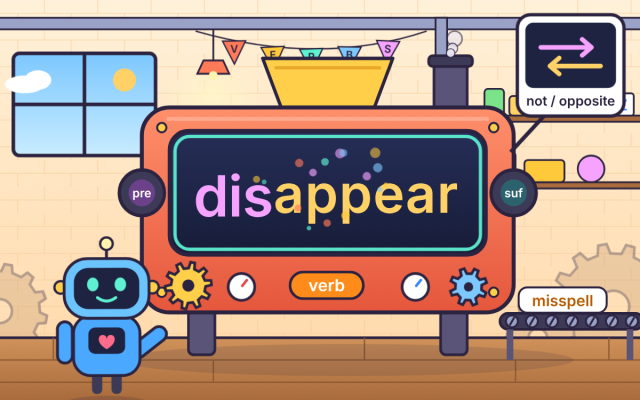
How –er and –ness turn words into nouns, like teacher and kindness
How to join two words into a compound noun, like whiteboard
That –ful means full of and –less means without
When to use –er to compare two and –est for the most
How adding –ly turns an adjective into an adverb, like slowly
When the y in a root word changes to i, as in happily
Chapter by chapter
Making nouns with –er and –ness (teacher, kindness)Free to try
Year 2 english · 1Year 2 english · 2
Making compound nouns by joining words (whiteboard, superman)
Year 2 english · 1
Making adjectives with –ful and –less (careful, careless)
Year 2 english · 3Year 2 english · 2
Comparing with –er and –est (taller, tallest)
Year 2 english · 4
Turning adjectives into adverbs with –ly (slowly, quickly)
Year 2 english · 4Year 2 english · 2
Spelling words with –ment, –ness, –ful, –less and –ly
Year 2 english · 2
Suffix Champion Challenge (10 questions)
What the chapters cover in the national curriculum in England:
Year 2 english: Word: formation of nouns using suffixes such as –ness, –er and by compounding
Year 2 english: Add suffixes to spell longer words including –ment, –ness, –ful, –less, –ly
Year 2 english: Word: formation of adjectives using suffixes such as –ful, –less
Year 2 english: Word: use of the suffixes –er, –est in adjectives and the use of –ly in Standard English to turn adjectives into adverbs
About this adventure
Year 2 Suffixes is an interactive word-building game that teaches children aged 6–8 how adding suffixes such as –er, –ness, –ful, –less, –est, –ly and –ment makes new words, matching the KS1 English curriculum. A suffix is a group of letters added to the end of a root word, and each one changes the word's meaning or job.
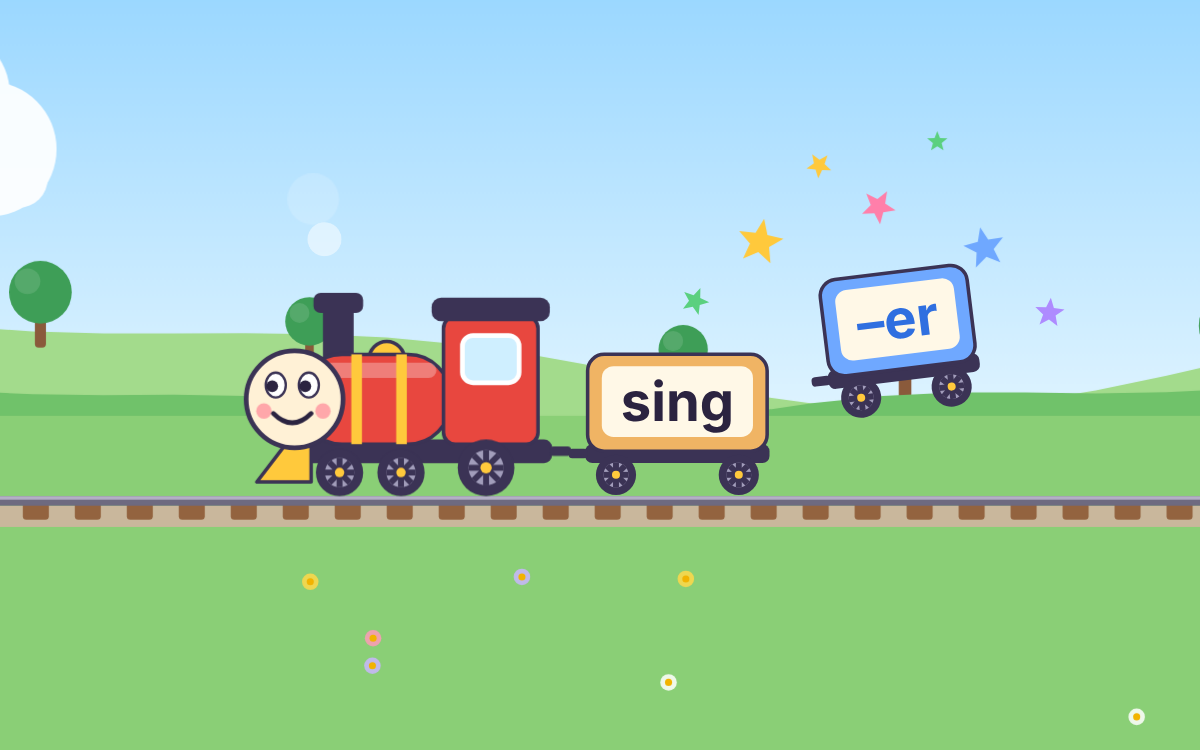
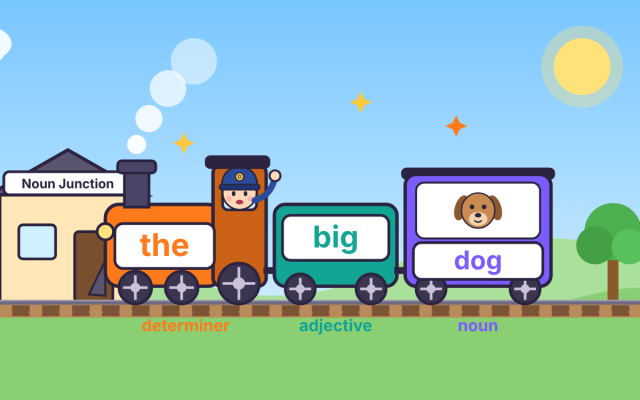
Players tap suffix carriages to couple them onto root-word carriages, so teach becomes teacher and kind becomes kindness. They join two words into compound nouns, decide whether a sentence needs –ful (full of) or –less (without), race trains to compare fast, faster and fastest, and turn adjectives into adverbs to say how something is done.
A spoken guide reads every instruction aloud. In the spelling chapter, children type words on an on-screen keyboard and learn when a y changes to i, as in happiness.
Questions and answers
What is a suffix, in simple words?
A suffix is a group of letters added to the end of a word to make a new word. For example, adding –ness to kind makes kindness, and adding –ful to care makes careful.
What is the difference between –ful and –less?
The suffix –ful means full of and –less means without. So a hopeful person is full of hope, while a hopeless situation has no hope. As a suffix, –ful is always spelt with just one l.
When do you change y to i before adding a suffix?
You change y to i when a consonant comes just before the y in a root word with more than one syllable, so happy becomes happiness and happily. If a vowel comes before the y, it stays, as in enjoyment and playful.
What age is this suffixes game for?
The game is designed for children aged 6 to 8 and follows the Year 2 English curriculum in England. Older children who are still unsure about suffixes or comparing words can use it as a refresher.
What does the game include and how long does it take?
It has six chapters, an optional warm-up on word jobs and a ten-question final challenge, taking about 45 minutes in total. Each chapter can be played on its own in around five to eight minutes.
Can we count your visit? We'd like to use one cookie, only on this site, to see how families find and use TapLearn, so we can make it better. No adverts, and nothing is shared. How we measure
Create a free family account and your child can play every chapter of every game for 7 days, with no card needed. Their progress is kept. After that, the free plan is free for ever, and membership is £6.99 a month if you'd like to keep every chapter.
 TapLearn