What you'll learn
- Read Year 2 common exception words such as find, great and could
- Spot the tricky part where spelling and sound don't match
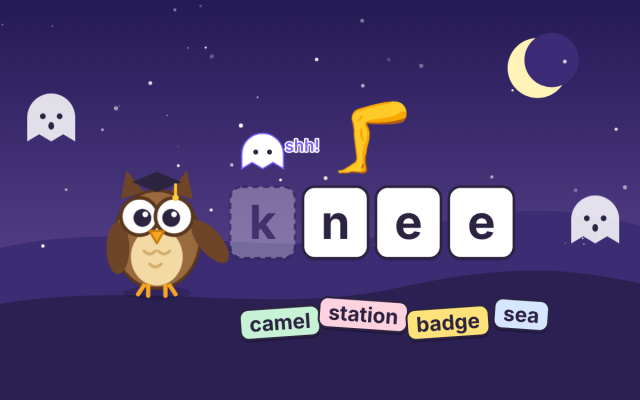
- Find silent letters, like the b in climb and the l in half
- Say whether a tricky part is at the start, middle or end
- Spell tricky words using Look, Say, Cover, Write, Check
- Use word families and memory tricks to spell could, should and would
Chapter by chapter
- Reading tricky words: spotting the tricky part Free to try
Year 2 english · 1
- Reading tricky words: silent letters and surprise sounds
Year 2 english · 1
- Spelling tricky words: Look, Say, Cover, Write, Check
Year 2 english · 2
- Spelling tricky words: word families and memory tricks
Year 2 english · 2
- Tricky words challenge: read and spell (10 questions)
What the chapters cover in the national curriculum in England:
- Year 2 english: Read further common exception words, noting unusual correspondences between spelling and sound and where these occur in the word
- Year 2 english: Spell by: learning to spell common exception words
About this adventure
Year 2 Common Exception Words is an interactive game that teaches children aged 6–7 to read and spell the tricky words on the Year 2 national curriculum list, and to spot the unusual part of each word.
Common exception words are words where the spelling doesn't match the sounds children have learnt in phonics, such as find, door, great and could. Guided by Ollie the owl, players explore an island map, mark the tricky part of each word with a heart, find silent letters like the b in climb, and say whether the tricky part sits at the start, middle or end.
For spelling, children practise the Look, Say, Cover, Write, Check method and type words on an on-screen keyboard. They also use word families and memory tricks, then test themselves in a ten-question challenge.
Questions and answers
What are common exception words in Year 2?
Common exception words are words whose spelling doesn't follow the phonics rules children have learnt so far. The Year 2 list in the national curriculum for England includes words such as door, because, find, climb, great, eye, could, people and Christmas.
Why are some words called tricky words?
They are called tricky words because one part of the word doesn't sound the way it looks. In find, the i says its name, and in climb, the b is silent, so children can't sound out that part and learn it by heart instead.
How can I help my child learn to spell tricky words?
A reliable method is Look, Say, Cover, Write, Check: look at the word, say it, cover it, write it from memory, then compare. Grouping words into families like could, should and would, and using short memory tricks, also helps.
What age is this common exception words game for?
The game is designed for children aged 6 to 7 in Year 2 of primary school. It also suits older children who need to revise these spellings, and it starts with an optional warm-up on Year 1 tricky words.
What does the tricky words game include and how long does it take?
It includes a warm-up, four chapters on reading and spelling tricky words, and a ten-question challenge with a score. Playing everything takes about 50 minutes, and children can start any chapter from the map.
 TapLearn