What you'll learn
- What a contraction is and where its apostrophe goes
- How to spell can't, didn't, couldn't, hasn't, it's and I'll
- How to use 's to show something belongs to one owner
- Why plural nouns like apples don't need an apostrophe
- How to tell missing-letter apostrophes from possessive apostrophes
- How to add missing apostrophes when correcting sentences
Chapter by chapter
- Contractions: apostrophes for missing letters Free to try
Year 2 english · 1 Year 2 english · 2
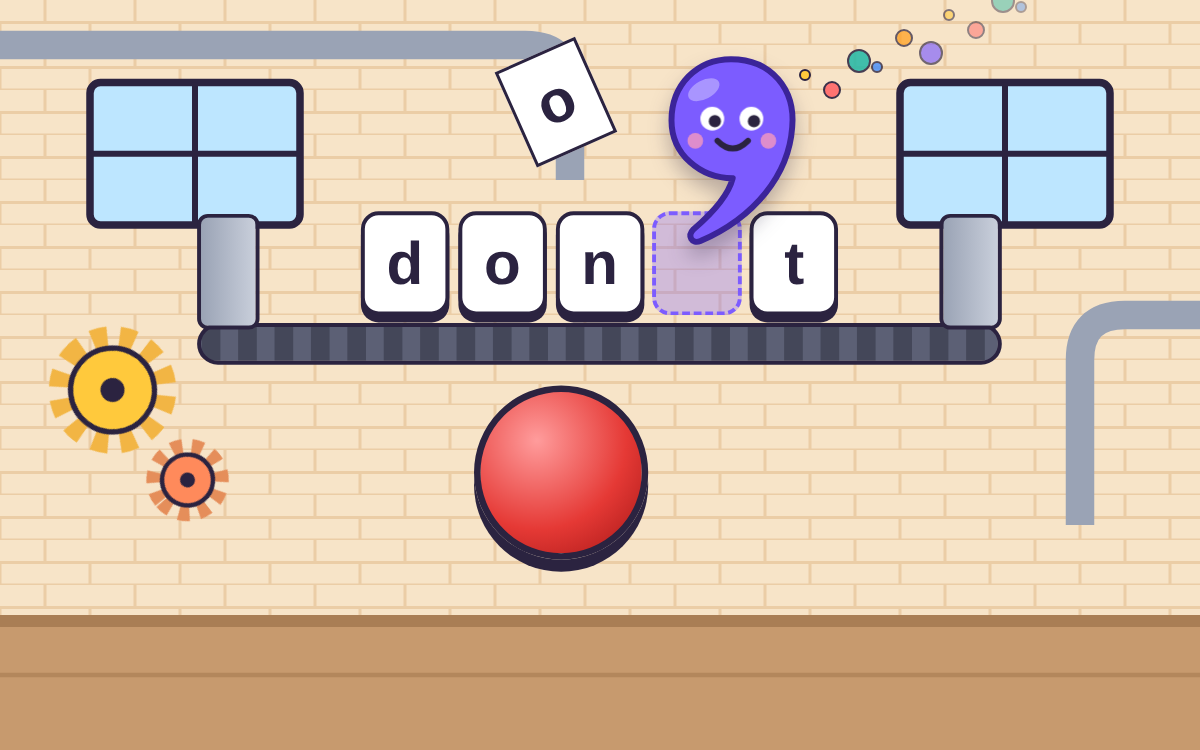
- Spelling contractions: can't, didn't, couldn't, hasn't, it's and I'll
Year 2 english · 2 Year 2 english · 1
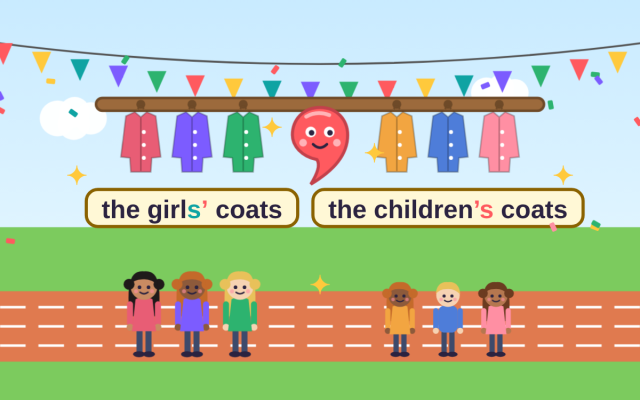
- The possessive apostrophe: 's to show belonging to one owner (the girl's book)
Year 2 english · 3 Year 2 english · 1
- Missing letters or belonging? Using apostrophes in sentences
Year 2 english · 1 Year 2 english · 2 Year 2 english · 3
- Apostrophe Champion quiz: contractions and belonging (10 questions)
What the chapters cover in the national curriculum in England:
- Year 2 english: Punctuation: apostrophes to mark where letters are missing in spelling and to mark singular possession in nouns
- Year 2 english: Spell by: learning to spell more words with contracted forms
- Year 2 english: Spell by: learning the possessive apostrophe (singular)
About this adventure
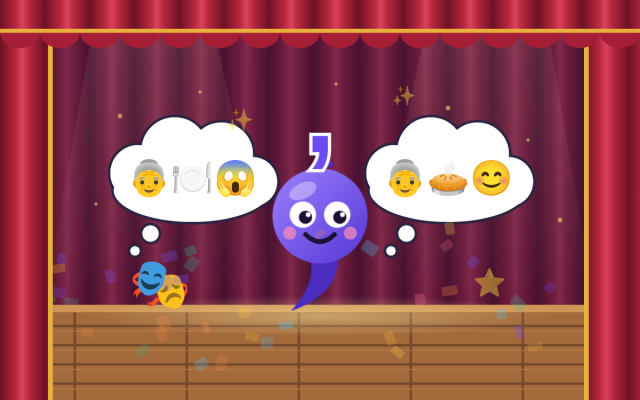
Apostrophes: Missing Letters and Belonging is an interactive game that teaches children aged 6–8 how apostrophes work, following the Year 2 English curriculum in England. Posy, a friendly talking apostrophe, guides players around a colourful town, and every instruction is read aloud.
Children learn the two jobs of an apostrophe. In a contraction, two words are squashed together and the apostrophe marks the missing letters, so do not becomes don't. In possession, apostrophe s ('s) shows that something belongs to one person or thing, as in the dog's bone.
Along the way, players learn to spot a common trap: a plural such as apples just means more than one, so it has no apostrophe. Gentle hints explain each mistake, and a final quiz checks everything they have learned.
Questions and answers
What is an apostrophe, in simple words?
An apostrophe is a small raised punctuation mark (') with two main jobs. It shows where letters have been left out in a contraction, such as don't for do not, and it shows that something belongs to someone, such as the girl's book.
Where does the apostrophe go in a contraction?
The apostrophe goes exactly where the missing letters were, not in the space between the two words. In didn't, the o from not has dropped out, so the apostrophe sits between the n and the t.
When do you use apostrophe s ('s)?
Use 's when something belongs to one person or thing: the dog's bone means the bone belongs to the dog. Plural words like dogs or apples don't take an apostrophe, because nothing is being owned.
What age is this apostrophes game for?
It is designed for children aged 6 to 7 in Year 2, matching the national curriculum in England, and also works well as revision for Year 3. Every line is read aloud, so early readers can play on their own.
What does the apostrophes game include and how long does it take?
The game has four chapters and a ten-question champion quiz, taking about 35 minutes in total. Children squash words, spell with letter tiles, type on a keyboard, sort parcels and fix sentences, and each chapter can be played on its own.
 TapLearn