What's new this year
Year 1 is the start of Key Stage 1 and the national curriculum. Days become a little more structured than in Reception, though many schools keep plenty of play, especially in the autumn term.
The one national check this year is the phonics screening check, in the week of Monday 14 to Friday 18 June 2027. Your child reads 40 words aloud, one to one with a teacher they know. Some are made-up "alien" words, which show whether they can decode rather than remember. The threshold mark is published on 28 June 2027, after the check (it was 31 out of 40 in 2026). Children who don't meet it get extra support and try again in Year 2. Our guide to the phonics screening check has the details.
Maths in Year 1
- Counting to and across 100, forwards and backwards, and counting in 2s, 5s and 10s.
- Reading and writing numbers to 100 in numerals, and to 20 in words.
- Number bonds within 20, and adding and subtracting one-digit and two-digit numbers to 20.
- Simple multiplication and division using objects, pictures and arrays, and finding a half and a quarter.
- Measuring length, mass and capacity, recognising coins and notes, and telling the time to the hour and half past.
- Naming common 2D and 3D shapes and describing turns and position.
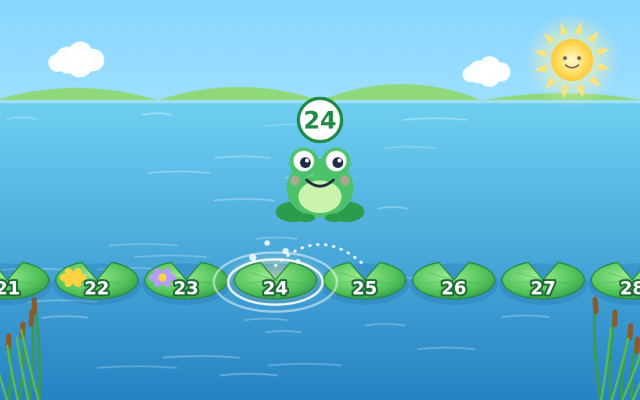
Counting to 100: Hop, Count and Blast Off with Pip
Learn counting to 100 forwards, backwards and in 2s, 5s and 10s by hopping lily pads, fuelling a rocket and b…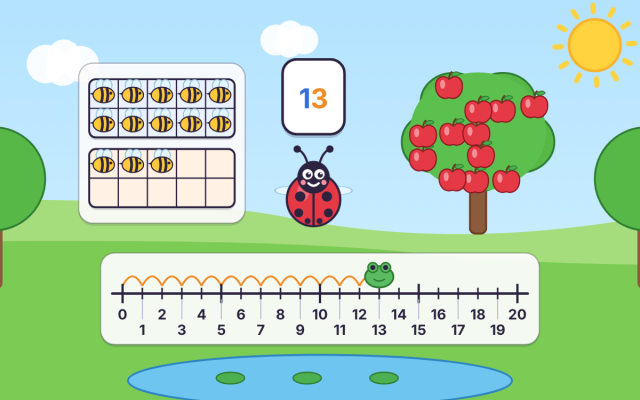
Numbers to 20: Count, Read and Compare with Dotty
Learn to read, write and compare numbers to 20 by counting apples, filling ten frames, hopping a frog along a…
Number Bonds to 20: A Ladybird Meadow Maths Game
Learn number bonds to 20 and the subtraction facts that go with them, by flipping counters, balancing scales…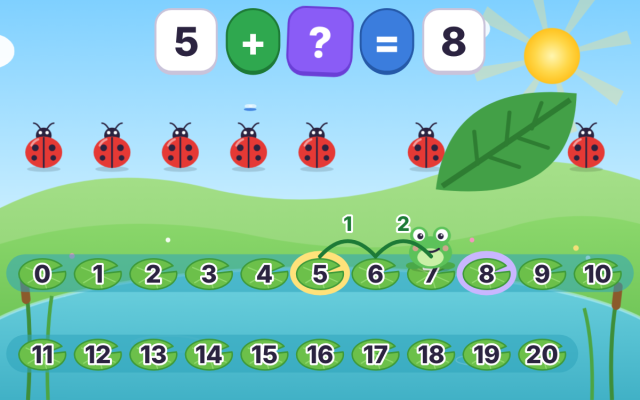
Adding and Subtracting to 20: Hop's Number Pond
Learn adding and subtracting to 20, including 0, with Hop the frog: read number sentences, hop on lily pads a…
2D and 3D Shapes: Explore Shape Island with Bo the Robot
Learn to recognise and name 2D and 3D shapes, from circles and squares to cubes and cones, by spinning, stret…
Telling the Time: Fix the Clocks of Time Town with Koo
Learn all about telling the time: read clocks to five minutes, quarter past and quarter to, draw the hands an…English in Year 1
- Reading: daily phonics, so your child can read most sounds quickly (including two- and three-letter sounds like "sh" and "igh") and blend unfamiliar words.
- Tricky words: common exception words such as "said", "they" and "friend".
- Stories and poems: listening, talking about them and learning some poems by heart.
- Writing: sentences with capital letters, full stops, question marks and exclamation marks, joined with "and".
- Spelling: days of the week, the alphabet, and endings like -s, -es, -ing, -ed, plus the prefix un-.
- Handwriting: forming lower-case letters correctly, plus capitals and the digits 0 to 9.
Digraphs and Trigraphs: A Letter Teams Island Adventure
Learn digraphs and trigraphs like ay, oy, ir and are, plus split digraphs, by joining letter teams, popping s…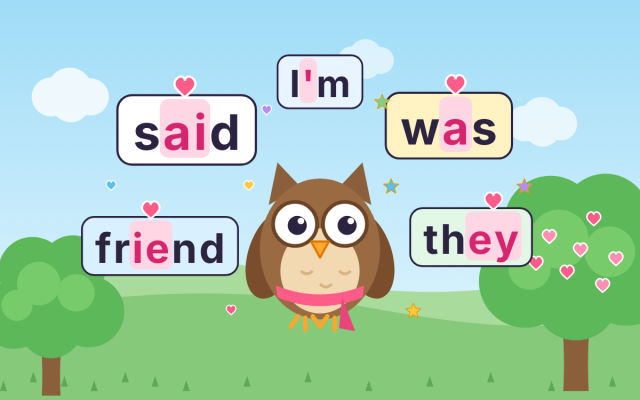
Year 1 Tricky Words: Heart Words and Days of the Week
Learn to read and spell Year 1 tricky words and the days of the week, find each word's tricky part and read I…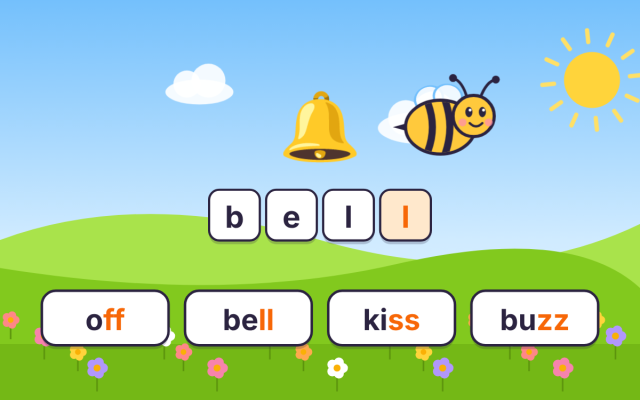
Year 1 Spelling Rules: A Garden Adventure with Bea
Learn Year 1 spelling rules, from ff, ll, ss, zz and ck to –s, –es, –ing, –ed and un–, by building words with…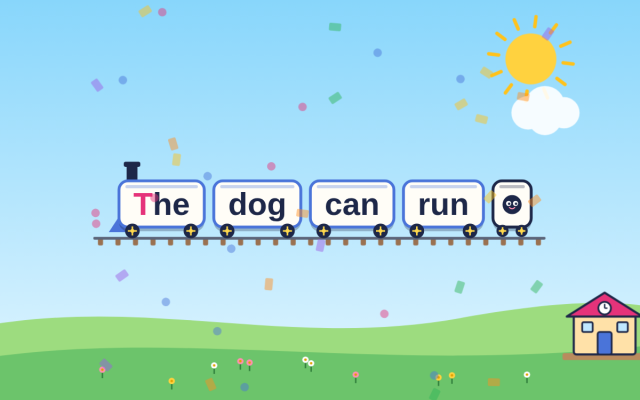
Capital Letters and Full Stops: A Sentence Train Adventure
Learn how capital letters and full stops make a sentence, then build sentence trains, fix capitals and join i…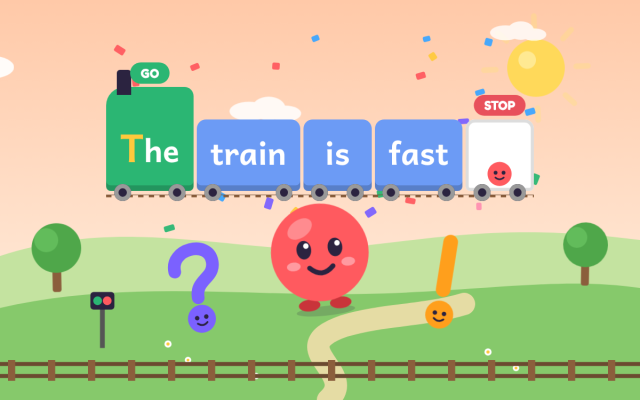
Year 1 Punctuation: A Park Adventure with Dot the Full Stop
Learn Year 1 punctuation: capital letters, full stops, question marks and exclamation marks. Fix sentences an…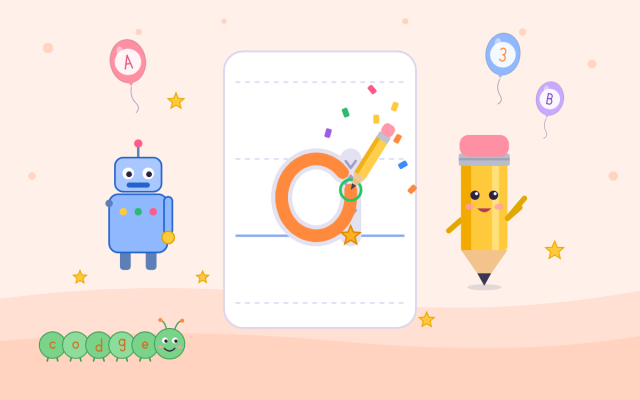
Year 1 Handwriting: Trace Letters and Digits with Poppy
Learn Year 1 handwriting: hold a pencil well, start each letter in the right place and form capitals and digi…Science and other subjects
Year 1 science covers plants (naming common plants and trees and their parts), animals including humans (animal groups, what they eat, body parts and senses), everyday materials and seasonal changes. Children also study history, geography, art, music, design and technology, computing, PE and RE. Schools choose their own topics, for example toys from the past, a famous explorer or the local area.
This year's topics, subject by subject
The roadmaps below show the order in which topics usually build up through Year 1, subject by subject. Schools teach in different orders, so treat them as a guide to what's coming rather than a timetable.
Maths 13 topics, 5 coming soon
- Numbers to 20 (Year 1)
- Number bonds to 20 (Year 1)
- Adding and subtracting (Year 1)
- Word problems: adding and subtracting (Year 1)
- 2D and 3D shapes (Year 1)
- Counting to 100
- Measuring (Year 1)
- Grouping and sharing (Year 1) coming soon
- Word problems: grouping and sharing (Year 1)
- Fractions (Year 1) coming soon
- Position and direction (Year 1) coming soon
- Days, weeks, months and years (Year 1) coming soon
- Telling the time (Year 1) coming soon
English 27 topics, 17 coming soon
- Good listening (KS1) coming soon
- Alphabet and alphabetical order (Year 1)
- Forming letters (Year 1)
- Digraphs and trigraphs
- Tricky words (Year 1)
- Syllables and compound words (Year 1) coming soon
- Spelling rules (Year 1)
- Spelling ph and wh (Year 1) coming soon
- Words that change (Year 1)
- Phonics screening check practice (Year 1) coming soon
- Must-know vocabulary (Year 1)
- Building sentences (Year 1)
- Punctuation (Year 1)
- Must-know spellings (Year 1) coming soon
- Dictation: listen and write (KS1) coming soon
- Writing great sentences (Year 1) coming soon
- Rhyme and rhythm (Year 1)
- Listening to and talking about books (Year 1) coming soon
- Word meanings (KS1) coming soon
- Fairy stories and traditional tales (Year 1) coming soon
- Predicting what happens next (KS1) coming soon
- Making inferences (KS1) coming soon
- Telling stories out loud (KS1) coming soon
- Thinking like a writer (Year 1) coming soon
- Sentences that follow on (Year 1) coming soon
- Writing stories (Year 1) coming soon
- Making your writing amazing (Year 1) coming soon
Science 12 topics, 8 coming soon
- Working like a scientist (KS1) coming soon
- Wild and garden plants (Year 1) coming soon
- Parts of a plant coming soon
- Trees through the seasons coming soon
- Seasons (Year 1) coming soon
- Animal groups
- What animals eat
- Dinosaurs coming soon
- Parts of the body
- The five senses
- Everyday materials coming soon
- Pushes and pulls coming soon
History 6 topics, 3 coming soon
- Old and new: how we know (KS1) coming soon
- Toys, homes and school: then and now coming soon
- The first Moon landing
- The first flight
- Grace Darling coming soon
- Florence Nightingale and Mary Seacole
Earth & Geography 6 topics, 5 coming soon
- My local area coming soon
- Human and physical features (KS1) coming soon
- Maps and aerial photos (KS1) coming soon
- Compass directions coming soon
- The UK: countries and capitals coming soon
- Weather and seasons
Technology 6 topics, 5 coming soon
- Technology around us (KS1) coming soon
- Staying safe online (KS1) coming soon
- Algorithms
- Tools for cutting, shaping, joining and finishing (KS1) coming soon
- Levers and sliders coming soon
- Healthy food and where it comes from (KS1) coming soon
Schools teach topics in different orders, so use this as a guide. Open the roadmaps, pick the school year, and follow the steps.
How you can help at home
- Listen to your child read their school book, then read them something richer that they can't read yet.
- Play "I spy" with sounds, not letter names: "something beginning with sh".
- Count in 2s, 5s and 10s on walks or up the stairs.
- Point out o'clock and half past on a real clock at bedtime or teatime.
- Let them write shopping lists, cards and labels. Praise the ideas first, then one capital letter or full stop.
 TapLearn