Sorting big habitats, like a pond, from tiny microhabitats
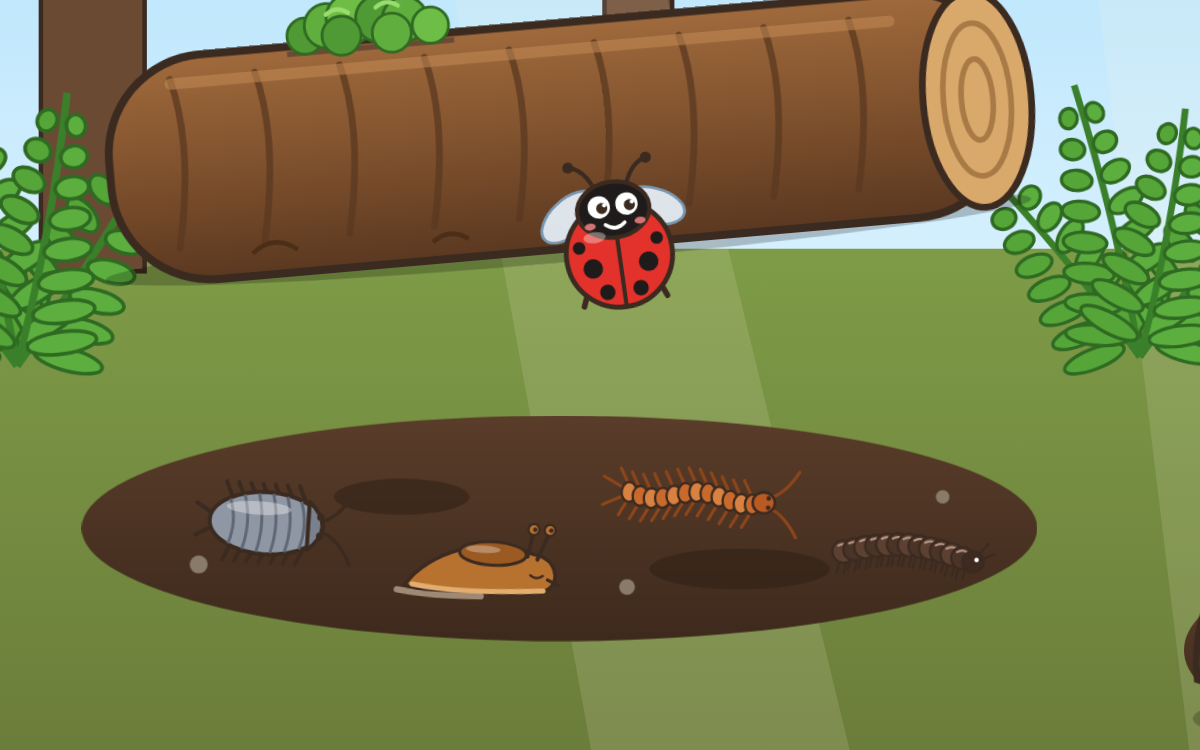
Naming minibeasts found under logs and stones, like woodlice
Telling a centipede from a millipede, and a slug from a snail
Naming plants in their habitats, such as moss, nettles and water lilies
Why minibeast hunters always put logs and stones back
Chapter by chapter
Habitats and microhabitats: big homes and tiny homes
Year 2 science · 1
Under logs and stones: finding and naming minibeasts
Year 2 science · 1
On plants and flowers: naming minibeasts and plants
Year 2 science · 1
Pond habitat: naming water minibeasts and plants
Year 2 science · 1
Minibeast hunt challenge: name them and find their homes (10 questions)
What the chapters cover in the national curriculum in England:
Year 2 science: Identify and name a variety of plants and animals in their habitats, including microhabitats
About this adventure
Minibeasts and Microhabitats is an interactive game that teaches children aged 5–8 to find and name minibeasts and plants in their habitats, including microhabitats, as in the Year 2 science curriculum.
Guided by Dotty the ladybird, children explore a park, a woodland floor, a flower bed and a pond. They learn that a habitat is the place where a plant or animal lives, and that a microhabitat is a tiny home inside it, such as under a log or a stone. They roll over logs, sweep a magnifying glass across the plants and drag a net through the water, then put the logs, stones and pond creatures back safely.
Each discovery goes into a Bug Book with a spoken description, and many come with a fun fact. Short naming checks and a 10-question challenge help children tell look-alikes apart, such as a centipede and a millipede.
Questions and answers
What is a microhabitat, in simple words?
A microhabitat is a very small home inside a bigger habitat, such as under a log, under a stone or in a pile of fallen leaves. These spots are often dark and damp, which suits minibeasts like woodlice, slugs and worms.
What minibeasts live under logs and stones?
Woodlice, centipedes, millipedes, slugs, ants, ground beetles and earthworms are often found under logs and stones. They hide there because it stays cool, dark and damp, which stops them drying out and keeps them safe from birds.
How can you tell a centipede from a millipede?
A centipede is flat and fast, with long legs sticking out at the sides, while a millipede is rounder and slower, with lots of short legs underneath. Centipedes have one pair of legs on each body section and millipedes have two.
What age is the Minibeasts and Microhabitats game for?
The game is designed for children aged 5 to 8, and it matches the Year 2 science statement on naming plants and animals in their habitats, including microhabitats. Every line is read aloud, so early readers can play on their own.
What does the minibeast game include and how long does it take?
It includes a warm-up, four chapters with animated introductions, a Bug Book of 17 minibeasts and 8 plants, and a 10-question challenge. Playing everything takes about 35 minutes, and children can choose any chapter from the garden map.
Can we count your visit? We'd like to use one cookie, only on this site, to see how families find and use TapLearn, so we can make it better. No adverts, and nothing is shared. How we measure
Create a free family account and your child can play every chapter of every game for 7 days, with no card needed. Their progress is kept. After that, the free plan is free for ever, and membership is £6.99 a month if you'd like to keep every chapter.




 TapLearn