The three phrases in plain English
- Working towards the expected standard: your child has learned some of what is expected for their year, but some skills aren't secure yet. This is common, and it tells you where to focus.
- Working at the expected standard (often just "expected"): your child is on track. They have learned what the curriculum expects for their year and can use it reliably.
- Working at greater depth: your child can use what they have learned confidently and flexibly, apply it to unfamiliar problems and explain their thinking. It doesn't mean they are working on the next year's content.
Some schools use other words for the same idea, such as "emerging", "developing" and "secure", or "below", "at" and "above". Since the old national curriculum levels were removed, each school chooses its own system, so the meaning can vary a little from school to school.
Where the words come from
At the end of Year 6, teachers use national frameworks to judge writing with exactly these phrases. Many schools use the same language in reports for every year group, so parents see it from Year 1 onwards.
In maths, reading and grammar, Year 6 children also sit tests, where a scaled score of 100 or more means "met the expected standard". See the 2027 SATs for how scaled scores work.
Timing matters too. A judgement in the autumn or spring is about progress towards end-of-year expectations, so "working towards" in January can be exactly where a child should be.
It's a description, not a verdict
"Working towards" is not a fail, and it isn't a label your child carries forever. It means some skills are still being practised. Many children move between these descriptions from one year to the next as things click.
Equally, "greater depth" isn't a reason to push ahead to harder content. Teachers usually prefer to deepen understanding of the current year's work.
How you talk about the report matters. "Your teacher says you're working really hard on your writing, so let's find one thing to practise" lands very differently from "you're behind".
What to ask the teacher
- Which specific skills is my child working towards, and which are already secure?
- Is this where you'd expect them to be at this point in the year?
- What support is happening in class?
- What one or two things could we do at home?
- When would be a good time to check in again?
If the report has surprised you, it's fine to say so and ask for examples of your child's work. Teachers are usually glad to explain.
How to help at home
- Pick one skill. Turn the broad judgement into something specific, such as "uses full stops and capital letters every time" or "knows the 3, 4 and 8 times tables".
- Go back a step if needed. Often the gap is in an earlier skill. Practising that first makes the current one easier.
- Practise little and often. A few minutes most days works better than a long session.
- Celebrate what's secure. Point out progress, however small.
TapLearn's skills report uses similar ideas: each skill shows as secure or practising, with common mix-ups to watch for. The year roadmaps show what each year covers, so you can see where a skill fits.

Place Value: Build Numbers to 1,000 with Digit the Robot
Learn place value with hundreds, tens and ones to 1,000. Turn ones into tens in a block machine, build number…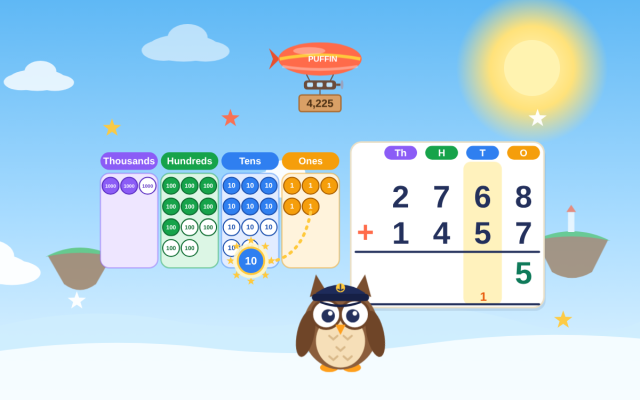
Column Addition and Subtraction: A Sky Harbour Adventure
Learn column addition and subtraction with up to 4 digits, exchanging, estimating and checking, by helping To…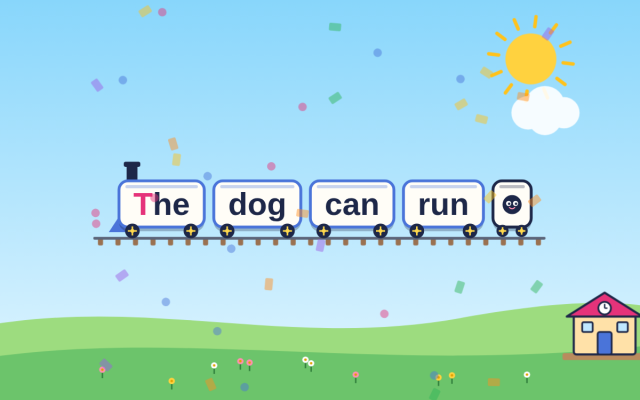
Capital Letters and Full Stops: A Sentence Train Adventure
Learn how capital letters and full stops make a sentence, then build sentence trains, fix capitals and join i…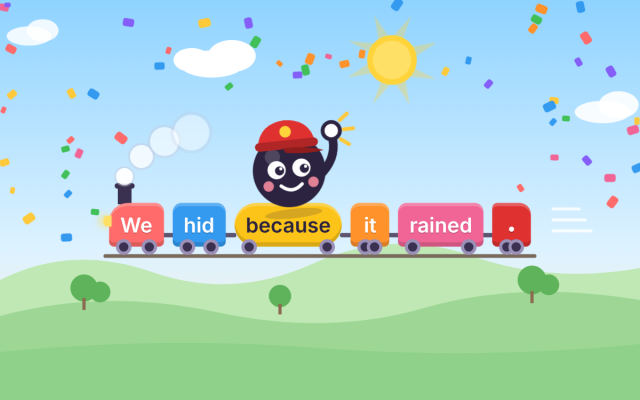
 TapLearn