What you'll learn
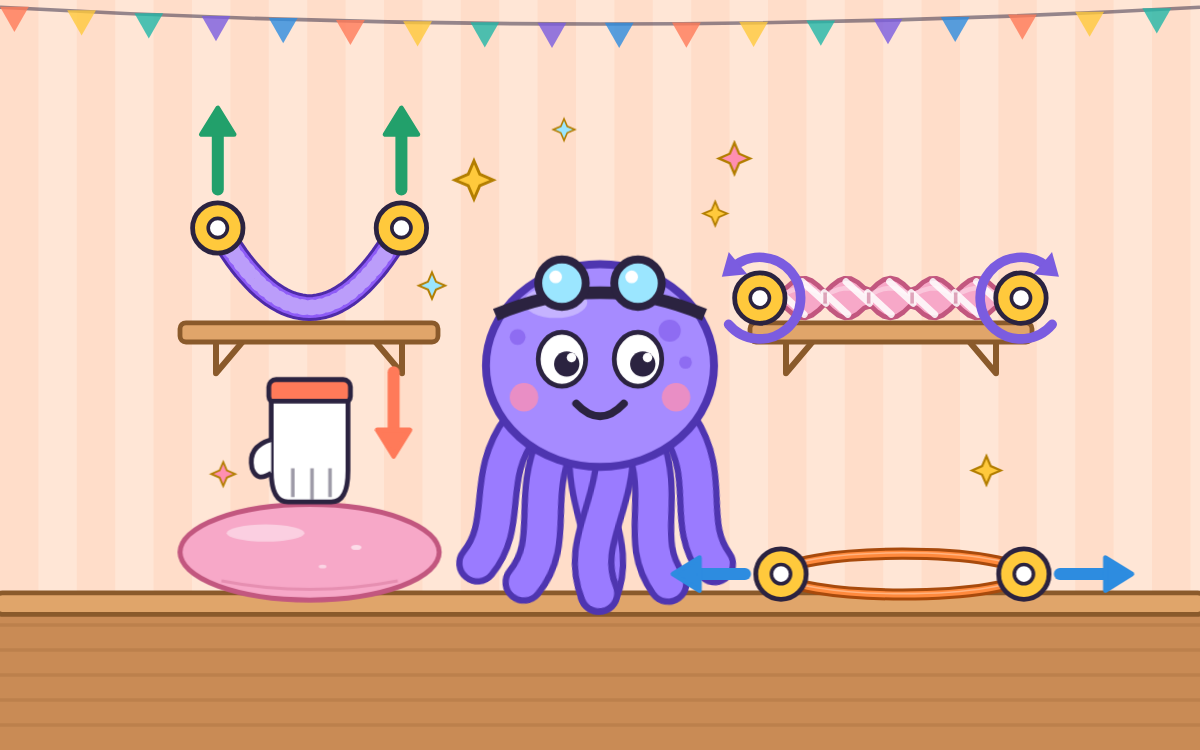
- Squashing means pressing or squeezing something to change its shape
- Bending pushes or pulls a straight object into a curve
- Twisting means turning the two ends opposite ways
- Stretching means pulling something to make it longer
- Elastic things spring back; dough, clay and foil stay changed
- How to predict, test and record results in a simple table
Chapter by chapter
- Squashing: pressing and squeezing to change shape Free to try
Year 2 science · 1
- Bending: pushing or pulling straight objects into curves
Year 2 science · 1
- Twisting: turning the two ends opposite ways
Year 2 science · 1
- Stretching: pulling objects to make them longer
Year 2 science · 1
- Spring back or stay changed? What happens after squashing, bending, twisting and stretching
Year 2 science · 1
- Testing materials: can it be squashed, bent, twisted or stretched?
Year 2 science · 1
- Shape Workshop Challenge (10 questions) (10 questions)
What the chapters cover in the national curriculum in England:
- Year 2 science: Find out how the shapes of solid objects made from some materials can be changed by squashing, bending, twisting and stretching
About this adventure
Squash, Bend, Twist and Stretch is an interactive science game that teaches children aged 5–7 how the shapes of solid objects made from some materials can be changed by squashing, bending, twisting and stretching. It follows the Year 2 science curriculum for England.
Guided by Ollie the octopus, children drag objects on a workbench to change their shape themselves. Dough stays flat, a sponge springs back, a stone is too hard to squash, and dry spaghetti snaps instead of bending. Along the way they sort objects into baskets and answer quick picture questions.
Later rooms ask whether a new shape springs back or stays changed, introducing the word elastic. Children then work like scientists: they predict, test each object in four ways and record ticks and crosses in a results table.
Questions and answers
What are the four ways to change the shape of a solid object?
The four ways are squashing, bending, twisting and stretching. Squashing presses or squeezes, bending makes a curve, twisting turns the two ends opposite ways, and stretching pulls something to make it longer.
Which materials can be squashed, bent, twisted or stretched?
Soft or flexible materials such as dough, sponge, rubber, fabric and thin foil can change shape by hand. Hard, stiff objects such as stones, bricks, glass and wooden blocks do not change shape when children push or pull them.
Why do some objects spring back after you stretch them?
Objects made from elastic materials, such as rubber bands and sponges, spring back to their old shape when you let go. Others, like dough, clay and scrunched foil, keep their new shape until they are changed again.
What age is this squash, bend, twist and stretch game for?
It is made for children aged 5 to 7 and matches Year 2 science in England, where pupils find out how the shapes of solid objects can be changed. Year 3 children can also use it for a quick recap.
What does the game include and how long does it take?
The game has a short warm-up, six hands-on rooms and a 10-question final challenge, taking about 40 minutes in total. Each room ends with a quick three-question check, so children can play one room at a time.

 TapLearn