What you'll learn
- What the progressive form is and when to use it
- How to use is, am or are with an -ing word for now
- How to use was or were with an -ing word for the past
- How to pick the helper verb that matches who is doing it
- How clue words like yesterday and right now signal present or past
- How to keep the same tense all through a short story
Chapter by chapter
- Happening now: the present progressive (she is drumming) Free to try
Year 2 english · 1 Year 2 english · 2
- Happening in the past: the past progressive (he was shouting)
Year 2 english · 1 Year 2 english · 2
- Present or past? Using tenses correctly and consistently
Year 2 english · 2
- Progressive tense champion quiz (10 questions)
What the chapters cover in the national curriculum in England:
- Year 2 english: Text: use of the progressive form of verbs in the present and past tense to mark actions in progress
- Year 2 english: Develop their understanding of the concepts set out in English appendix 2 by: learning how to use the present and past tenses correctly and consistently, including the progressive form
About this adventure
Progressive Tense is an interactive game that teaches children aged 6–8 how to use the progressive tense to show an action in progress, both in the present (she is drumming) and in the past (he was shouting). It follows the Year 2 English grammar curriculum in England.
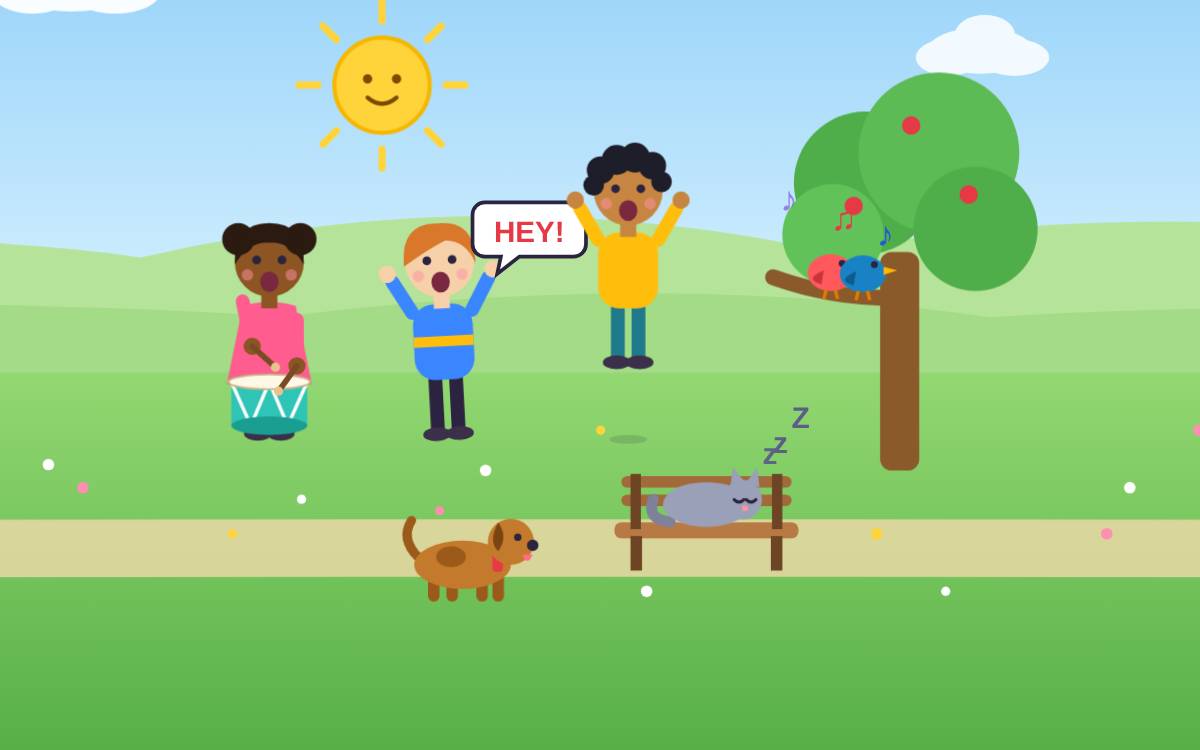
In a busy park, children tap characters to make them act and see the sentence that describes them. They discover that the progressive form needs two words working together: a helper verb (is, am, are, was or were) and a verb ending in -ing. A rewind button turns the scene to yesterday, showing how is becomes was while the -ing word stays the same.
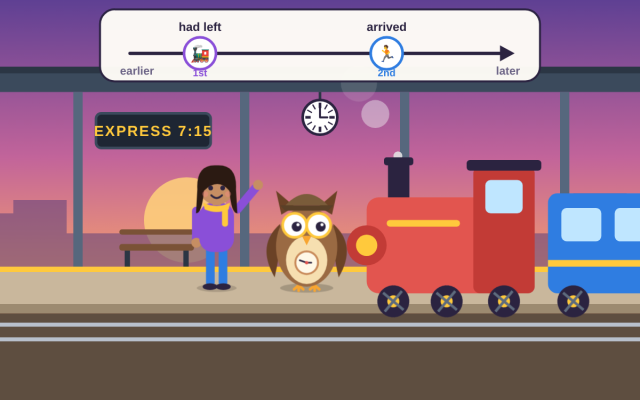
Later, children use clue words like yesterday and right now to choose present or past, and fix short stories that switch tense by mistake. Every instruction and question is read aloud for early readers.
Questions and answers
What is the progressive tense, in simple words?
The progressive tense shows that an action is, or was, still going on. It uses a helper verb such as is, am, are, was or were, followed by a verb ending in -ing, as in 'Maya is drumming' or 'Sam was shouting'.
What is the difference between the present progressive and the past progressive?
The present progressive describes something happening now and uses is, am or are, as in 'The birds are singing.' The past progressive describes something that was going on in the past and uses was or were, as in 'The birds were singing.' The -ing word stays the same.
When do you use was and when do you use were?
Use was with I, he, she, it or one person or thing, and were with we, you, they or more than one. So we say 'I was reading' and 'We were reading'; 'we was' is not Standard English.
What age is this progressive tense game for?
The game is designed for children aged 6 to 8 and matches Year 2 English in the national curriculum for England. Everything is read aloud, so early readers can play on their own, and older children can use it for revision.
What does the progressive tense game include and how long does it take?
It includes an optional warm-up, three chapters and a ten-question champion quiz, taking about 30 minutes in total. Children can pick any chapter from the park map and carry on later from where they stopped.
 TapLearn