Year 1 Handwriting: Trace Letters and Digits with Poppy
Learn Year 1 handwriting: hold a pencil well, start each letter in the right place and form capitals and digits by tracing them on screen.
- Ages 5–7
- About 45 min
- Easy start
- Handwriting
Learn Year 1 handwriting: hold a pencil well, start each letter in the right place and form capitals and digits by tracing them on screen.
Year 1 english · 1
Year 1 english · 2
Year 1 english · 3 Year 1 english · 2
Year 1 english · 3 Year 1 english · 2
Year 1 english · 3 Year 1 english · 2
Year 1 english · 3 Year 1 english · 2
Year 1 english · 4
Year 1 english · 5
What the chapters cover in the national curriculum in England:
Year 1 Handwriting is an interactive tracing game that teaches children aged 5 to 7 to sit and hold a pencil correctly and to form lower-case letters, capital letters and the digits 0 to 9. It follows the Year 1 handwriting objectives in the national curriculum for England.
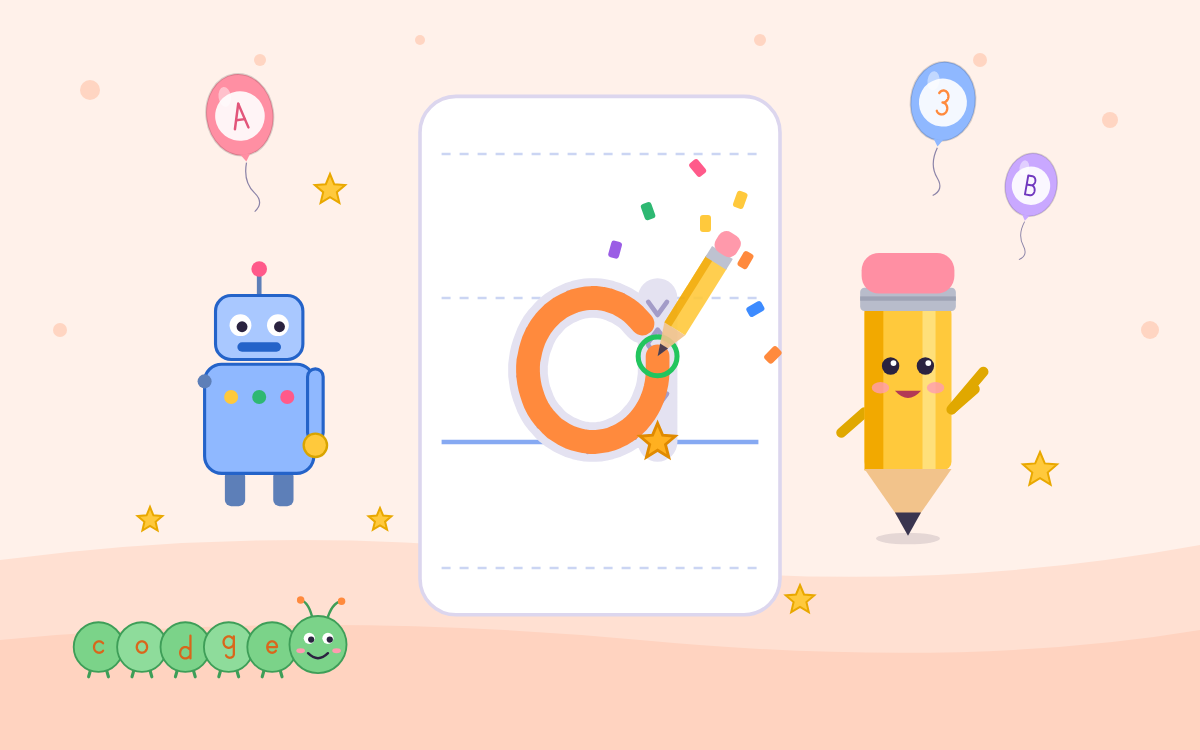
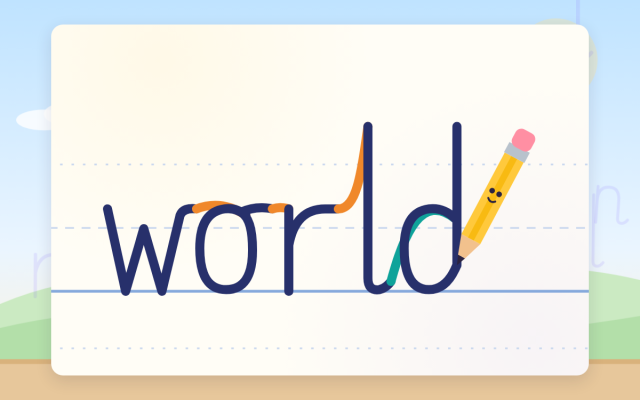
Poppy the pencil shows how each letter is written, then the child traces it on lined paper. A green dot marks the start, arrows show the direction and a star marks the finish. If a child starts at the wrong end or goes round the wrong way, Poppy notices and gives a gentle hint.
Children also meet the four handwriting families: letters formed in similar ways, such as the curly caterpillar letters that all begin like c. They sort letters into their families, and they check that tricky digits like 3 and 7 face the right way.
In Year 1, children learn to sit correctly and hold a pencil comfortably, to form lower-case letters in the right direction, starting and finishing in the right place, and to form capital letters and the digits 0 to 9. They also learn which letters belong to which handwriting family.
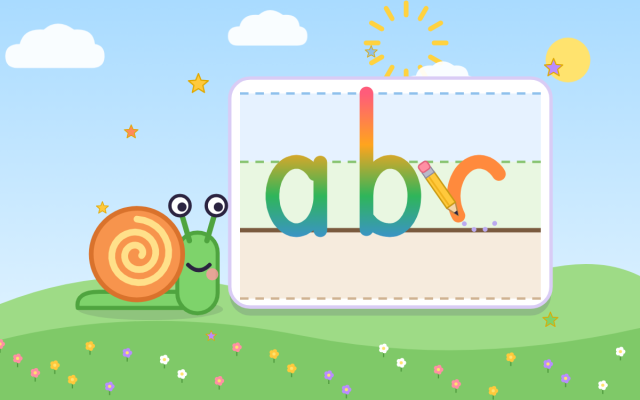
Letter families are groups of letters formed with the same first movement. Curly caterpillar letters like c, a and o curl back and round, long ladder letters like l and t go straight down, one-armed robot letters like n and h go down then up and over, and zig-zag letters like v and z use straight slanting lines.
Most children are taught the tripod grip: the pencil is pinched between the thumb and pointer finger and rests on the middle finger. It is held just above the sharpened wooden part. A simple way to find it is to pinch near the point, then flip the pencil back onto the hand.
Mixing up b and d is common while children are learning to write and usually fades by about age 7. Forming them differently helps: d starts with a curly c shape and then a tall line, while b starts with a long line down and then bounces round.
The game is made for children aged 5 to 7, especially those in Year 1. It has eight short chapters, a 10-question challenge and a practice board for tracing any letter or digit, and takes about 45 minutes to play through in full.


 TapLearn
Getting it ready…
Great work on chapter 1! To open the next chapters, ask a grown-up to take a look.
To play this game, ask a grown-up to take a look. There are lots of free games you can play right now too!
Create a free family account and your child can play every chapter of every game for 7 days, with no card needed. Their progress is kept. After that, the free plan is free for ever, and membership is £6.99 a month if you'd like to keep every chapter.
That's all the learning time for today. Great work! Flip will be ready to play again tomorrow.