What you'll learn
- All 26 letter names, and how a letter's name differs from its sound
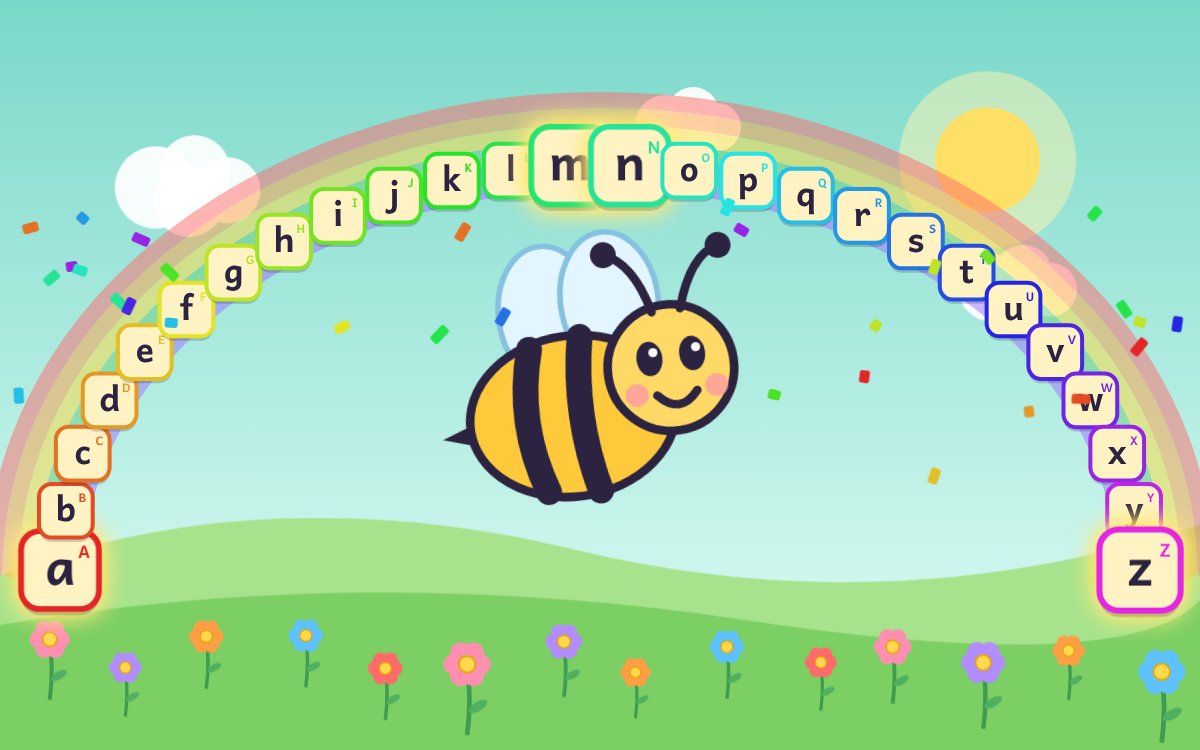
- Saying the alphabet in order, with A, M-N and Z as markers
- Finding the letter that comes next, before or in a gap
- Spelling short words out loud with letter names, like c-a-t
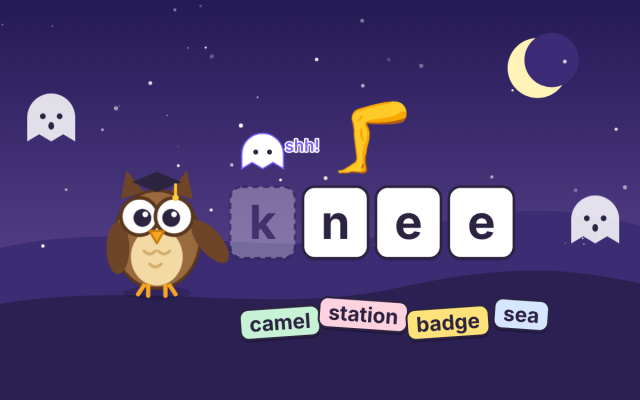
- Telling apart spellings of one sound with letter names, like ee and ea
Chapter by chapter
- Letter names: every letter has a name and a sound
Year 1 english · 1
- Alphabet order: saying the letters from A to Z
Year 1 english · 1
- Alphabet order: next, before and missing letters
Year 1 english · 1
- Letter names: spelling words out loud, like c-a-t
Year 1 english · 1 Year 1 english · 2
- Same sound, different spellings: telling them apart with letter names
Year 1 english · 2
- Alphabet champion challenge (10 questions)
What the chapters cover in the national curriculum in England:
- Year 1 english: Name the letters of the alphabet: naming the letters of the alphabet in order
- Year 1 english: Name the letters of the alphabet: using letter names to distinguish between alternative spellings of the same sound
About this adventure
Alphabet and Alphabetical Order is an interactive game that teaches children aged 4–7 the names of all 26 letters, how to say them in alphabetical order, and how to use letter names to tell apart different spellings of the same sound. It follows the Year 1 English spelling curriculum in England.
Guided by Bea the bee, children tap, pop and sort letters while every instruction is read aloud. They find out that a letter's name is different from its sound, use A, M, N and Z as markers to find any letter, and work out which letter comes next, before or in a gap.
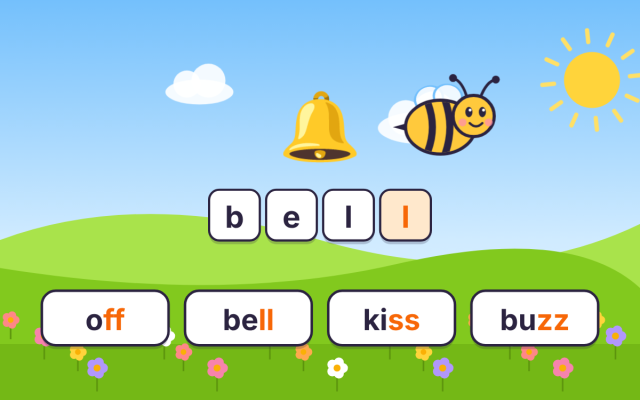
They then spell short words out loud with letter names, like c-a-t, and compare words that share a sound but not its spelling, such as tree (e-e) and leaf (e-a), or fish (f) and dolphin (p-h). A 10-question challenge checks what they know.
Questions and answers
What is the difference between a letter's name and its sound?
A letter's name is what we call it, and its sound is what it says inside a word. The letter b is called 'bee', but in the word ball it makes a short 'b' sound. Children use sounds to read and names to spell words out loud.
How do you help a child learn the alphabet in order?
Chant the alphabet in small chunks rather than one fast song: ABCDEFG, HIJKLMN, OPQ, RST, UVW, XYZ. This stops L, M, N, O and P blurring into one sound, and simple markers help too: A comes first, M and N sit in the middle and Z comes last.
Why do children learn letter names in Year 1?
Letter names let children say exactly which letters spell a word, which matters because one sound can be spelt in different ways. In Year 1 in England, children learn to name the letters in order and use those names to tell apart spellings such as ee in tree and ea in leaf.
What age is this alphabet game for?
The game is made for children aged 4 to 7 and matches the Year 1 English curriculum in England, where children are 5 or 6. Younger children who know some letter sounds can enjoy the early chapters, and older children can use it for quick revision.
How long does the alphabet game take, and what is in it?
Playing everything takes about 35 minutes, so most children play one chapter at a time. There are five short chapters, each opening with an animated introduction, plus a final challenge, and a friendly narrator reads every instruction aloud for children who are still learning to read.
 TapLearn