Year 1 Spelling Rules: A Garden Adventure with Bea
Learn Year 1 spelling rules, from ff, ll, ss, zz and ck to –s, –es, –ing, –ed and un–, by building words with Bea the bee in a sunny garden.
- Ages 5–7
- About 45 min
- Easy start
- Phonics & Spelling
Learn Year 1 spelling rules, from ff, ll, ss, zz and ck to –s, –es, –ing, –ed and un–, by building words with Bea the bee in a sunny garden.
Year 1 english · 1
Year 1 english · 1
Year 1 english · 2
Year 1 english · 2
Year 1 english · 3
Year 1 english · 3
Year 1 english · 4
What the chapters cover in the national curriculum in England:
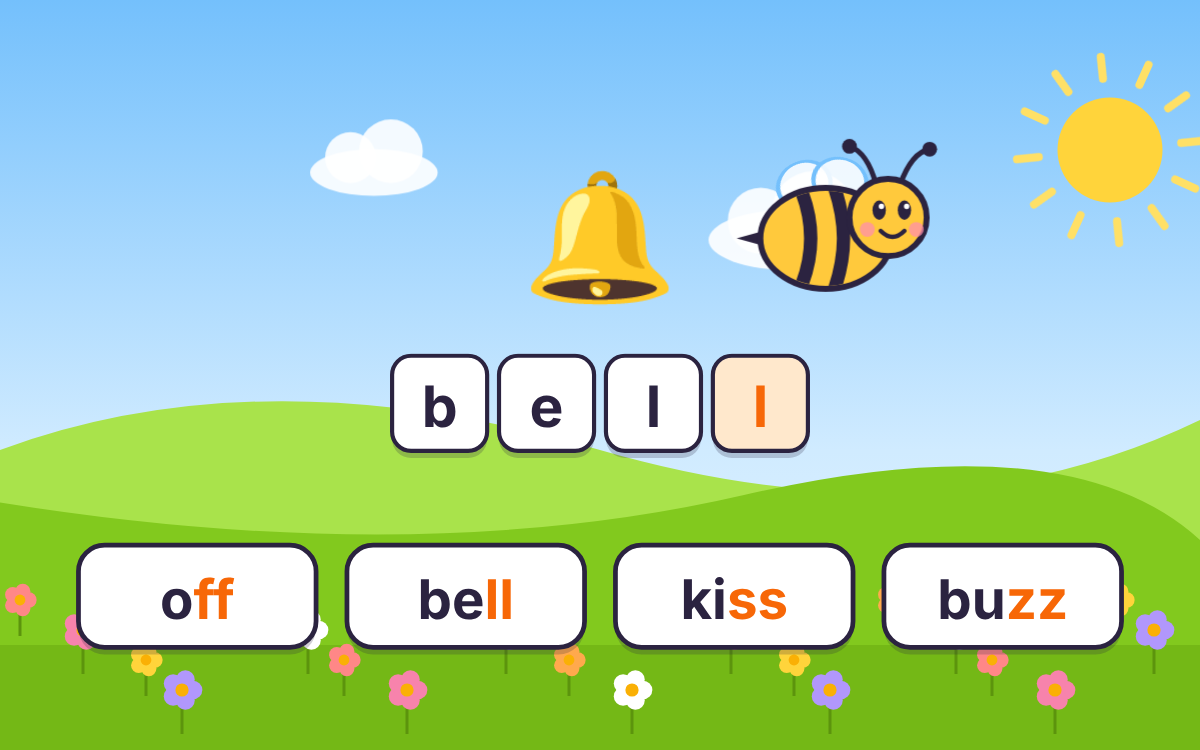
Year 1 Spelling Rules is an interactive game that teaches children aged 5–7 the spelling rules in the national curriculum for England: ff, ll, ss, zz and ck, plurals with –s and –es, adding –ing, –ed, –er and –est, and the prefix un–.
Bea the bee narrates every step aloud. Children add letters and endings to words, sort words into jars, clap syllables to hear when –es is needed, and spell words with letter tiles. They meet the key terms simply: a root word is the word we start with, a suffix is added at the end, and a prefix goes at the start.
Each chapter opens with a short animated introduction, has a quick check at the end, and grows a flower in the garden. A final ten-question challenge mixes every rule together.
You add –es when the new word has an extra beat you can hear, like fox and foxes or dish and dishes. If there is no extra beat, as in cats or dogs, you just add –s.
In short words, the f, l, s and z sounds straight after a short vowel are usually spelt with a double letter, as in off, bell, kiss and buzz. A few rule breakers, such as if, pal, us, bus and yes, use one letter.
The –ed ending is always written e-d, even though it can sound like t (jumped), d (buzzed) or an extra beat (hunted). Children often write 'jumpt', so the game shows all three sounds side by side.
It is made for children aged 5 to 7, matching Year 1 English in England, and works well for Year 2 children revising these rules. Every instruction is read aloud, so early readers can play on their own.
There are seven short chapters, each with an animated introduction, hands-on activities and a quick check, plus a ten-question Spelling Star challenge. Playing everything takes about 45 minutes, and children can start from any chapter.
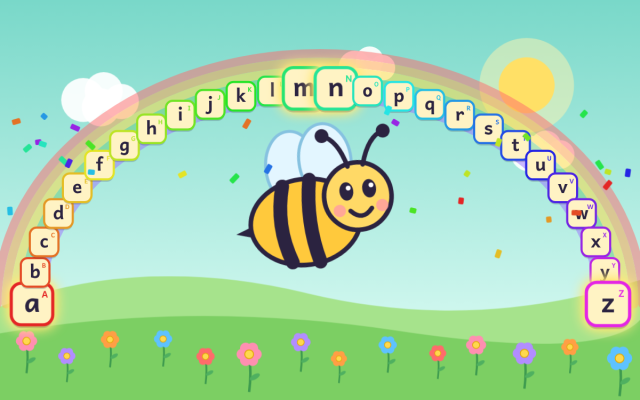
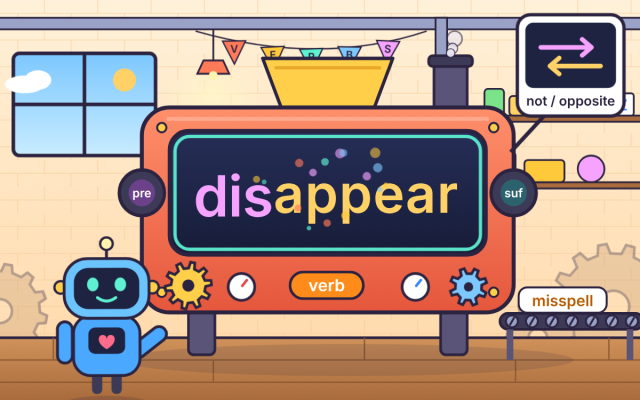
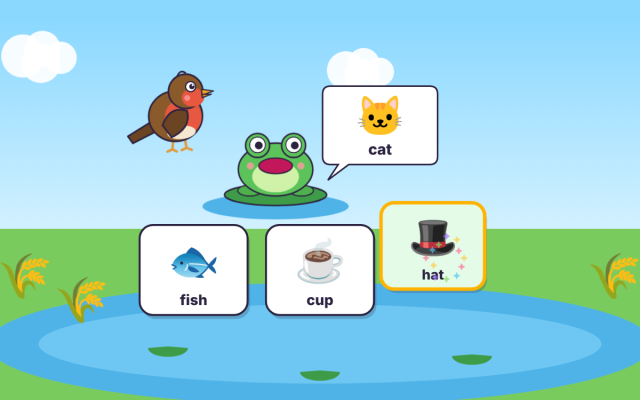
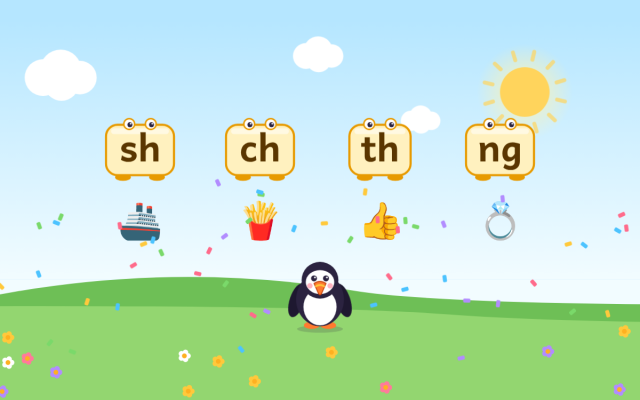
 TapLearn
Getting it ready…
Great work on chapter 1! To open the next chapters, ask a grown-up to take a look.
To play this game, ask a grown-up to take a look. There are lots of free games you can play right now too!
Create a free family account and your child can play every chapter of every game for 7 days, with no card needed. Their progress is kept. After that, the free plan is free for ever, and membership is £6.99 a month if you'd like to keep every chapter.
That's all the learning time for today. Great work! Flip will be ready to play again tomorrow.