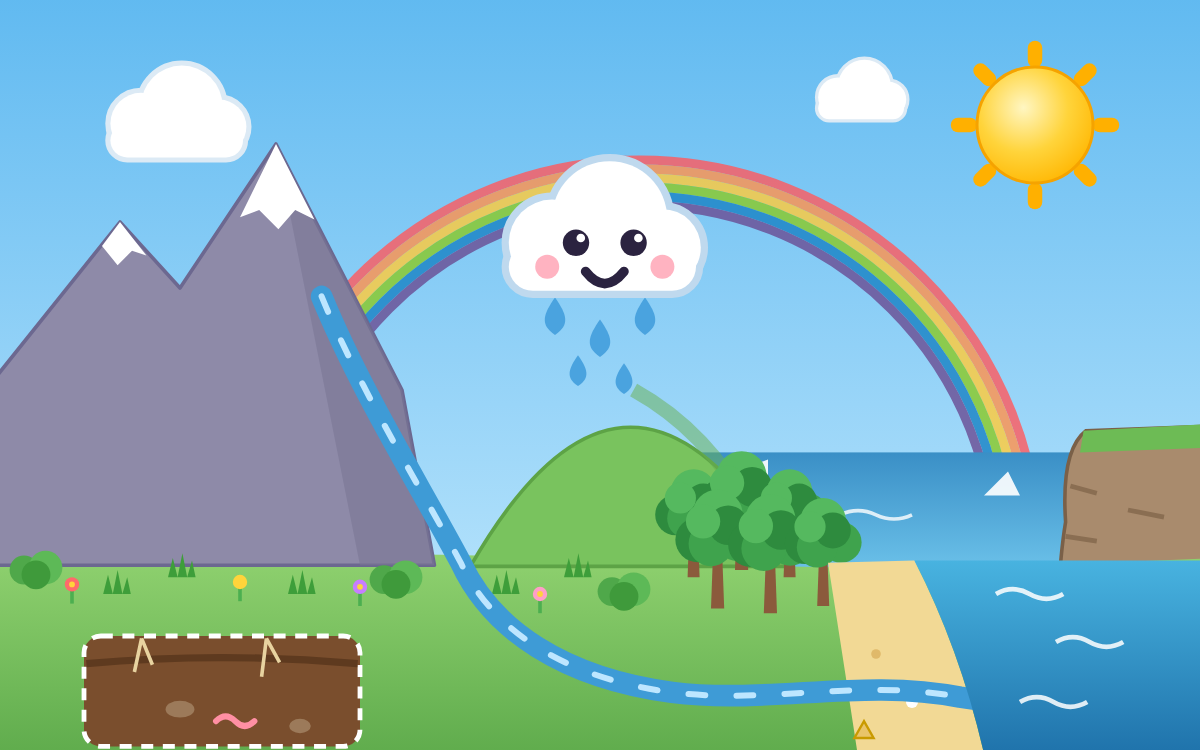
Weather and Seasons: Explore UK Skies with Pip the Cloud
Learn about weather and seasons in the UK: name the weather, watch a day and a year change, and find hot and cold places on the globe.
- Ages 5–7
- About 40 min
- Easy start
- Weather & Climate
Learn about weather and seasons in the UK: name the weather, watch a day and a year change, and find hot and cold places on the globe.
Years 1–2 geography · 1 Years 1–2 geography · 2
Years 1–2 geography · 2
Years 1–2 geography · 2 Years 1–2 geography · 1
Years 1–2 geography · 2
Years 1–2 geography · 1
What the chapters cover in the national curriculum in England:
Weather and Seasons Explorer is an interactive game that teaches children aged 5–7 about weather and seasons in the UK, where the hot and cold places of the world are, and key land and water words from KS1 Geography.
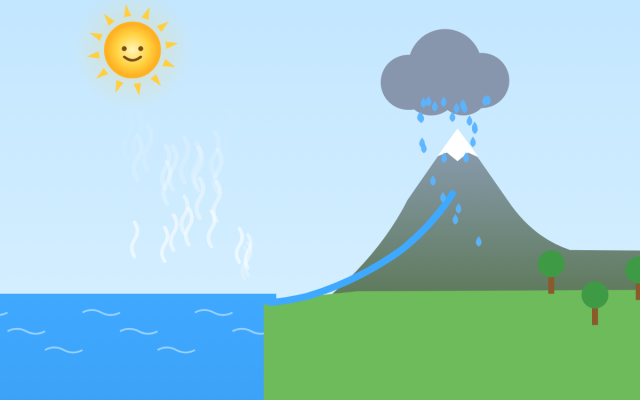
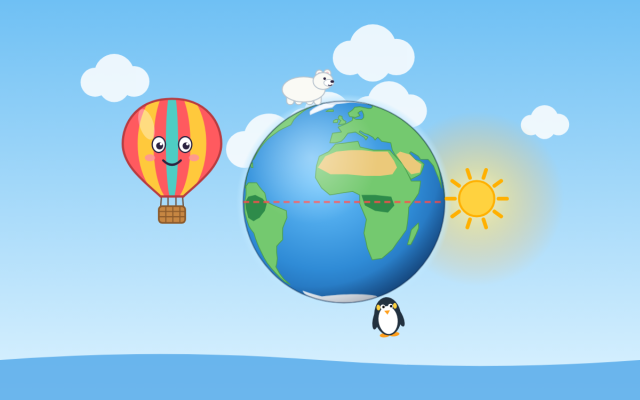
Children learn by doing: they press buttons to make it rain or snow, move the sun across the sky while a thermometer rises and falls, stamp symbols on a weekly weather chart and dress a child for the day. They meet the Equator, an imaginary line around the middle of the Earth where it is hot all year, and the icy North and South Poles. Along the way they tackle common mix-ups, such as thinking it always snows in a UK winter.
Pip the cloud reads every line aloud with captions, so early readers can play on their own. A 10-question challenge at the end checks what they remember.
The four seasons in the UK are spring (March to May), summer (June to August), autumn (September to November) and winter (December to February). Summer is usually the warmest season with the longest days, and winter is the coldest with the shortest days.
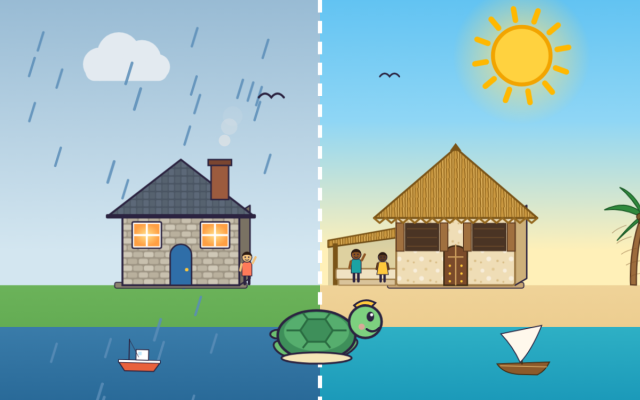
Weather is what the sky and air are doing right now, such as sunny, rainy or windy, and it can change several times in one day. A season is a part of the year lasting about three months, with its own usual pattern of weather.
Places near the Equator get strong sunshine all year round, so they stay hot, while the North and South Poles get much weaker sunshine and stay icy cold. The UK sits in between, so it has warm summers and cool winters.
It is made for children aged 5 to 7 and matches the KS1 Geography curriculum in England, pitched mainly at Year 1. Every instruction is read aloud with captions, so children who are still learning to read can play without help.
Playing all five chapters and the final 10-question challenge takes about 40 minutes. Children can pick any chapter from the map, stop whenever they like and carry on later from where they left off.


 TapLearn
Getting it ready…
Great work on chapter 1! To open the next chapters, ask a grown-up to take a look.
To play this game, ask a grown-up to take a look. There are lots of free games you can play right now too!
Create a free family account and your child can play every chapter of every game for 7 days, with no card needed. Their progress is kept. After that, the free plan is free for ever, and membership is £6.99 a month if you'd like to keep every chapter.
That's all the learning time for today. Great work! Flip will be ready to play again tomorrow.