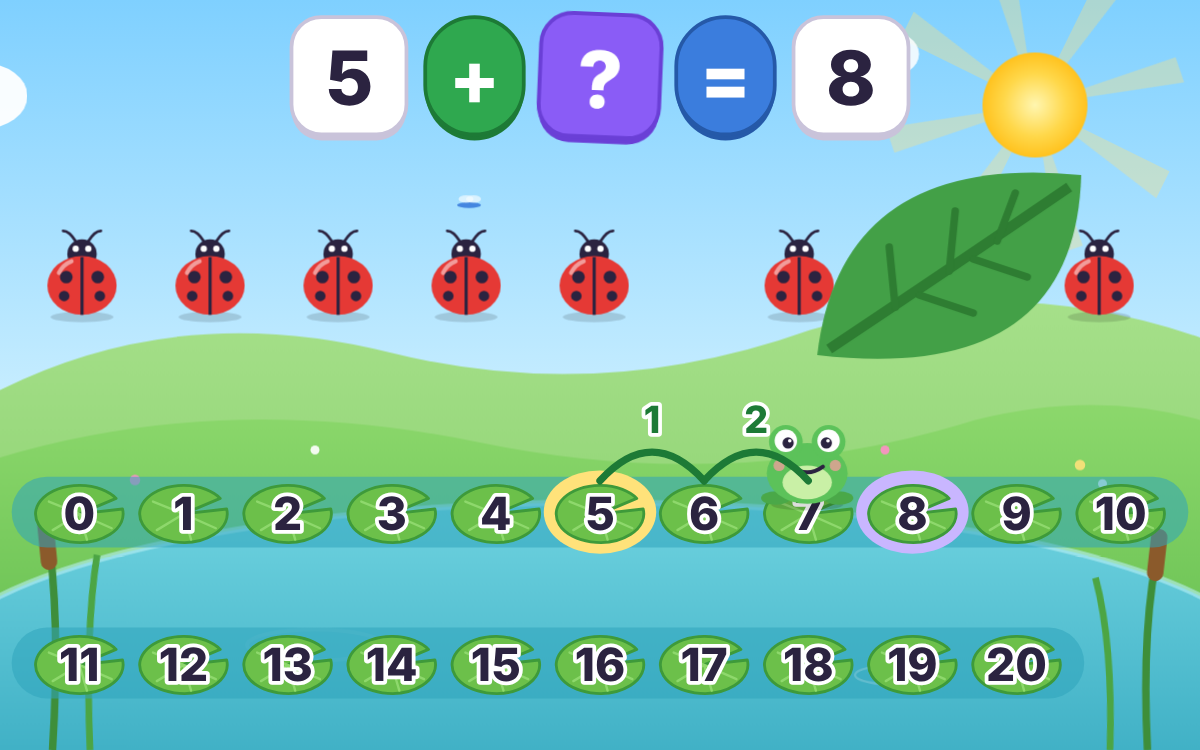
Adding and Subtracting to 20: Hop's Number Pond
Learn adding and subtracting to 20, including 0, with Hop the frog: read number sentences, hop on lily pads and crack missing number puzzles.
- Ages 5–7
- About 50 min
- Easy start
- Calculation
Learn adding and subtracting to 20, including 0, with Hop the frog: read number sentences, hop on lily pads and crack missing number puzzles.
Year 1 maths · 1
Year 1 maths · 2
Year 1 maths · 2
Year 1 maths · 3 Year 1 maths · 1
Year 1 maths · 3 Year 1 maths · 1
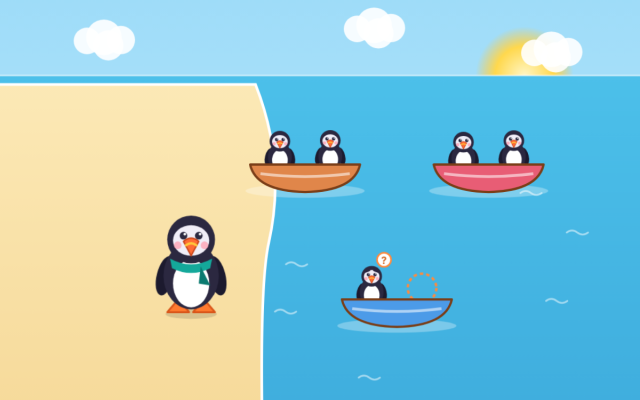
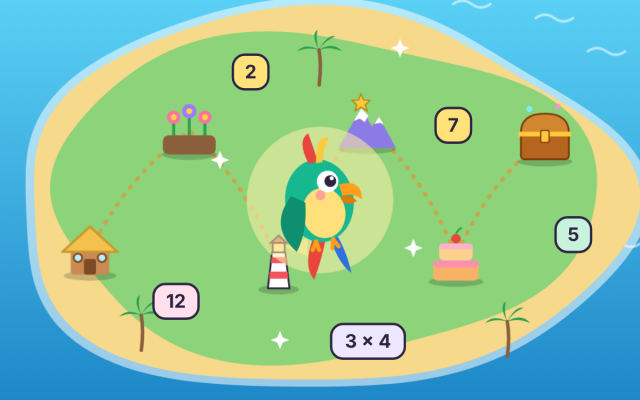
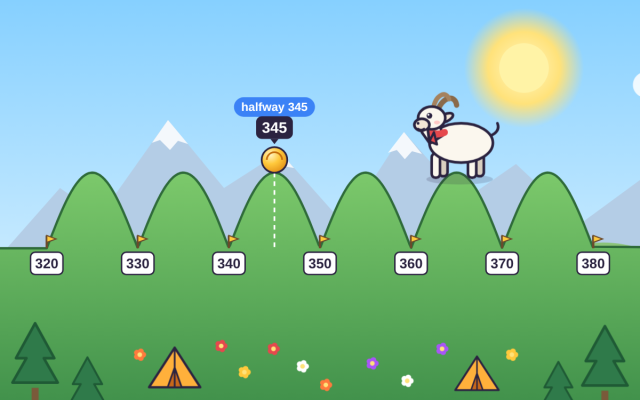
What the chapters cover in the national curriculum in England:
Adding and Subtracting to 20 is an interactive maths game that teaches children aged 5–7 (Year 1) to read and write number sentences with +, − and =, add and take away within 20, and solve one-step and missing number problems.
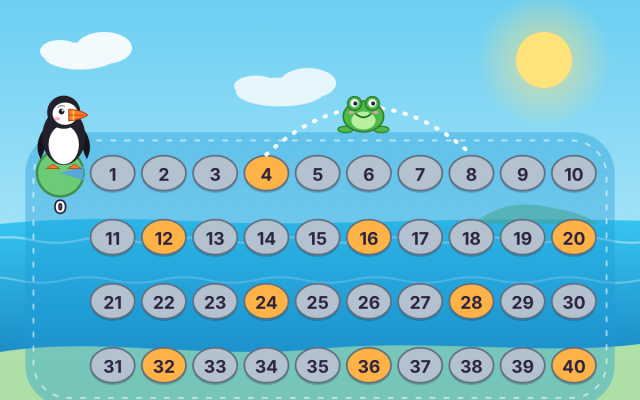
Hop the frog guides each step. Children bring ducks onto a pond, level a balance scale to see that = means 'is the same as', fill ten frames, and count on or count back along a lily-pad number track from 0 to 20. They act out story problems, choose plus or minus, and type their answers on a keypad.
Every chapter has a spoken animated introduction, hands-on teaching, practice with gentle worked examples after a mistake, and a short recap. A final 10-question challenge mixes everything together.
The equals sign means 'is the same as': the amount on one side matches the amount on the other. That is why 3 + 2 = 5 and 5 = 3 + 2 are both true, even though the answer is not at the end.
To count on, start on the first number and count forwards one step for each number you are adding. For 8 + 3, start on 8 and say 9, 10, 11. Count the jumps, not the number you start on, or the answer will be one too small.
Think of a story: some things were there, 9 went away and 7 are left. Put the 9 back with the 7 to find how many there were at the start, which is 16. Check it: 16 − 9 = 7.
It is designed for children aged 5 to 6 in Year 1, following the national curriculum in England for addition and subtraction. Seven-year-olds who want to revise number sentences, counting on and missing numbers within 20 will also find it useful.
The game has five chapters and a final 10-question challenge, taking about 50 minutes to play everything. Children can start any chapter from the pond map, and the Continue button takes them to the next chapter they have not finished.
 TapLearn
Getting it ready…
Great work on chapter 1! To open the next chapters, ask a grown-up to take a look.
To play this game, ask a grown-up to take a look. There are lots of free games you can play right now too!
Create a free family account and your child can play every chapter of every game for 7 days, with no card needed. Their progress is kept. After that, the free plan is free for ever, and membership is £6.99 a month if you'd like to keep every chapter.
That's all the learning time for today. Great work! Flip will be ready to play again tomorrow.