Start with your school's scheme
Schools in England teach early reading through systematic synthetic phonics, using a programme the school has chosen. Each programme teaches sounds in a set order, often with its own pictures, rhymes and actions. It helps your child if home matches school, so it's worth asking the teacher:
- Which sounds has my child learned this week?
- Is there a video showing how the school says the sounds?
- Which tricky words are they practising?
Many schools run phonics sessions for Reception parents or share short videos. They're well worth a look, even if you learned to read a different way.
Say the sounds pure
The most common slip for parents is adding "uh" to the end of sounds: "muh", "suh", "tuh". That makes blending harder, because "suh-a-tuh" doesn't sound like "sat".
- Stretch the sounds that can be stretched: "mmm", "sss", "fff", "lll".
- Keep short sounds short and crisp: "t", "p", "k", with no "uh".
- Use letter sounds rather than letter names when reading ("sss", not "ess"). Children learn letter names too, but those are for other jobs, such as alphabetical order.
Blending and segmenting
Blending is for reading. Your child says each sound in a word and pushes them together to hear the word: "c-a-t, cat". Start with three-sound words and say the sounds closer and closer together until the word pops out.
Segmenting is for spelling. Your child hears a word and breaks it into its sounds: "dog, d-o-g". Many children count the sounds on their fingers before writing them.
You can practise both out loud, with no books or screens. Try "robot talk" around the house: "Can you find your h-a-t?" or "Let's go to the sh-o-p." Then swap, and let your child give you robot instructions.
Sound buttons, digraphs and tricky words
You'll probably see some new terms in your child's book bag:
- Sound buttons are dots and dashes under a word. A dot goes under a letter that makes a sound on its own; a dash goes under two or three letters that make one sound together. Your child touches each button as they say the sound, then blends.
- A digraph is two letters making one sound, such as "sh", "ch", "ee" or "ai". A trigraph is three letters making one sound, such as "igh" or "air".
- Tricky words (also called common exception words, or "heart words" in some schools) have a part that doesn't follow the phonics your child knows yet, such as "the", "said" or "was". Children learn the tricky part by heart and sound out the rest.
A few tricky words on cards make a quick game of snap or a word hunt in a favourite book.
Little and often
Five to ten minutes a day is plenty in Reception and Year 1. Stop while your child is still enjoying it. Go over sounds they know before adding new ones, and praise effort. If a sound keeps getting muddled, mention it to the teacher, who may already be working on it in class.
In June of Year 1, children take the phonics screening check: they read 40 words aloud to a teacher, including some made-up "alien" words. Everyday practice like this is the right preparation; there's no need for anything special. Our guide to the Year 1 phonics screening check explains how it works.
Phonics games on TapLearn
TapLearn's phonics games give short practice with letter sounds, blending, letter teams and tricky words. The skills report shows which sounds look secure and which ones your child still mixes up, which can be useful to share with the teacher.
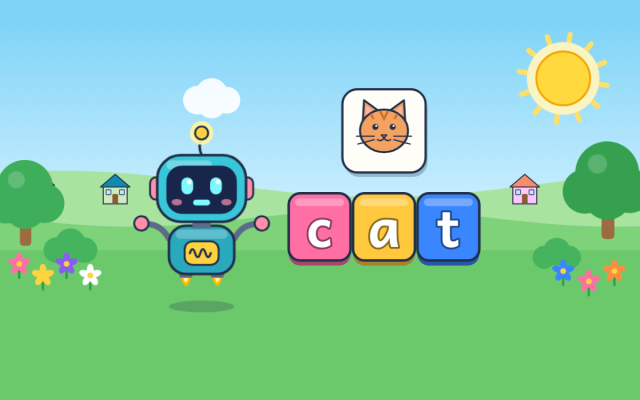
Letter Sounds and Blending: Read Words with Bip the Robot
Learn letter sounds and blending: match letters to sounds, hear first sounds and push sounds together to read…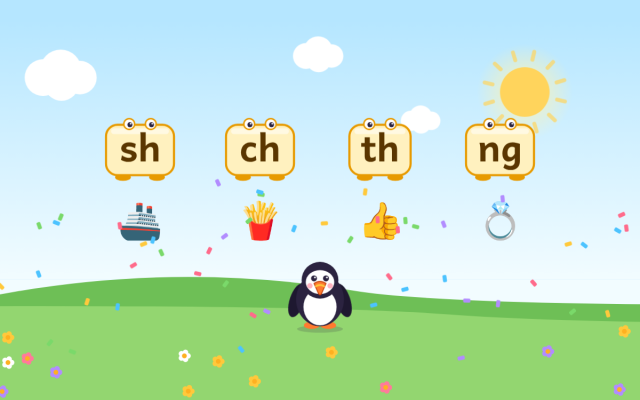
Phonics Digraphs: Two Letters, One Sound with Pip
Learn phonics digraphs such as sh, ch, ai and igh. Drag letters into teams, tap sound buttons and blend words…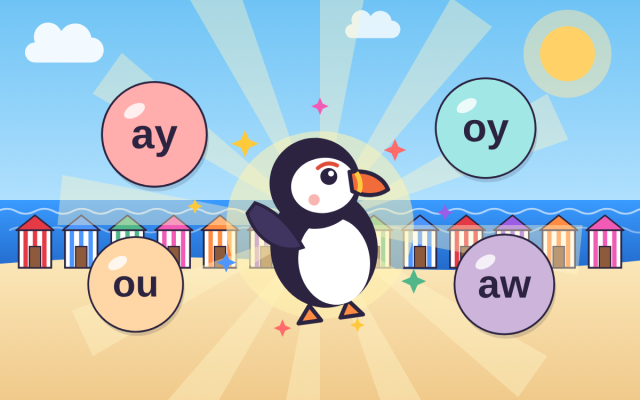
Digraphs and Trigraphs: A Letter Teams Island Adventure
Learn digraphs and trigraphs like ay, oy, ir and are, plus split digraphs, by joining letter teams, popping s…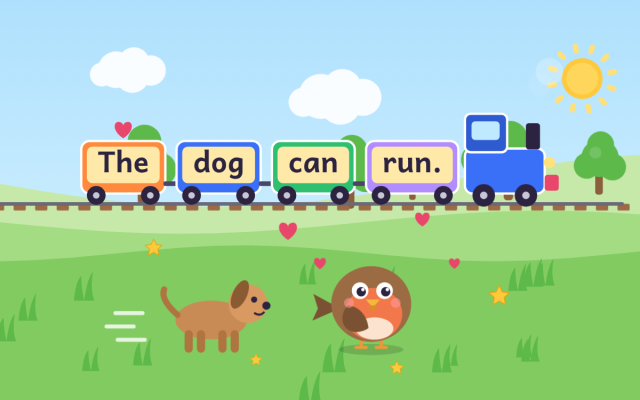
Tricky Words for Reception: Read with Pip the Robin
Learn to read the tricky words the, I, to, no and go, spot the tricky part of each, then read sentences and a…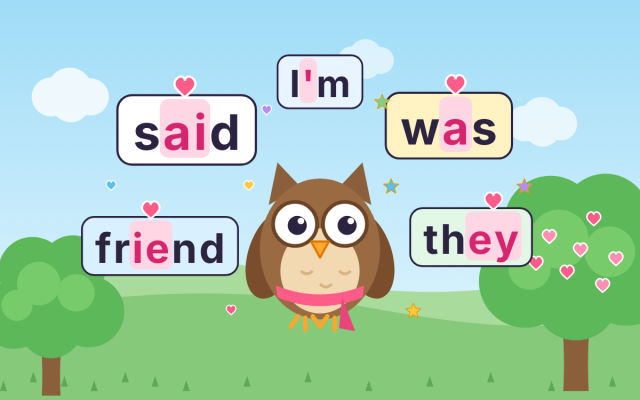
Year 1 Tricky Words: Heart Words and Days of the Week
Learn to read and spell Year 1 tricky words and the days of the week, find each word's tricky part and read I…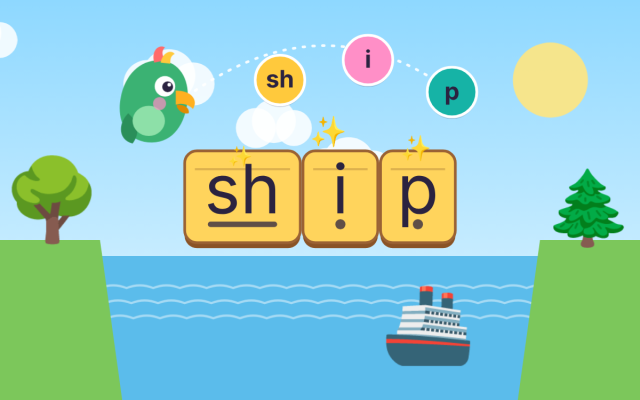
 TapLearn