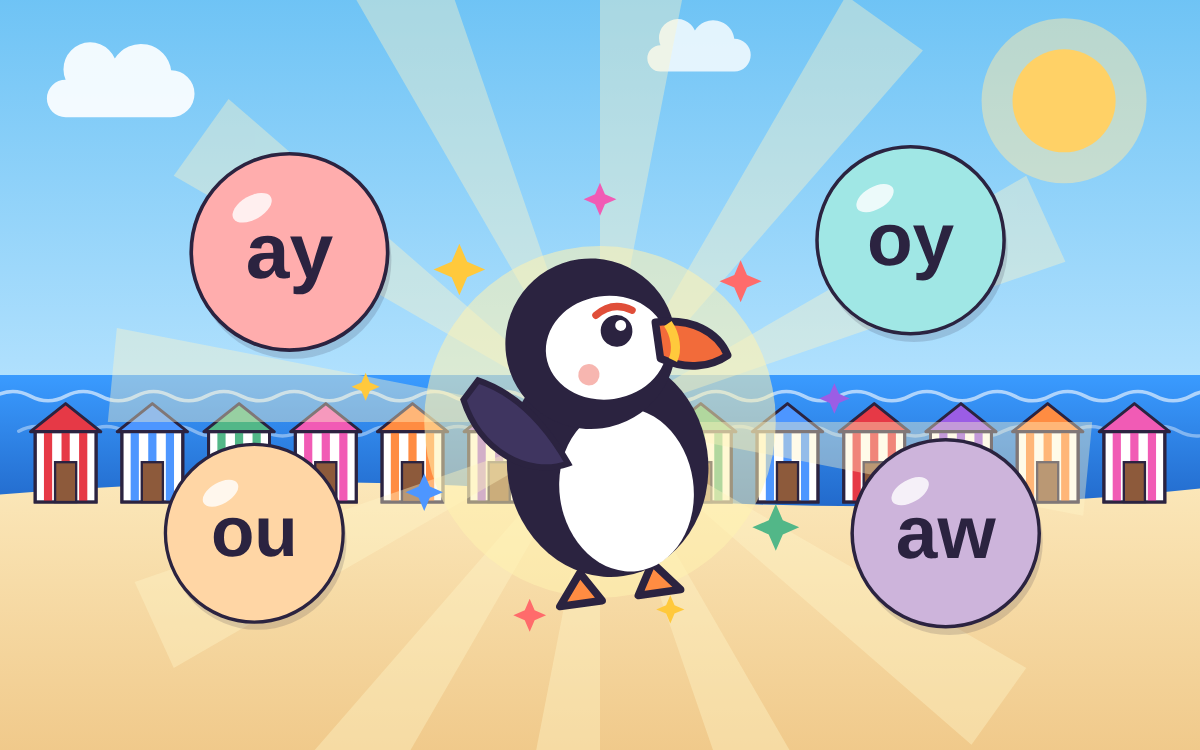
Digraphs and Trigraphs: A Letter Teams Island Adventure
Learn digraphs and trigraphs like ay, oy, ir and are, plus split digraphs, by joining letter teams, popping sound bubbles and spelling words.
- Ages 5–7
- About 45 min
- Easy start
- Phonics & Spelling
Learn digraphs and trigraphs like ay, oy, ir and are, plus split digraphs, by joining letter teams, popping sound bubbles and spelling words.
Year 1 english · 1
Year 1 english · 1
Year 1 english · 1 Year 1 english · 2
Year 1 english · 1
Year 1 english · 2
Year 1 english · 2
What the chapters cover in the national curriculum in England:
Digraphs and Trigraphs: A Letter Teams Island Adventure is an interactive phonics game that teaches children aged 5–7 to read and spell the Year 1 vowel digraphs, trigraphs and split digraphs from the national curriculum in England.
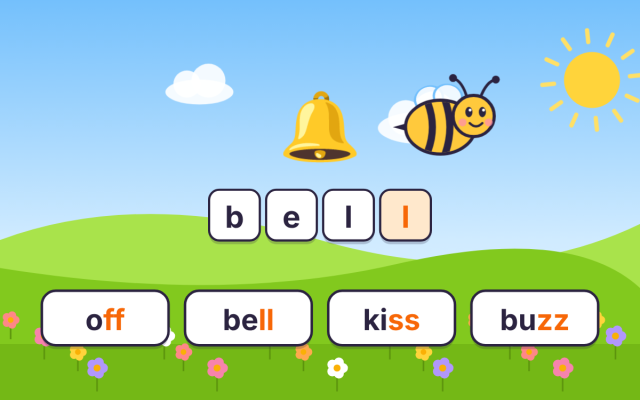
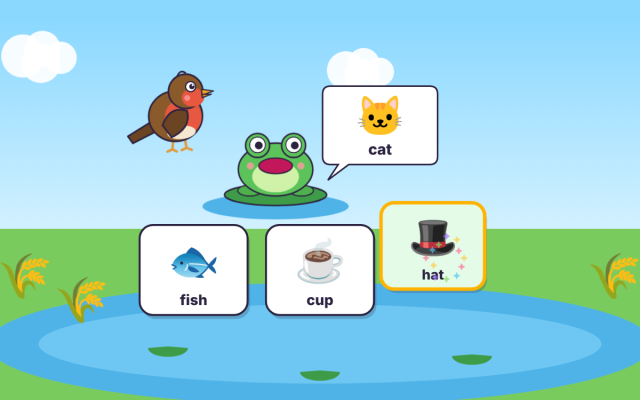
Guided by Pip the puffin, children tap letters to join them into teams, hear each new sound with an example word, and see sound buttons: a dot under a single letter, a line under a letter team and a curved arc for a split digraph. They pop sound bubbles against the clock, match words to pictures and add an e to turn cap into cape.
Later places practise choosing ai or ay and oi or oy, trying both sounds for ow, ie and ea, and spelling words one sound box at a time. A 12-question challenge at the lighthouse brings everything together.
A digraph is two letters that work together to make one sound, such as ay in play or ir in bird. Children learn to see the pair as one unit instead of sounding out each letter separately.
A digraph uses two letters to make one sound, while a trigraph uses three letters to make one sound. For example, oy in boy is a digraph, and are in hare and ore in snore are trigraphs.
A split digraph is a vowel team with another letter in the middle, such as a-e in cake or i-e in kite. The e at the end works with the earlier vowel, so cap becomes cape and kit becomes kite.
It is designed for children aged 5 to 7, matching Year 1 phonics and spelling in the national curriculum in England. Older children who are still unsure of these sounds can use it for practice too.
The game has six chapters plus a 12-question final challenge, and playing everything takes about 45 minutes. Each chapter has a short animated intro, hands-on activities with spoken guidance, and can be played on its own.
 TapLearn
Getting it ready…
Great work on chapter 1! To open the next chapters, ask a grown-up to take a look.
To play this game, ask a grown-up to take a look. There are lots of free games you can play right now too!
Create a free family account and your child can play every chapter of every game for 7 days, with no card needed. Their progress is kept. After that, the free plan is free for ever, and membership is £6.99 a month if you'd like to keep every chapter.
That's all the learning time for today. Great work! Flip will be ready to play again tomorrow.