What you'll learn
- Solve adding stories by putting two groups together
- Solve take-away stories and find how many are left
- Find the difference by pairing up two groups
- Decide whether a story needs adding or subtracting
- Understand that the equals sign means "is the same as"
- Find missing numbers in number sentences like 7 =? − 9
Chapter by chapter
- Adding stories: how many altogether? Free to try
Year 1 maths · 1
- Take-away stories: how many are left?
Year 1 maths · 1
- Comparing stories: how many more or fewer?
Year 1 maths · 1
- Add or subtract: choosing the right one
Year 1 maths · 1
- Missing numbers: problems like 7 = ? − 9
Year 1 maths · 1
- Story problem challenge (10 questions)
What the chapters cover in the national curriculum in England:
- Year 1 maths: Solve one-step problems that involve addition and subtraction, using concrete objects and pictorial representations, and missing number problems such as 7 = ? − 9
About this adventure
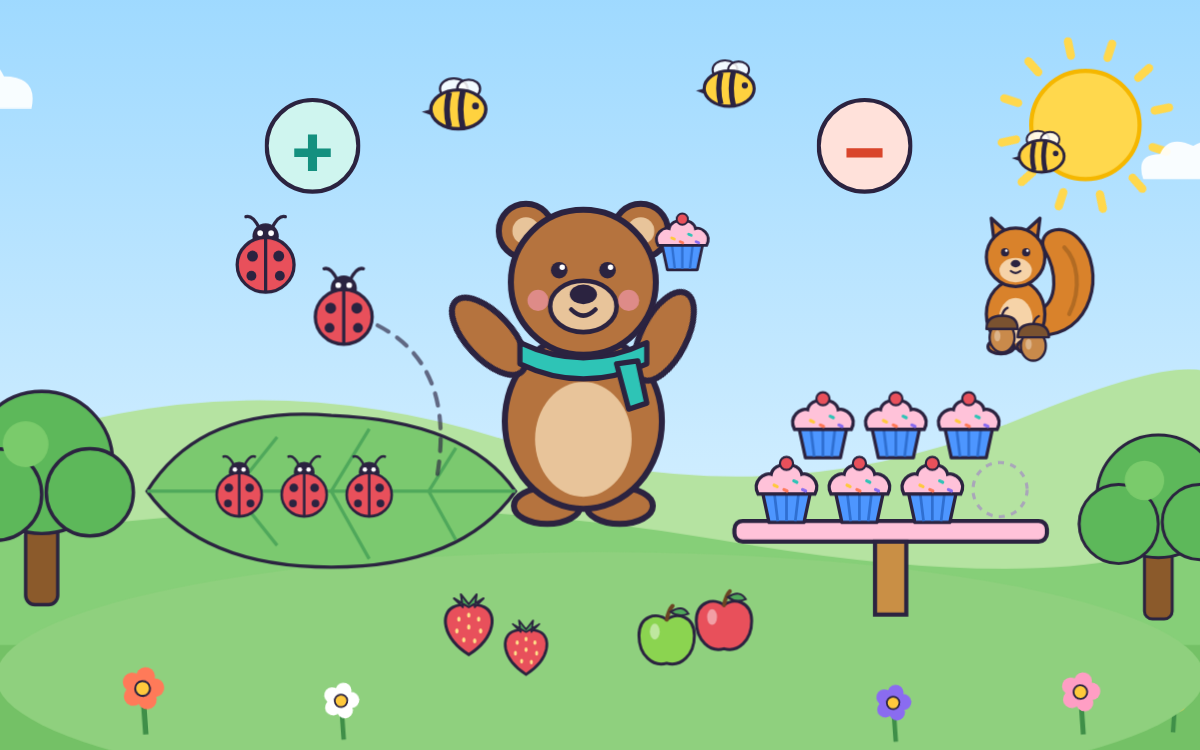
Story Problem Park is an interactive game that teaches children aged 5 to 7 how to solve one-step addition and subtraction word problems, matching the Year 1 maths curriculum in England. Bramble the bear guides them round a park where every place has stories to act out.
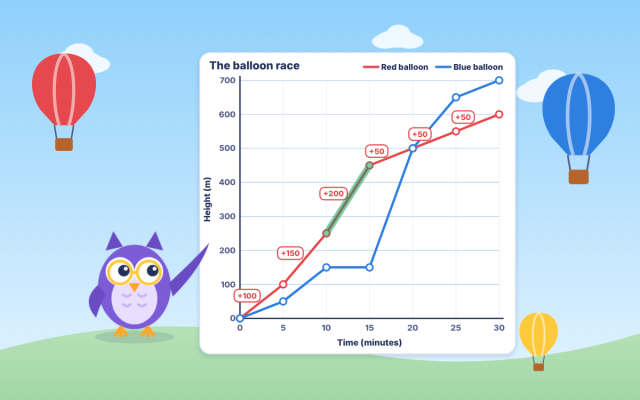
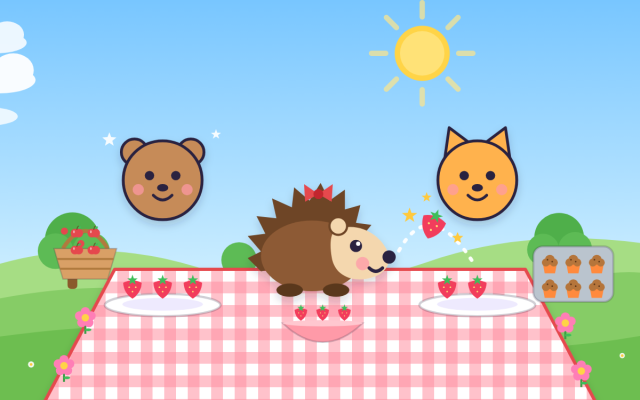
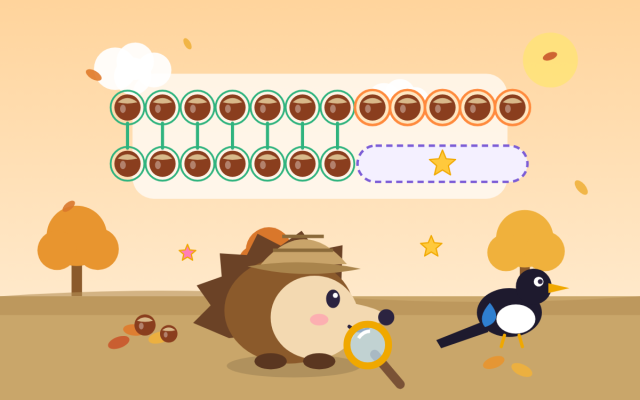
Children tap to bring ladybirds onto a leaf, let balloons float away and pair up strawberries, then draw the same stories with counters in ten frames. They learn that the word "more" doesn't always mean add: picturing whether things join, go away or are being compared tells them which to use.
The last place tackles missing number problems. A balance scale shows that the equals sign means "is the same as", and part-whole models help children decide whether the hidden number is a part or the whole. A 10-question challenge at the end checks everything.
Questions and answers
How do you teach addition and subtraction word problems to a 5 year old?
Act the story out with real objects or pictures first, then write the number sentence. Asking whether things are joining, going away or being compared helps a child choose between adding and subtracting.
Does the word "more" always mean add in a maths problem?
No, "more" does not always mean add. In "Tom has 8 cars and Jo has 5. How many more does Tom have?", the two groups are being compared, so you subtract: 8 − 5 = 3.
How do you solve a missing number problem like 7 = ? − 9?
Work out whether the missing number is a part or the whole. In 7 =? − 9, the missing number is the whole and 7 and 9 are its parts, so add them: 7 + 9 = 16.
What age is Story Problem Park for?
It is made for children aged 5 to 7 and matches the Year 1 maths curriculum in England. Older children who find word problems tricky can use it for practice, as all the numbers stay within 20.
What is in the game and how long does it take?
There are five chapters, two optional warm-ups and a 10-question challenge, taking about 40 minutes in total. Each chapter has a spoken introduction, hands-on story activities and a short recap with a fun fact.



 TapLearn