Expanding Sentences: Stretch Short Sentences with Pip
Learn how to expand sentences with adjectives, commas, -ly adverbs and where, when and why, by building sentences that come to life in animated scenes.
Online game, chapter 1 free · Year 3 (KS2) · ages 7–9 · national curriculum in England · no adverts · plays on a phone, tablet or computer · no sign-up to start.
An online English game for Year 3 (KS2). It covers the national curriculum in England, Years 3–4 english: “Draft and write by: composing and rehearsing sentences orally (including dialogue), progressively building a varied and rich vocabulary and an increasing range of sentence structures (English appendix 2)”, and 6 more statements listed under the chapters.
5 short chapters, about 40 minutes in all. Children can stop after any chapter.
Start playing for free. Plays in the browser on phones, tablets and computers: no app, no adverts.
Free for teachers: every chapter on the whiteboard with a free teacher account.
Last updated · Checked against the national curriculum in England by the TapLearn team
What you'll learn
Find the who (noun) and the doing word (verb) in a sentence
Add adjectives before a noun to build an expanded noun phrase
Use a comma between two adjectives, as in the tiny, purple frog
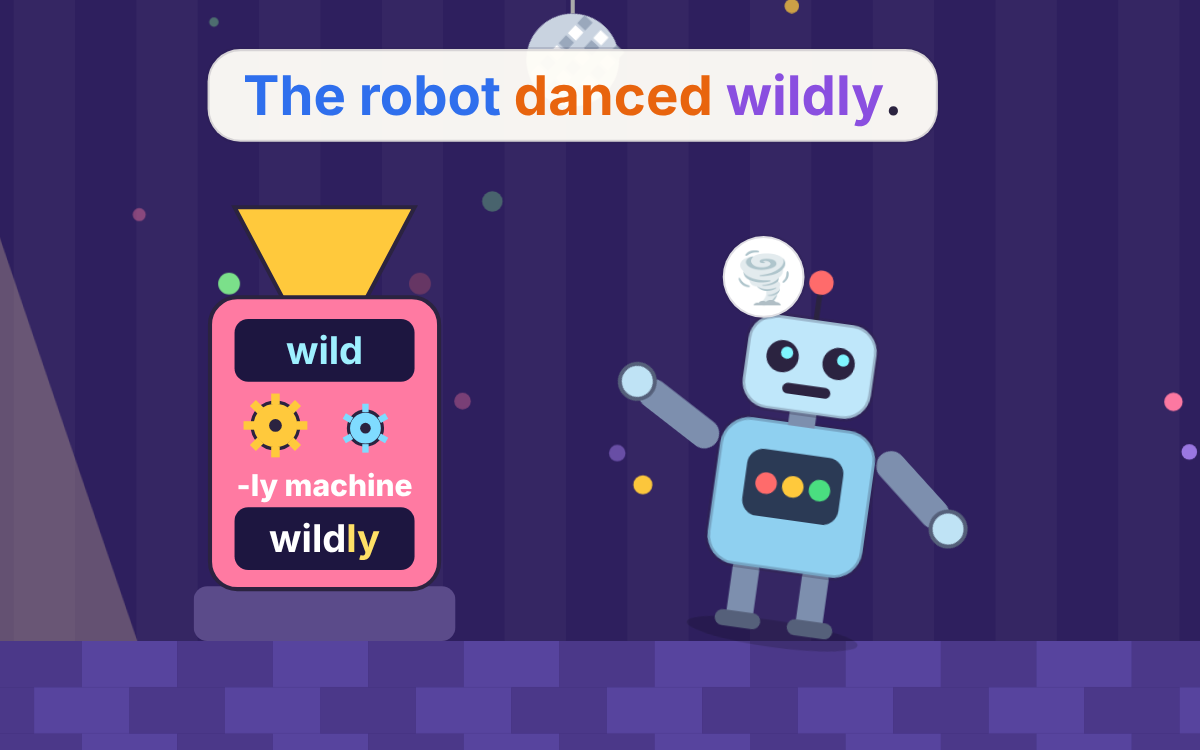
Turn adjectives into adverbs with -ly, including happy to happily
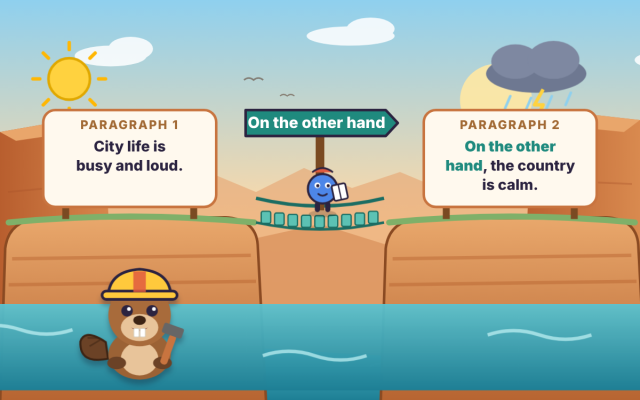
Add where, when or why using prepositions and the conjunction because
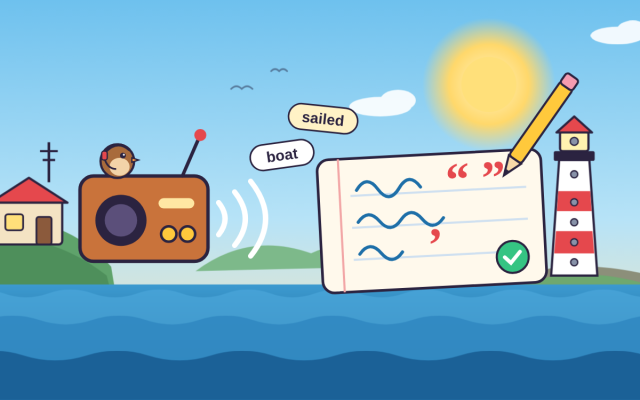
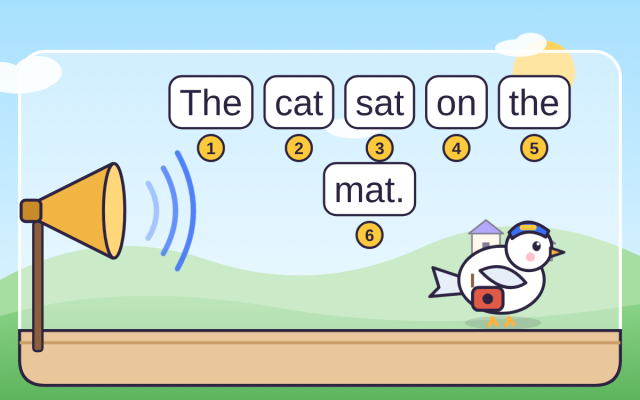
Read a sentence aloud to check it makes sense and improve it
What the chapters cover in the national curriculum in England:
Years 3–4 english: Draft and write by: composing and rehearsing sentences orally (including dialogue), progressively building a varied and rich vocabulary and an increasing range of sentence structures (English appendix 2)
Year 2 english: Sentence: expanded noun phrases for description and specification
Year 2 english: Punctuation: commas to separate items in a list
Year 2 english: Word: use of the suffixes –er, –est in adjectives and the use of –ly in Standard English to turn adjectives into adverbs
Year 3 english: Sentence: expressing time, place and cause using conjunctions, adverbs, or prepositions
Years 3–4 english: Develop their understanding of the concepts set out in English appendix 2 by: using conjunctions, adverbs and prepositions to express time and cause
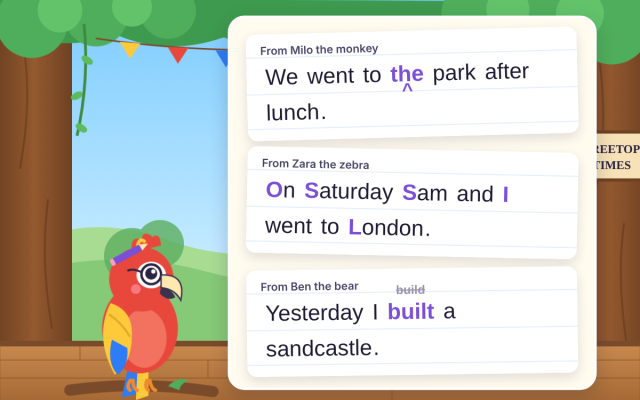
Years 3–4 english: Evaluate and edit by: assessing the effectiveness of their own and others' writing and suggesting improvements
🖨️ Printable worksheets
5 printable Expanding Sentences worksheets for Year 3, one for each of 5 chapters of this game, to print and do away from the screen, with answers for grown-ups.
Expanding Sentences is an interactive game that teaches children aged 7–9 how to turn a short, simple sentence into a longer, more interesting one. It follows Year 3 of the English national curriculum, with quick recaps of the Year 2 skills it builds on.
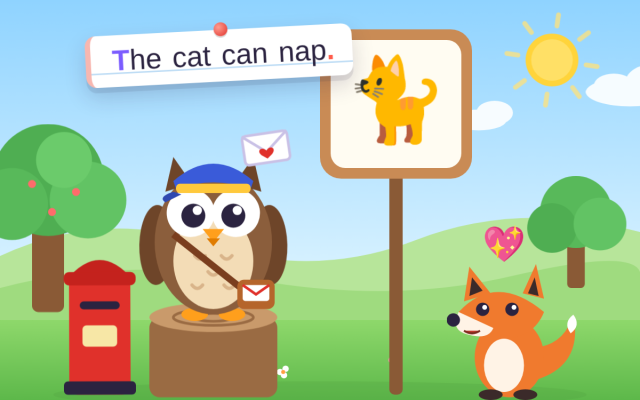
Guided by Pip the pencil, players start with a sentence's who (the noun) and doing word (the verb). They add adjectives to make an expanded noun phrase, an adverb that says how, and extra information that says where, when or why, using prepositions such as under or after and the conjunction because. Each word they add changes the picture, so a frog shrinks or the sky turns to night.
Children then act as sentence detectives. They read sentences aloud, spot words that don't make sense and suggest improvements to someone else's writing.
Questions and answers
How do you expand a sentence?
You expand a sentence by adding detail to the who and the doing word. Add adjectives before the noun, an adverb that says how, and extra information that says where, when or why, as in 'The tiny, green frog jumped happily into the pond.'
Where does the comma go when you use two adjectives?
The comma goes between the two adjectives, not before the noun, as in 'the shy, brown mouse'. A handy check is to say 'and' between them: if 'shy and brown' makes sense, the comma fits there.
How do you turn an adjective into an adverb?
Most adjectives become adverbs when you add -ly, so slow becomes slowly and quick becomes quickly. If the adjective ends in y, change the y to i first, so happy becomes happily.
What age is the expanding sentences game for?
It is made for children aged 7 to 9 and follows Year 3 of the English national curriculum. It also includes quick recaps of the Year 2 skills it uses, such as adjectives, commas in lists and -ly words.
What is in the expanding sentences game and how long does it take?
The game has five chapters and a ten-question challenge, and playing everything takes about 40 minutes. Children sort words, place commas, feed words into an -ly machine, fix mistakes in a sentence theatre and type their own stretched sentence.
We count visits to make TapLearn better.We use one cookie, only on this site, to see how families find and use it. No adverts, and nothing is shared.One cookie, only on this site. No adverts.How we measure




 TapLearn