What you'll learn
- What a pronoun is and which noun it stands for
- How to swap repeated nouns for pronouns across sentences
- When to keep a noun because a pronoun would be unclear
- Using possessive pronouns like mine, hers and theirs without apostrophes
- The difference between a determiner like my and a possessive pronoun
- How to edit writing so pronouns match and stay consistent
Chapter by chapter
- Pronouns: words that stand in for nouns
Years 3–4 english · 1 Year 4 english · 2
- Avoiding repetition: swapping nouns for pronouns
Years 3–4 english · 1 Year 4 english · 3
- Clear writing: when to use a noun instead of a pronoun
Years 3–4 english · 1 Year 4 english · 3
- Possessive pronouns: mine, yours, his, hers, ours and theirs
Year 4 english · 2 Year 4 english · 3
- Grammar words: determiner, pronoun, possessive pronoun and adverbial
Year 4 english · 2
- Editing: checking pronouns for accurate, consistent writing
Years 3–4 english · 4 Year 4 english · 3
- Pronoun Champion challenge (12 questions)
What the chapters cover in the national curriculum in England:
- Years 3–4 english: Develop their understanding of the concepts set out in English appendix 2 by: choosing nouns or pronouns appropriately for clarity and cohesion and to avoid repetition
- Year 4 english: Terminology: determiner, pronoun, possessive pronoun, adverbial
- Year 4 english: Text: appropriate choice of pronoun or noun within and across sentences to aid cohesion and avoid repetition
- Years 3–4 english: Evaluate and edit by: proposing changes to grammar and vocabulary to improve consistency, including the accurate use of pronouns in sentences
About this adventure
Pronouns for Kids is an interactive grammar game that teaches children aged 7–10 how to choose between a noun and a pronoun so their writing is clear and doesn't repeat itself, matching the Year 4 English curriculum. A pronoun is a word such as he, she, it or they that stands in for a noun.
Players fly round Pronoun Town with Oli, an editor owl. They tap pronouns in sentences, swap repeated nouns for pronouns in Echo Cave, and clear the fog on Foggy Bridge by putting a noun back when 'he' or 'she' could mean two people. In the Lost Property Office they return items using possessive pronouns, which never take an apostrophe.
Later chapters sort words into determiners, pronouns, possessive pronouns and adverbials, then edit short passages. A final 12-question challenge, including typed answers, checks everything.
Questions and answers
What is a pronoun, in simple words?
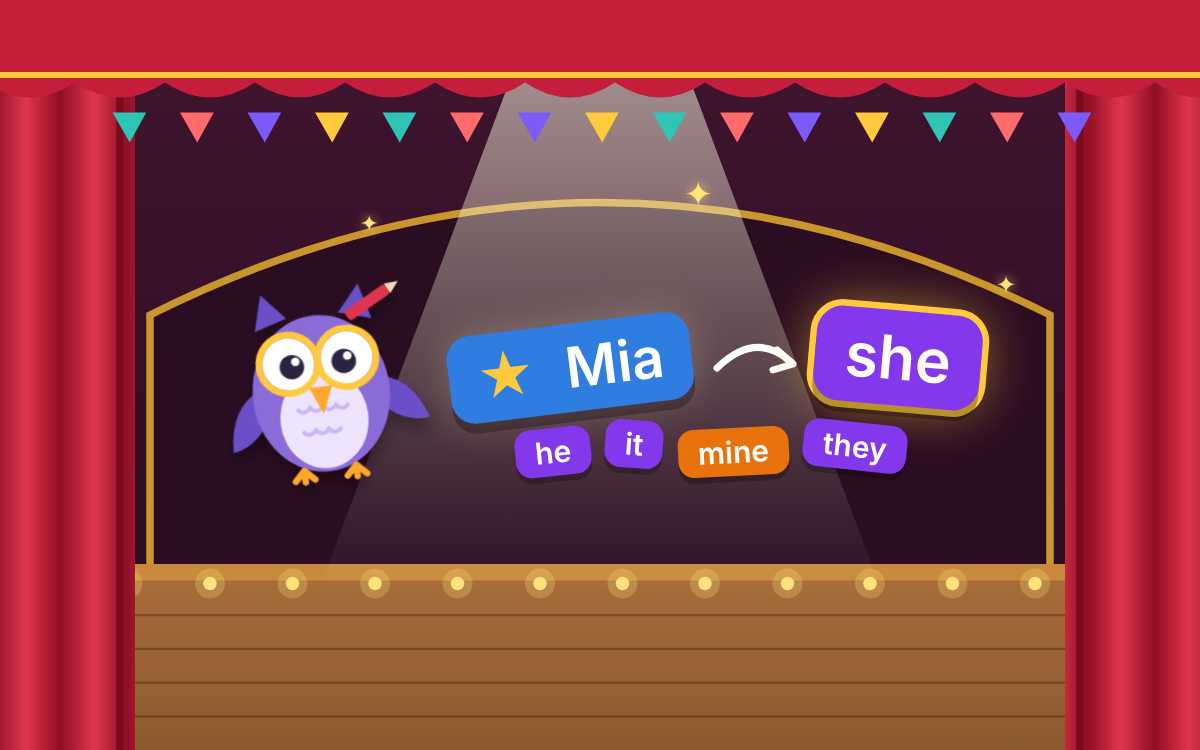
A pronoun is a short word that stands in for a noun, such as he, she, it, we or they. Instead of writing Mia twice, you can write Mia smiled and then she waved, so the sentence doesn't repeat itself.
When should you use a noun instead of a pronoun?
Use the noun when a pronoun could mean more than one person or thing. In Leo and Sam played football and he scored, we can't tell who scored, so writing Sam scored makes the meaning clear.
What is the difference between my and mine?
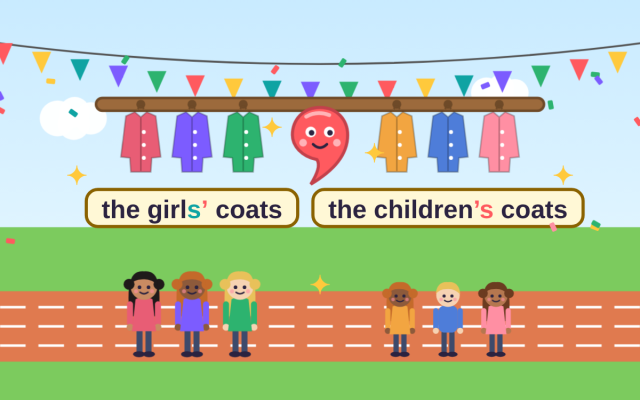
My is a determiner because it comes before a noun, as in my coat. Mine is a possessive pronoun because it stands on its own, as in the coat is mine. Possessive pronouns like hers and theirs never have an apostrophe.
What age is this pronouns game for?
It is made for children aged 7 to 10 and follows the Year 4 English curriculum in England. Younger children can play with an adult reading along, and the narrator speaks every instruction aloud.
How long does the pronouns game take and what does it include?
Playing everything takes about 45 minutes. There are six chapters, each with an animated introduction, hands-on activities and a recap, plus a skippable noun refresher and a 12-question final challenge with some typed answers.
 TapLearn