Dictation for Kids: Listen and Write at Echo Bay
Learning gameYears 3–4 · Start for free

Dictation for Kids: Listen and Write at Echo Bay

Learn to write dictated sentences from memory with correct spellings, capitals, speech marks and apostrophes by taking radio messages at a seaside station.

Online game, chapter 1 free · Years 3 and 4 (KS2) · ages 7–9 · national curriculum in England · no adverts · plays on a phone, tablet or computer · no sign-up to start.

Dictation: Listen and Write for other years: KS1

Play the game

At a glance

An online English game for Years 3 and 4 (KS2). It covers the national curriculum in England, Years 3–4 english: “Write from memory simple sentences, dictated by the teacher, that include words and punctuation taught so far”.

5 short chapters, about 30 minutes in all. Children can stop after any chapter.

Start playing for free. Plays in the browser on phones, tablets and computers: no app, no adverts.

Free for teachers: every chapter on the whiteboard with a free teacher account.

Last updated · Checked against the national curriculum in England by the TapLearn team

What you'll learn

  • Remember a whole spoken sentence by saying it back and chunking it
  • Write dictated sentences with capital letters and the right end mark
  • Use commas to separate items in a list
  • Put inverted commas around spoken words with punctuation inside
  • Use apostrophes for short forms and for singular and plural possession
  • Check writing for capitals, spellings and punctuation, then correct it

Chapter by chapter

  1. Listen and remember a sentence Start playing for free

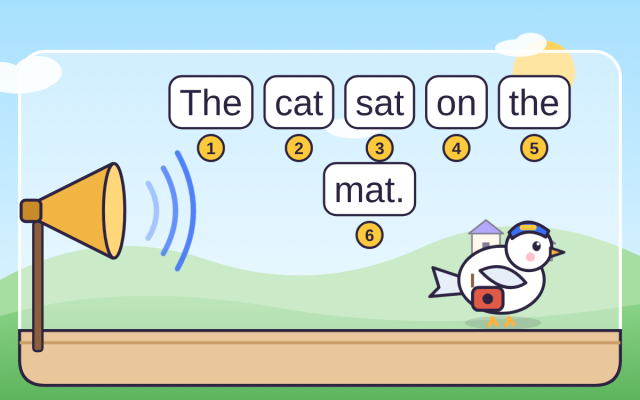
    Learn a dictation routine: listen to the whole sentence, say it back, then write. Children rebuild heard sentences from word and chunk tiles and count the words to check nothing is missing.

    Years 3–4 english

  2. Write it down: capitals, spellings and end marks

    Write dictated sentences from memory with capital letters for sentences, names and months, correct Year 3 and 4 spellings, commas in a list, and a full stop or question mark.

    Years 3–4 english

  3. Speech marks: writing what people say

    Punctuate direct speech with inverted commas: place speech marks around the spoken words, keep the punctuation inside, add a comma before or after the speech, then write dictated speech sentences.

    Years 3–4 english

  4. Apostrophes: short forms and belonging

    Place apostrophes where letters are missing in short forms like didn't, and to show possession with one owner (the dog's bone), more than one owner (the dogs' bones) and irregular plurals like children's.

    Years 3–4 english

  5. Check and correct your dictation

    Proofread a dictated sentence against what was heard, using a capitals, spellings and punctuation check (the CSP check) to find and correct mistakes, then write and check a full message.

    Years 3–4 english

  6. Message Master: the big dictation challenge (6 questions)

See every English chapter in the chapter library

What the chapters cover in the national curriculum in England:

  1. Years 3–4 english: Write from memory simple sentences, dictated by the teacher, that include words and punctuation taught so far

About this adventure

Dictation for Kids: Listen and Write is an interactive game that teaches children aged 7–9 how to hear a sentence, hold it in their memory and write it down accurately, as set out in the Year 3 and 4 English curriculum.

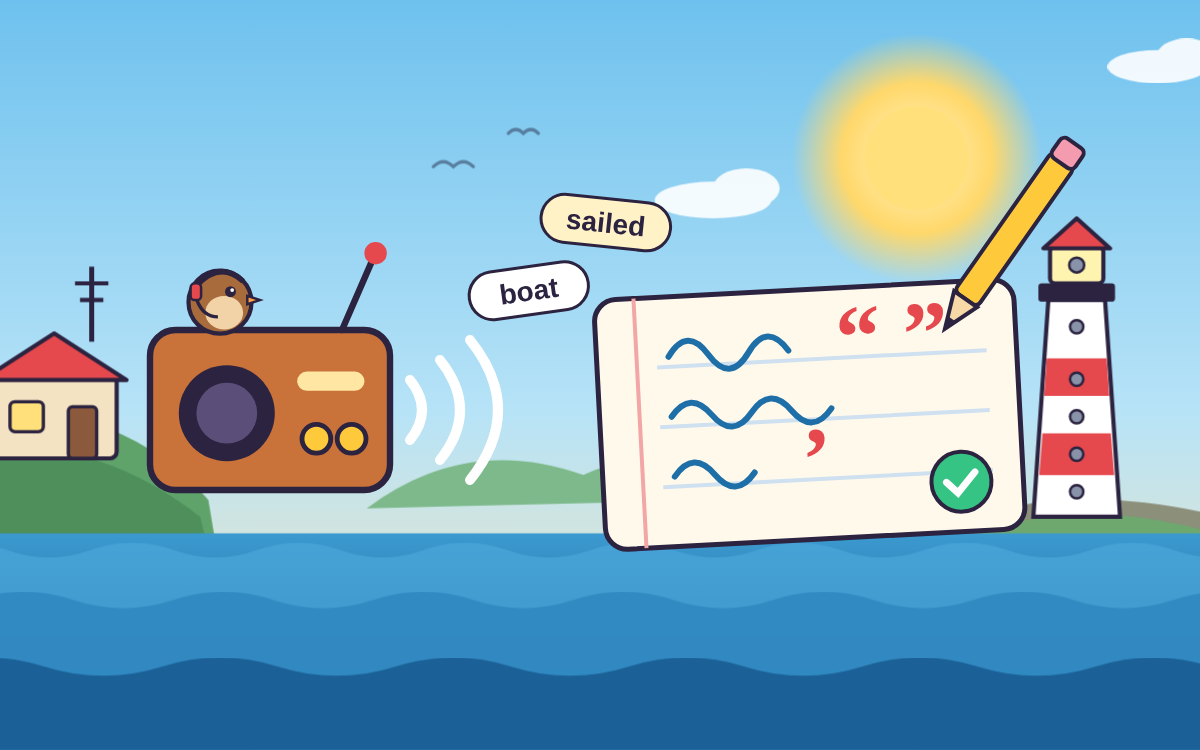
Players run a radio message station by the sea. They hear messages from boats, say them back, and type them on a message pad, then check them for capital letters, spellings and end marks. Along the way they learn to punctuate direct speech with inverted commas (speech marks), to place apostrophes in short forms such as can't, and to show belonging with one owner (the dog's bone) or more than one (the dogs' bones).

Every answer gets clear feedback that shows exactly which word or mark needs fixing. A final challenge of six messages brings all the skills together.

Questions and answers

What is dictation in primary school?

Dictation is when a teacher reads a sentence aloud and children write it from memory. In Years 3 and 4 it checks that children can use the spellings and punctuation they have learnt, such as capital letters, full stops, speech marks and apostrophes, all at once.

How can my child get better at dictation?

Teach a simple routine: listen to the whole sentence, say it back out loud, then write it in chunks. Afterwards, check capitals, spellings and punctuation. Short, regular practice with sentences that use known spellings builds memory and accuracy.

Where do speech marks go in a sentence?

Speech marks, also called inverted commas, go around only the words someone actually says. The punctuation that belongs to those words goes inside, as in Mia said, "The boat is late." When the speech comes first, a comma goes inside before said.

What age is this dictation game for?

The game is pitched at children aged 7 to 9 in Years 3 and 4, matching the national curriculum statement about writing dictated sentences from memory. Older children who need a refresher on speech marks or apostrophes may also find it useful.

What does the dictation game include and how long does it take?

It has five chapters plus a six-message final challenge, and takes about 30 minutes to play through. Children can start with any chapter, replay messages as often as they like, and see exactly which words or marks to fix.

400+ learning games · Reception to Year 6

More to explore

See all