Writing Instructions for Year 2: Zib's Earth Guidebook
Learn to write instructions with bossy verbs, commands and time words, then test your own steps on Zib, an alien who does exactly what you say.
Online game, chapter 1 free · Year 2 (KS1) · ages 6–7 · national curriculum in England · no adverts · plays on a phone, tablet or computer · no sign-up to start.
An online English game for Year 2 (KS1). It covers the national curriculum in England, Year 2 english: “Develop positive attitudes towards and stamina for writing by: writing for different purposes”, and 1 more statement listed under the chapters.
5 short chapters, about 35 minutes in all. Children can stop after any chapter.
Start playing for free. Plays in the browser on phones, tablets and computers: no app, no adverts.
Free for teachers: every chapter on the whiteboard with a free teacher account.
Last updated · Checked against the national curriculum in England by the TapLearn team
What you'll learn
What instructions are for: telling someone how to do something
The parts of instructions: title, 'You will need' list, numbered steps
How bossy verbs (imperative verbs) start each step
How to tell a command from a statement or a question
How time words like first, next and finally put steps in order
How to write instructions, then test them for missing steps
Chapter by chapter
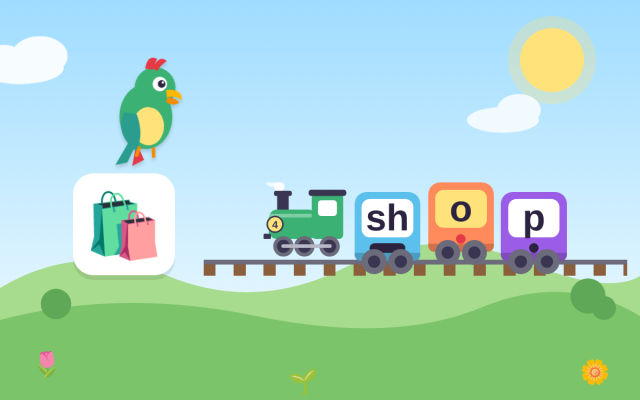
What instructions are for: title, 'You will need' list and numbered stepsStart playing for free
Learn that instructions are writing with a purpose: telling someone how to do something. Children pick out instructions from other writing, find the title, 'You will need' list and numbered steps, and choose good 'How to' titles.
Year 2 english · 1
Bossy verbs: the command words that tell the reader what to do
Meet bossy verbs (imperative verbs) by making Zib clap, jump and spin. Children tap the bossy verb in each step, ignoring time words and nouns, and choose the verb that fits the job, such as pour, cut or fold.
Year 2 english · 2Year 2 english · 1
Command sentences: telling commands apart from statements and questions
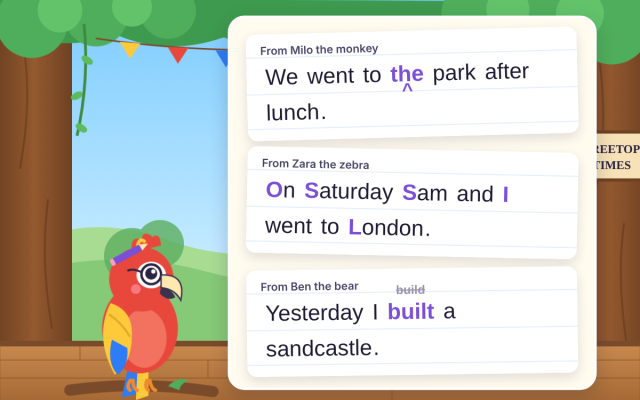
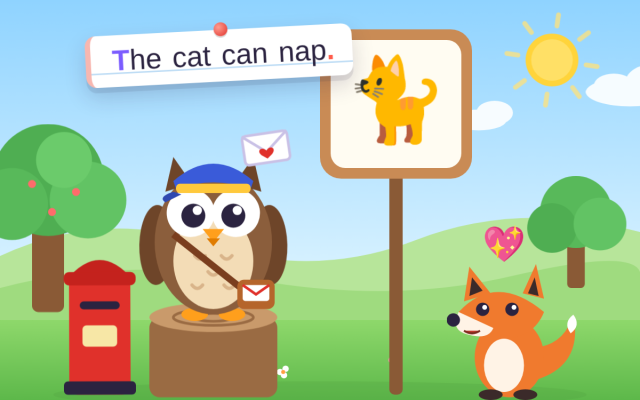
Learn that a command tells someone to do something and usually starts with a bossy verb. Children sort commands from statements and questions, see that commands can end with a full stop or an exclamation mark, and turn sentences into commands.
Year 2 english · 2
Time words: putting steps in order with first, next, then and finally
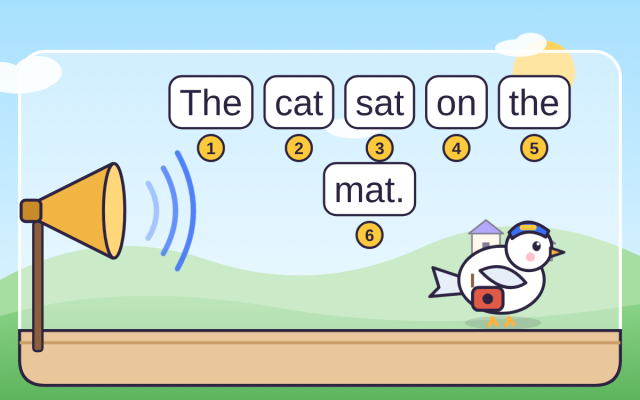
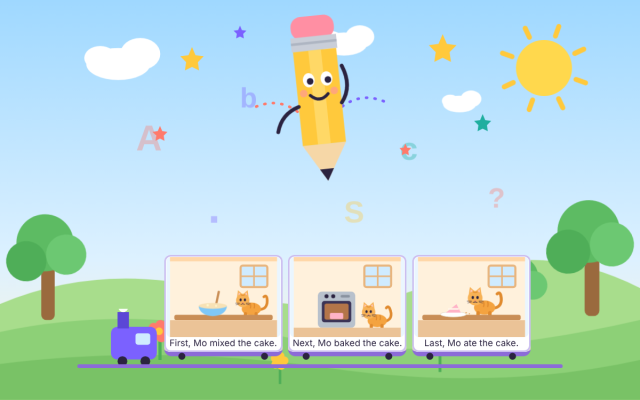
Put muddled jam sandwich and toothbrushing steps in order, then choose the right time word for each snowman step. Children learn that first starts, finally ends, and next, then and after that go in the middle (time connectives).
Year 2 english · 1
Writing your own instructions and testing them
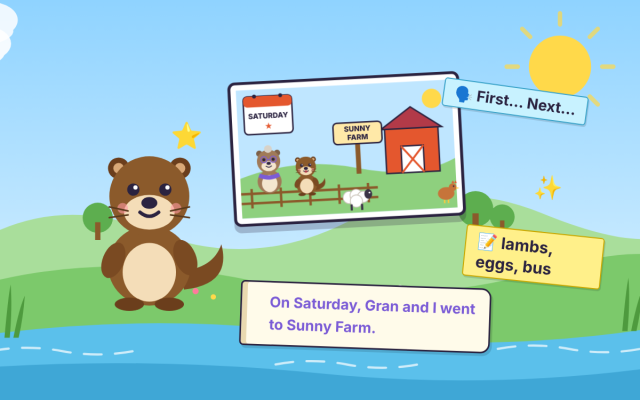
Plan and build a full set of instructions with a title, a 'You will need' list, time words and bossy verbs, then test them on Zib. Children also check another set of steps, fixing a step that isn't a command and adding a missing one.
What the chapters cover in the national curriculum in England:
Year 2 english: Develop positive attitudes towards and stamina for writing by: writing for different purposes
Year 2 english: Sentence: how the grammatical patterns in a sentence indicate its function as a statement, question, exclamation or command
About this adventure
Writing Instructions for Year 2 is an interactive game that teaches children aged 6–7 how to write clear instructions, following the Year 2 English curriculum in England. Children help Zib, a friendly alien who has landed in the garden and does exactly what the words say, so muddled steps go comically wrong.
Along the way they meet the parts of instructions (a 'How to' title, a 'You will need' list and numbered steps), bossy verbs such as pour, fold and stir, and command sentences, the sentence type that tells someone to do something. They sort commands from statements and questions, put muddled steps in order and choose time words like first, next, then and finally.
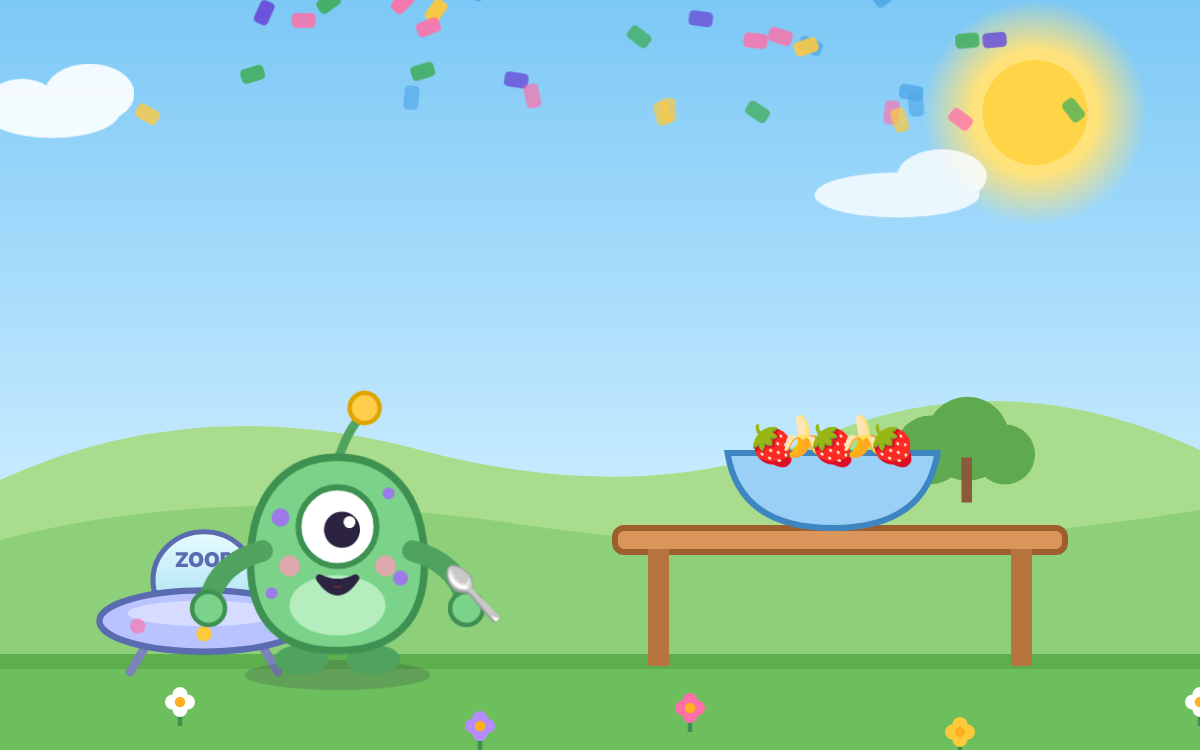
To finish, children build their own instructions for a fruit salad, toast or a drink of squash, and watch Zib follow them step by step.
Questions and answers
How do you write instructions in Year 2?
Year 2 children write instructions with a 'How to' title, a 'You will need' list and numbered steps in order. Each step is a command that starts with a bossy verb, often after a time word such as first, next, then or finally.
What is a bossy verb?
A bossy verb, also called an imperative verb, is a doing word that gives an order, such as pour, cut, fold or stir. In instructions it tells the reader exactly what to do and usually starts each step, or comes straight after a time word.
What is a command sentence for kids?
A command is a sentence that tells someone to do something, like 'Close the door.' It usually starts with a bossy verb. A calm command ends with a full stop, and an urgent one, like 'Stop!', can end with an exclamation mark.
What age is this writing instructions game for?
The game is made for children aged 6 to 7, in Year 2, and follows the English national curriculum for writing for different purposes and command sentences. Every task is read aloud, so children still building reading confidence can play too.
What is in the game and how long does it take?
The game has five chapters, a short optional warm-up on verbs and a 10-question challenge. It takes about 35 minutes to play everything, and children can start any chapter from Zib's garden menu.
We count visits to make TapLearn better.We use one cookie, only on this site, to see how families find and use it. No adverts, and nothing is shared.One cookie, only on this site. No adverts.How we measure
 TapLearn