Sentence Dictation: Listen and Write with Dot the Dove
Learn to write sentences from memory: listen to Dot's spoken messages, say them back, count the words, then spell and punctuate them correctly.
Online game, chapter 1 free · Years 1 and 2 (KS1) · ages 5–7 · national curriculum in England · no adverts · plays on a phone, tablet or computer · no sign-up to start.
An online English game for Years 1 and 2 (KS1). It covers the national curriculum in England, Year 1 english: “Write from memory simple sentences dictated by the teacher that include words using the GPCs (grapheme-phoneme correspondences) and common exception words taught so far”, and 1 more statement listed under the chapters.
5 short chapters, about 35 minutes in all. Children can stop after any chapter.
Start playing for free. Plays in the browser on phones, tablets and computers: no app, no adverts.
Free for teachers: every chapter on the whiteboard with a free teacher account.
Last updated · Checked against the national curriculum in England by the TapLearn team
What you'll learn
Hold a spoken sentence in your head by saying it back
Count the words in a sentence so none go missing
Spell words using sounds, and remember tricky words like said
Start with a capital letter, leave finger spaces, end with a full stop
Use question marks, exclamation marks, list commas and apostrophes
Check your own writing and fix mistakes before you finish
Chapter by chapter
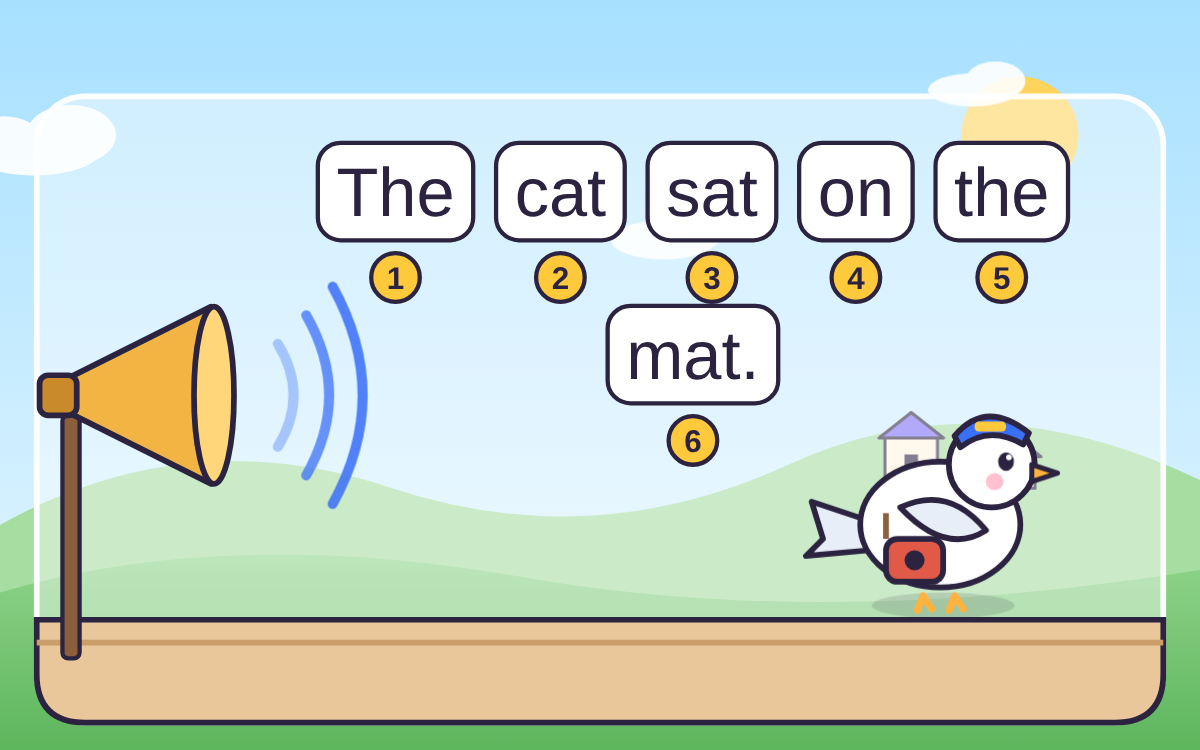
Listen, say it back and count the wordsStart playing for free
Learn to hold a dictated sentence in your head by saying it back out loud, tapping a bead for each word, picking how many words there are and rebuilding the sentence in order.
Year 1 english · 1
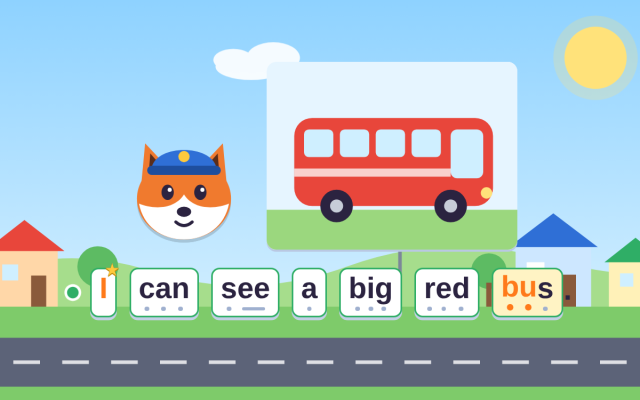
Spell each word with sounds and tricky words
Write each word of a dictated sentence in its own box, sounding out regular words and remembering common exception words like said and was, with the sounds shown underneath (sound buttons).
Year 1 english · 1
Capital letters, finger spaces and full stops
Fix Dot's windswept postcards, then write whole dictated sentences with a capital letter at the start, capitals for names and I, finger spaces between words and a full stop at the end.
Year 1 english · 1
Question marks, exclamation marks, commas and apostrophes (Year 2)
Pick the right end mark for questions and exclamations, add commas between items in a list, squash words like do not into don't, and use them all when writing dictated sentences.
Year 2 english · 2
Write a whole message, then check it and fix it
Spot the mistakes on Dot's wobbly postcards, then listen, say, count, write and check whole sentences, comparing your word count and fixing errors before posting (tick it or fix it).
What the chapters cover in the national curriculum in England:
Year 1 english: Write from memory simple sentences dictated by the teacher that include words using the GPCs (grapheme-phoneme correspondences) and common exception words taught so far
Year 2 english: Write from memory simple sentences dictated by the teacher that include words using the GPCs (grapheme-phoneme correspondences), common exception words and punctuation taught so far
About this adventure
Sentence Dictation is an interactive game that teaches children aged 5–7 to listen to a short spoken sentence and write it from memory, using their phonics, tricky words, capital letters and full stops, as the KS1 English curriculum expects.
Dot the dove runs a post office where messages arrive by voice. Children hear each message, say it back out loud and count the words, then type it on a big on-screen keyboard. The game checks every part of the sentence: missing words, spellings, capital letters for the start, names and I, finger spaces and the end mark.
Year 2 players go on to question marks, exclamation marks, commas in lists and apostrophes in words like can't and Tom's. Finally they use the full listen, say, count, write and check routine, fixing their own mistakes before they post the message.
Questions and answers
What is dictation in Year 1 and Year 2?
Dictation is when a teacher says a short sentence aloud and children write it down from memory. In England, Year 1 and Year 2 pupils are expected to do this using the sounds, tricky words and punctuation they have learnt so far.
How can I help my child write a sentence from memory?
Ask your child to say the sentence back out loud, then count the words on their fingers before writing. Saying and counting helps the sentence stay in their head, and the count lets them check that no word has gone missing.
Why does my child forget capital letters and full stops?
Remembering the words and spelling them takes a lot of a young child's attention, so punctuation often slips. A quick check at the end, looking for a capital letter at the start and a full stop at the end, helps it become a habit.
What age is this dictation game for?
The game is for children aged 5 to 7 in Year 1 and Year 2. Chapters 1 to 3 match Year 1 expectations, and chapter 4 adds the Year 2 punctuation: question marks, exclamation marks, commas in lists and apostrophes.
What does the game include and how long does it take?
It has a short warm-up, five chapters and an eight-question Dictation Challenge, and takes about 35 minutes to play through. Every message is read aloud, can be heard again slowly, and is checked word by word.
We count visits to make TapLearn better.We use one cookie, only on this site, to see how families find and use it. No adverts, and nothing is shared.One cookie, only on this site. No adverts.How we measure

 TapLearn