Proofreading and Editing: Check Writing with Polly
Learn proofreading and editing for Year 2: read your writing back, fix verb tenses, capitals, end marks and spellings, and give two stars and a wish.
Online game, chapter 1 free · Year 2 (KS1) · ages 6–7 · national curriculum in England · no adverts · plays on a phone, tablet or computer · no sign-up to start.
An online English game for Year 2 (KS1). It covers the national curriculum in England, Year 2 english: “Make simple additions, revisions and corrections to their own writing by: rereading to check that their writing makes sense and that verbs to indicate time are used correctly and consistently, including verbs in the continuous form”, and 2 more statements listed under the chapters.
6 short chapters, about 25 minutes in all. Children can stop after any chapter.
Start playing for free. Plays in the browser on phones, tablets and computers: no app, no adverts.
Free for teachers: every chapter on the whiteboard with a free teacher account.
Last updated · Checked against the national curriculum in England by the TapLearn team
What you'll learn
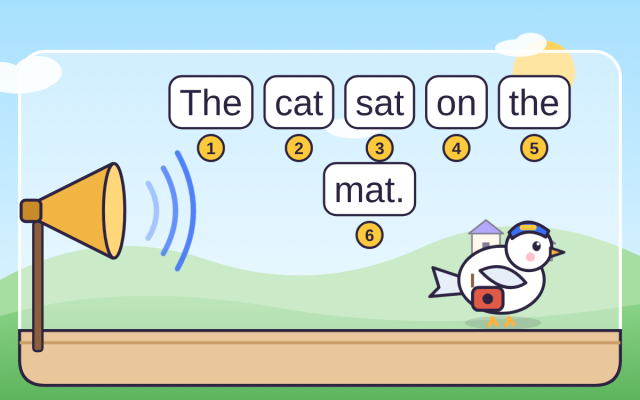
Read writing aloud, pointing at each word, to check it makes sense
Spot missing words, words written twice and words that don't fit
Keep verbs in the past tense or the present tense throughout
Use am, is, are, was or were with -ing verbs
Proofread capital letters, full stops, question marks and exclamation marks
Fix tricky spellings and sound-alike words like see and sea
Chapter by chapter
Read it back: checking your writing makes senseStart playing for free
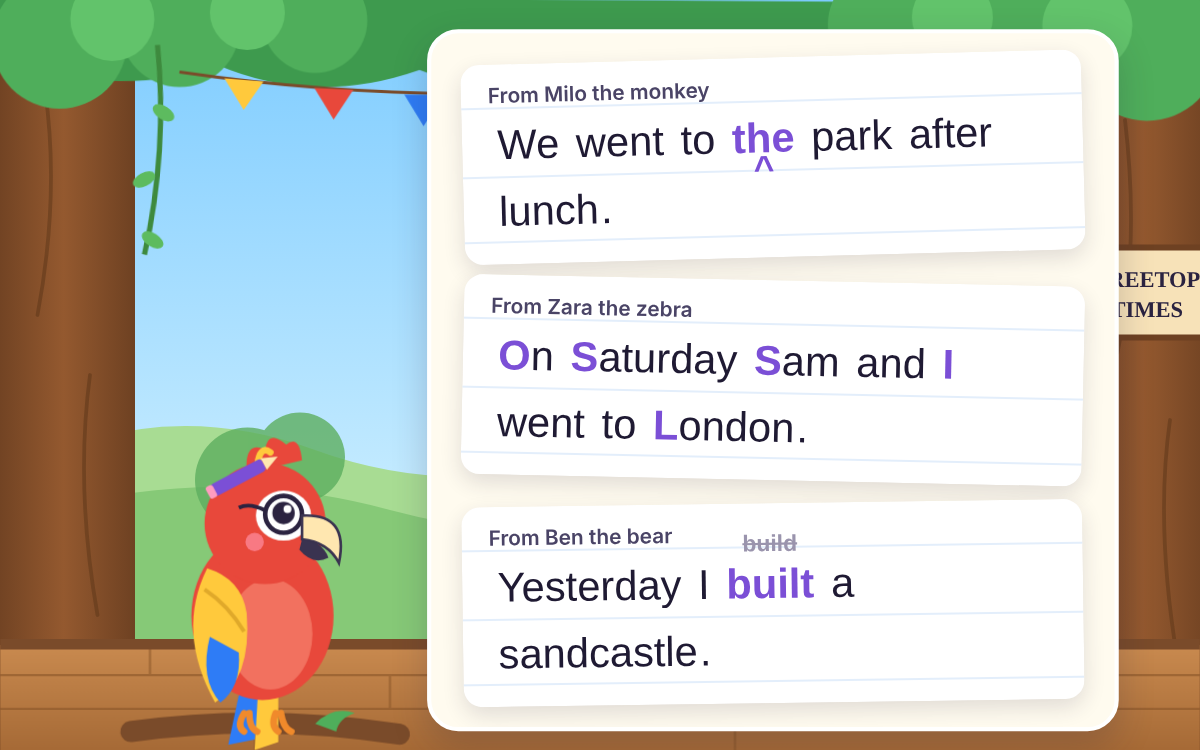
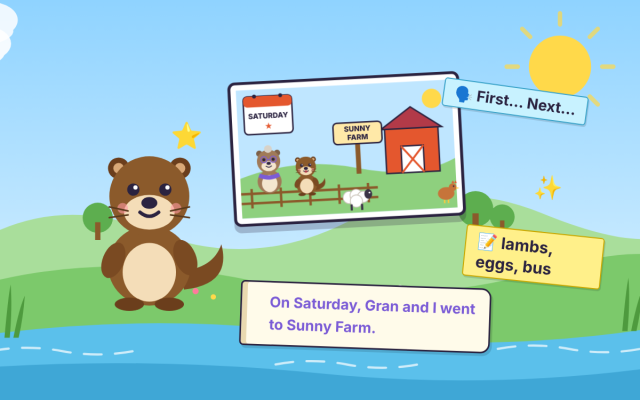
Learn to reread writing to check it makes sense, by listening as Polly points at each word, then adding a missing word with a caret, crossing out a repeated word and replacing a word that doesn't fit.
Year 2 english · 1
Past or present: keeping verbs in the same time
Learn to check that verbs indicating time are used correctly and consistently, by pulling a time-machine lever, sorting past and present verbs, fixing diary slips like 'build' to 'built' and using time clue words.
Year 2 english · 1
Checking -ing verbs: am, is, are, was and were
Learn to check verbs in the continuous form, choosing am, is, are, was or were so the helper word matches the time and the subject, then adding and fixing helpers in real sentences (the progressive form).
Year 2 english · 1
Proofreading capital letters, full stops, question marks and exclamation marks
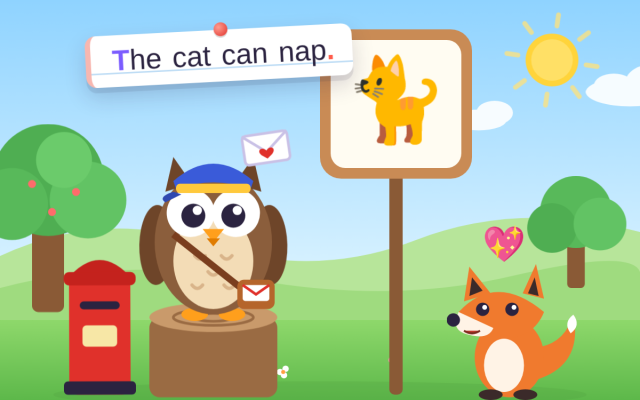
Learn to proofread for punctuation errors: capital letters for sentence starts, names, places, days and I, and the right full stop, question mark or exclamation mark at the end of each sentence (sentence demarcation).
Year 2 english · 2
Proofreading spellings: tricky words and sound-alike words
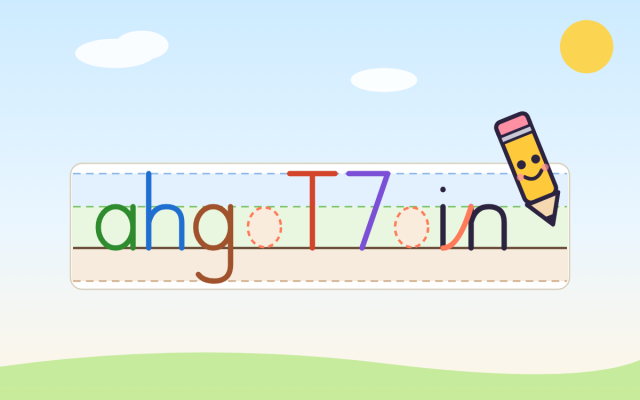
Learn to proofread for spelling errors by asking whether each word looks right, fixing Year 2 common exception words like people and busy, and choosing between homophones such as see and sea, to and two.
Year 2 english · 2
Checking with a partner: two stars and a wish to improve writing
Learn to evaluate writing with a partner or teacher by picking two specific stars and one kind, helpful wish for Milo's story, then choosing the revisions and additions that use the wish to improve it.
What the chapters cover in the national curriculum in England:
Year 2 english: Make simple additions, revisions and corrections to their own writing by: rereading to check that their writing makes sense and that verbs to indicate time are used correctly and consistently, including verbs in the continuous form
Year 2 english: Make simple additions, revisions and corrections to their own writing by: proofreading to check for errors in spelling, grammar and punctuation (for example, ends of sentences punctuated correctly)
Year 2 english: Make simple additions, revisions and corrections to their own writing by: evaluating their writing with the teacher and other pupils
About this adventure
Proofreading and Editing is an interactive game that teaches children aged 6–7 how to check and improve their writing, following the Year 2 English curriculum. Children help Polly the parrot, editor of the Treetop Times, check stories from her animal writers before they go to the printing press.
Players read sentences back while Polly points at each word, then add missing words with a caret, cross out words written twice and swap words that don't make sense. They keep verbs in the past or present tense, check that -ing verbs have the right helper word (is jumping, was jumping), and proofread for capital letters, full stops, question marks, exclamation marks, tricky spellings and sound-alike words such as see and sea.
In the last desk, children act as a writing partner, choosing two specific stars and one kind, helpful wish, then watch the writer use that wish to improve the story.
Questions and answers
What is proofreading, in simple words?
Proofreading means reading your writing carefully to find and fix small mistakes, such as missing capital letters, wrong end marks and misspelt words. Children in Year 2 are taught to proofread their own work after they have written it.
How can my child check that their writing makes sense?
The best way is to read it out loud slowly, pointing at each word. Saying the words aloud helps children hear when a word is missing, written twice or doesn't fit, because their eyes often skip what their brain expects to see.
What is the progressive form of a verb in Year 2?
The progressive form uses a helper word with a verb ending in -ing to show an action going on for a while, such as 'she is dancing' or 'he was shouting'. Am, is and are show now, and was and were show the past.
What age is this proofreading game for?
It is written for children aged 6 to 7 in Year 2, following the English national curriculum. Older children who still mix up tenses or forget capital letters can also use it for practice.
What does the game include and how long does it take?
There are six short chapters, an optional warm-up on sentences and verbs, and a 10-question Editor's Challenge. Playing everything takes about 25 minutes, and each chapter can be played on its own.
We count visits to make TapLearn better.We use one cookie, only on this site, to see how families find and use it. No adverts, and nothing is shared.One cookie, only on this site. No adverts.How we measure
 TapLearn