How to Write a Poem and Perform It: Wren's Poetry Tree
Learn how to write a poem: pick powerful words, fresh similes and a form like haiku, then write your own poem and perform it on a stage.
Online game, chapter 1 free · Years 3 to 6 (KS2) · ages 7–11 · national curriculum in England · no adverts · plays on a phone, tablet or computer · no sign-up to start.
An online English game for Years 3 to 6 (KS2). It covers the national curriculum in England, Years 3–4 english: “Plan their writing by: discussing writing similar to that which they are planning to write in order to understand and learn from its structure, vocabulary and grammar”, and 3 more statements listed under the chapters.
6 short chapters, about 60 minutes in all. Children can stop after any chapter.
Start playing for free. Plays in the browser on phones, tablets and computers: no app, no adverts.
Free for teachers: every chapter on the whiteboard with a free teacher account.
Last updated · Checked against the national curriculum in England by the TapLearn team
What you'll learn
How a poem is built: title, lines, verses and a repeating line
Why poems don't have to rhyme, and what free verse is
How precise nouns and powerful verbs change a line's meaning
How to write fresh similes using like or as
How to follow the patterns of a kenning and a haiku
How volume, pace, pauses and actions make a performance clear
What the chapters cover in the national curriculum in England:
Years 3–4 english: Plan their writing by: discussing writing similar to that which they are planning to write in order to understand and learn from its structure, vocabulary and grammar
Years 5–6 english: Draft and write by: selecting appropriate grammar and vocabulary, understanding how such choices can change and enhance meaning
Years 3–4 english: Draft and write by: composing and rehearsing sentences orally (including dialogue), progressively building a varied and rich vocabulary and an increasing range of sentence structures (English appendix 2)
Years 5–6 english: Perform their own compositions, using appropriate intonation, volume, and movement so that meaning is clear
🖨️ Printable worksheets
6 printable How to Write a Poem and Perform It worksheets for Years 3–6, one for each of 6 chapters of this game, to print and do away from the screen, with answers for grown-ups.
How to Write a Poem and Perform It is an interactive game that teaches children aged 7–11, mainly Year 4, how to plan, write and improve a poem of their own, then read it aloud so the meaning is clear.
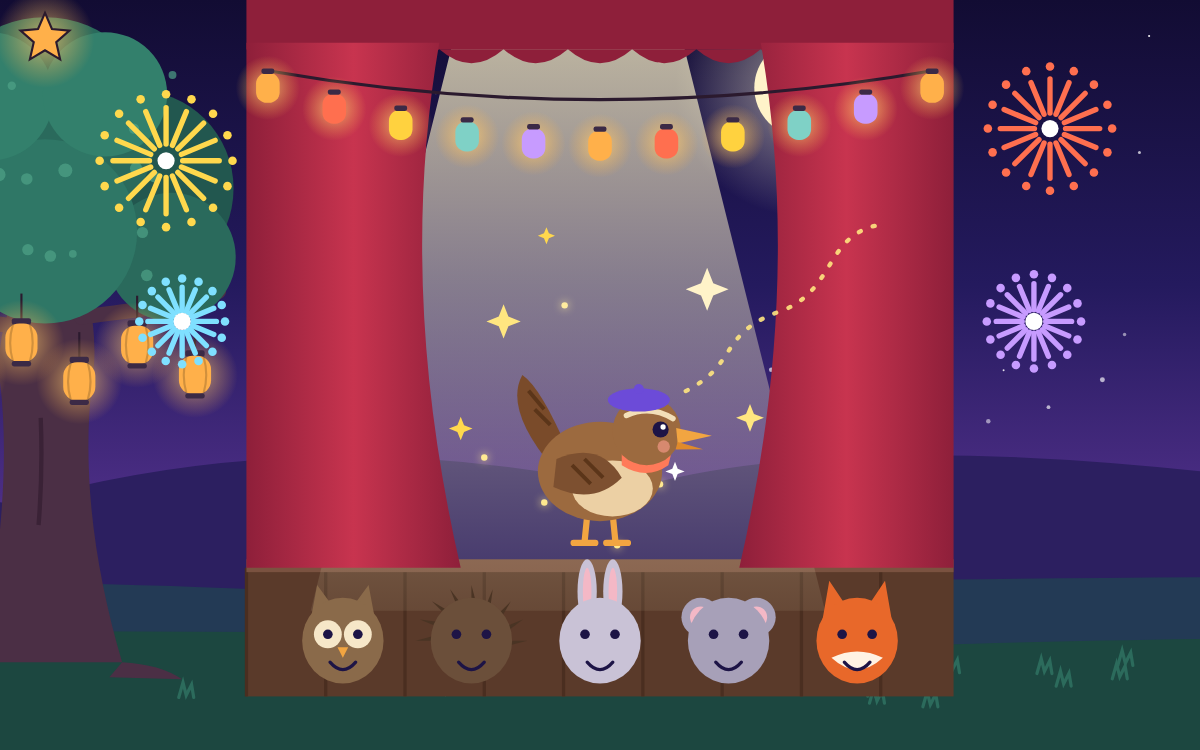
Guided by Wren, a small bird poet, players study a model poem to spot its title, lines, verses and repeating line. They swap vague words for precise nouns and powerful verbs, try onomatopoeia (words that sound like their noise), and build similes that compare two things using like or as. They meet three poem forms: free verse, kennings (two-word clues such as whale-road for the sea) and haiku, with 5, 7 and 5 syllables.
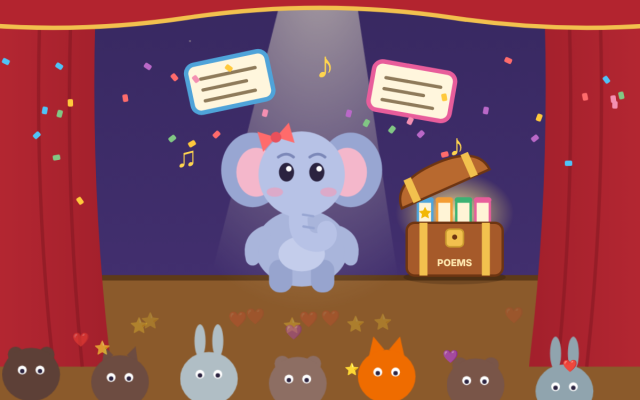
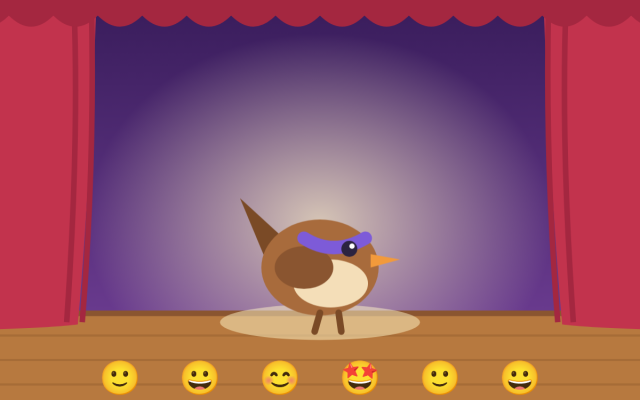
Players then choose a subject and a form, say each line aloud before writing it, and fix forced rhymes. Finally they practise volume, tone, pace, pauses and actions in front of an animal audience, and perform their own poem.
Questions and answers
How do you write a poem, step by step?
Start by reading a poem you like and noticing how it is built. Choose a subject and a form, collect powerful words, then say each line aloud before writing it down. Finally, read your draft back and change any words that are vague or don't make sense.
Does a poem have to rhyme?
No, a poem does not have to rhyme. Many poems, called free verse, have no fixed rules about rhyme or line length. Rhyme can be fun, but choosing a word only because it rhymes often makes a line that doesn't make sense.
What is a kenning in poetry?
A kenning is a two-word phrase, usually joined by a hyphen, that describes something without naming it. Old English poets called the sea the whale-road and the sun the sky-candle. Children can write a kenning poem as a riddle, such as mouse-catcher for a cat.
What age is this poetry writing game for?
The game is designed for children aged 7 to 11 and is pitched mainly at Year 4. It matches the KS2 English curriculum for planning, drafting and performing writing, and an optional warm-up recaps nouns, verbs and adjectives first.
What does the poetry game include and how long does it take?
It has six chapters and a 10-question Poetry Slam quiz, taking about an hour to play in full. Children can start any chapter from the Poetry Tree map and come back later to carry on where they stopped.
We count visits to make TapLearn better.We use one cookie, only on this site, to see how families find and use it. No adverts, and nothing is shared.One cookie, only on this site. No adverts.How we measure



 TapLearn