Learn poems by heart with memory tricks and a Vanishing Words game, then recite them on stage with a voice that shows what the words mean.
Online game, chapter 1 free · Year 2 (KS1) · ages 6–8 · national curriculum in England · no adverts · plays on a phone, tablet or computer · no sign-up to start.
An online English game for Year 2 (KS1). It covers the national curriculum in England, Year 2 english: “Develop pleasure in reading, motivation to read, vocabulary and understanding by: continuing to build up a repertoire of poems learnt by heart, appreciating these and reciting some, with appropriate intonation to make the meaning clear”.
5 short chapters, about 35 minutes in all. Children can stop after any chapter.
Start playing for free. Plays in the browser on phones, tablets and computers: no app, no adverts.
Free for teachers: every chapter on the whiteboard with a free teacher account.
Last updated · Checked against the national curriculum in England by the TapLearn team
What you'll learn
Say what a poem is about and picture each line
Use rhymes, a beat and actions to remember lines
Learn a poem in small chunks, then join them up
Recite a whole short poem from memory in the right order
Use intonation: voice up for questions, pauses at commas
Keep a repertoire of poems fresh by saying them again
Chapter by chapter
Understanding a poem before learning it by heartStart playing for free
Children listen to 'Rain' by Robert Louis Stevenson, say what it is about, explain a phrase and build a mind movie of its pictures in the same order as the lines.
Year 2 english · 1
Memory tricks: rhymes, a beat, actions and little bites
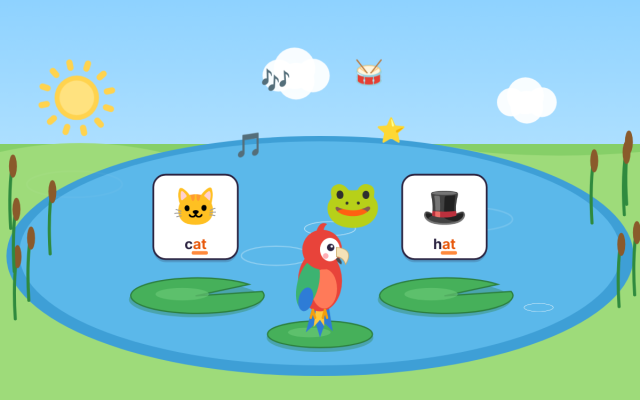
Using Christina Rossetti's 'Mix a Pancake', children find a rhyming clue, tap the beat on a drum, match an action to each line and learn the poem in two small chunks.
Year 2 english · 1
Learning a whole poem by heart, line by line
In the Vanishing Words game, words disappear from a chalkboard round by round: children fill gaps, recall lines from their first word, put lines in order and finally recite 'Rain' from memory.
Year 2 english · 1
Reciting with intonation: question voice, pauses, loud and soft
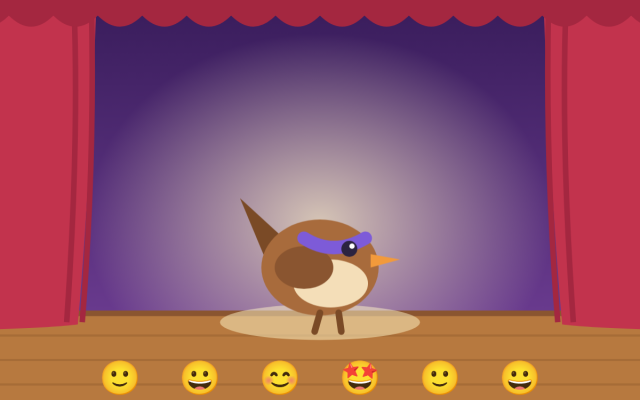
Children compare a flat robot voice with an expressive one, watch a voice line rise for questions, pause at commas and choose whisper, worried or loud voices to match the meaning of each line.
Year 2 english · 1
Reciting by heart to an audience and keeping a poem collection
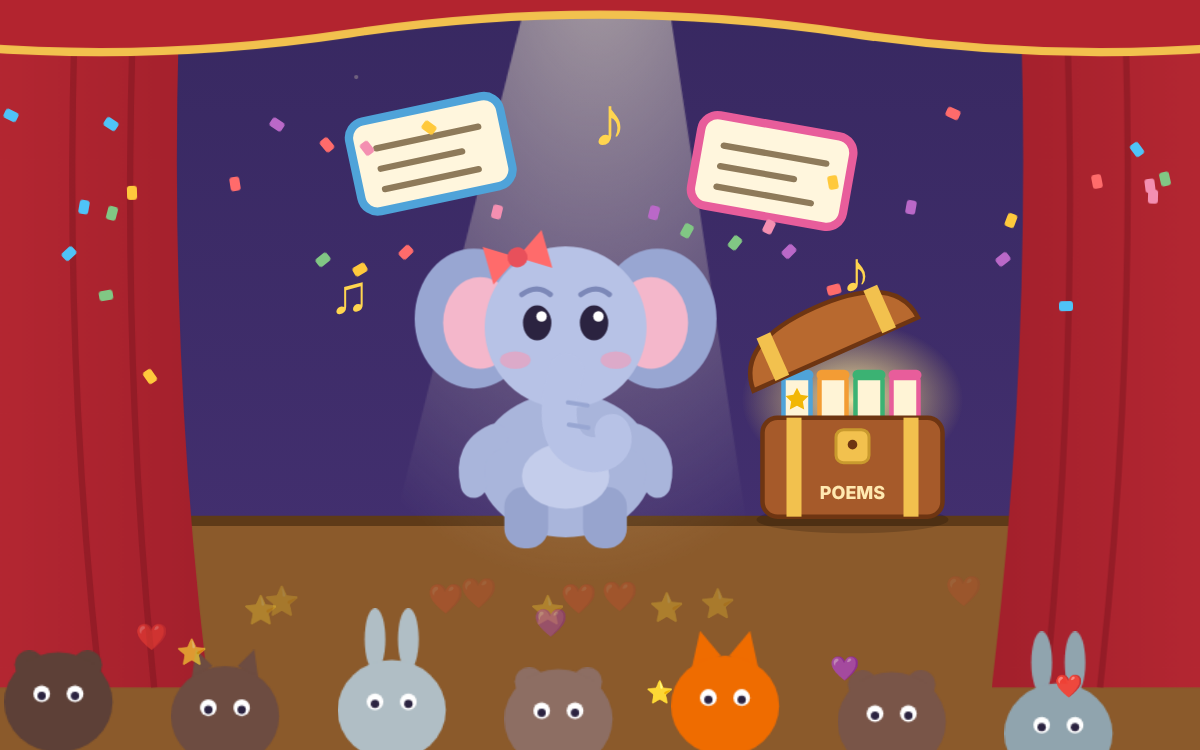
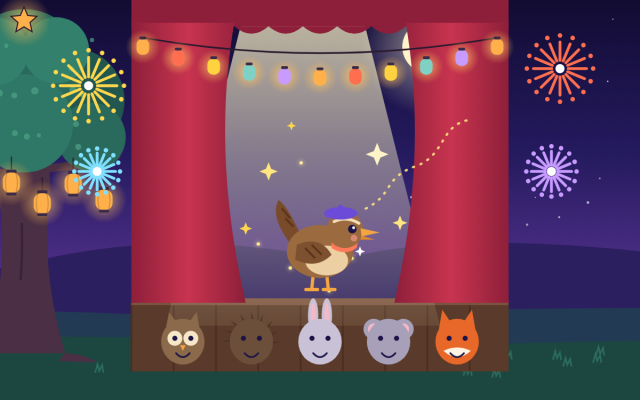
Children learn performer tips, choose a poem from their trunk, practise with first-word prompts and recite it on stage, then learn what a repertoire is and how to keep old poems fresh.
What the chapters cover in the national curriculum in England:
Year 2 english: Develop pleasure in reading, motivation to read, vocabulary and understanding by: continuing to build up a repertoire of poems learnt by heart, appreciating these and reciting some, with appropriate intonation to make the meaning clear
About this adventure
Learning Poems by Heart is an interactive game that helps children aged 6–8 learn short poems from memory and recite them with intonation that makes the meaning clear, as the Year 2 English curriculum asks.
With Ellie the elephant, children picture a poem line by line, then try memory tricks: rhyming clues, a steady beat, actions for each line and learning in small chunks. In Vanishing Words, words disappear from a chalkboard until the whole poem is said from memory.
Next they practise intonation, the way the voice rises and falls: going up for a question, pausing at commas, whispering a sneaky line and booming an exciting one. Finally they perform to an audience of animals and fill a Poem Trunk, their own repertoire, with classic poems by Robert Louis Stevenson and Christina Rossetti.
Questions and answers
How can a child learn a poem by heart quickly?
Children learn a poem fastest in small chunks of two or three lines, saying each chunk aloud and then joining them. Rhymes, a steady beat and an action for each line give the memory extra clues, and saying the poem again on later days makes it stick.
What does reciting with intonation mean?
Intonation is the way your voice rises and falls as you speak. Reciting with intonation means your voice goes up for a question, pauses at commas and full stops, and gets louder or softer to match what the words mean.
Do Year 2 children have to learn poems by heart?
Yes. The national curriculum for England asks Year 2 pupils to keep building a repertoire of poems learnt by heart, to appreciate them and to recite some with intonation that makes the meaning clear.
What age is this poems by heart game for?
The game is written for children aged 6 to 8, mainly Year 2 in England. Younger readers can play with a grown-up, because every line is read aloud and the poems are short.
What is in the game and how long does it take?
There are five chapters and an eight-question Poem Star Challenge, taking about 35 minutes in all. Children learn four short poems, play Vanishing Words and perform on a stage, and each chapter can be played on its own.
We count visits to make TapLearn better.We use one cookie, only on this site, to see how families find and use it. No adverts, and nothing is shared.One cookie, only on this site. No adverts.How we measure


 TapLearn