What you'll learn
- Find ideas for a poem using the five senses
- Swap plain words for powerful doing words and describing words
- Use sound words, called onomatopoeia, like splash and buzz
- Write list poems, acrostic poems and rhyming lines that make sense
- Why a poem doesn't have to rhyme
- Read a poem aloud with expression, pausing at punctuation
Chapter by chapter
- Finding ideas for a poem with your five senses Free to try
Year 2 english · 1
- Choosing words carefully: powerful doing words, describing words and sound words
Year 2 english · 1
- Writing a list poem (poems don't have to rhyme)
Year 2 english · 1
- Writing rhyming lines that make sense
Year 2 english · 1
- Writing an acrostic poem
Year 2 english · 1
- Reading a poem aloud with expression
Year 2 english · 2
- Writing and performing your own poem
Year 2 english · 1 Year 2 english · 2
- Poetry star quiz: writing and reading poems (8 questions)
See every English chapter in the chapter library
What the chapters cover in the national curriculum in England:
- Year 2 english: Develop positive attitudes towards and stamina for writing by: writing poetry
- Year 2 english: Read aloud what they have written with appropriate intonation to make the meaning clear
About this adventure
Writing Poems is an interactive game that teaches children aged 6–8 how to write simple poems about things they know and like, choose words carefully and read their poems aloud with expression. It follows the Year 2 English curriculum in England for writing poetry.
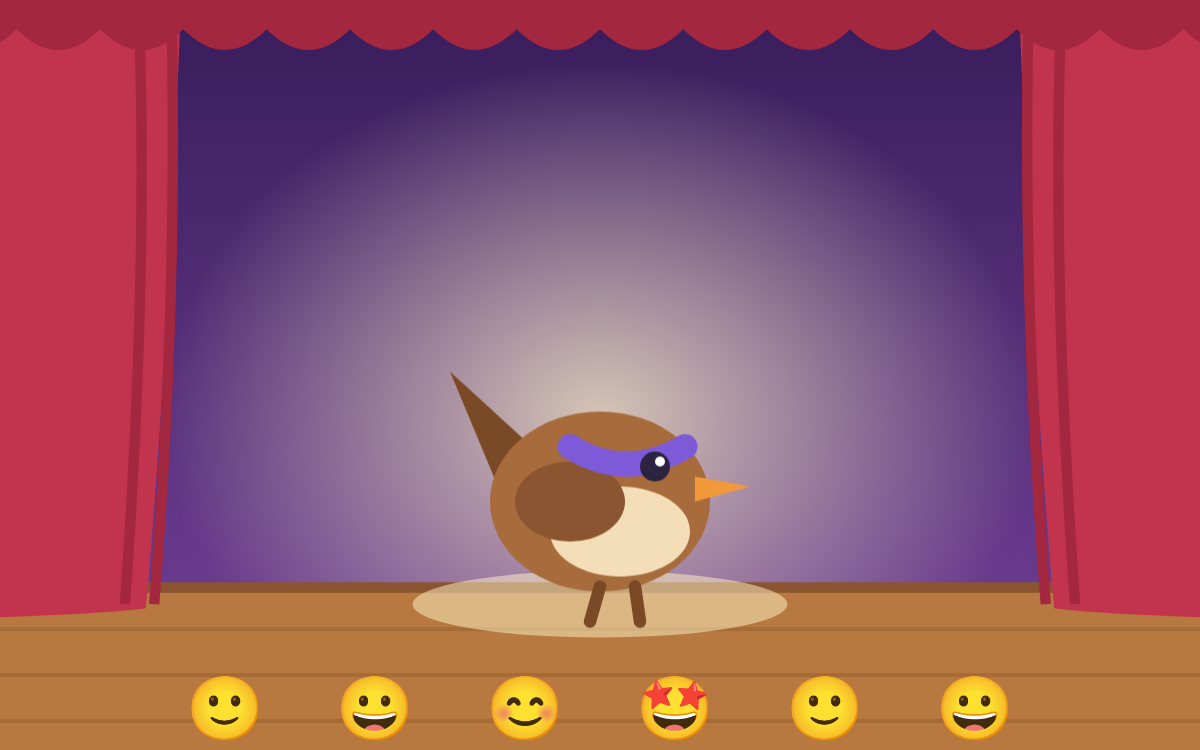
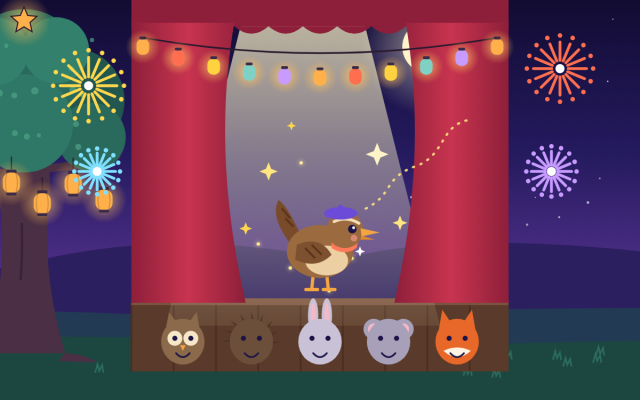
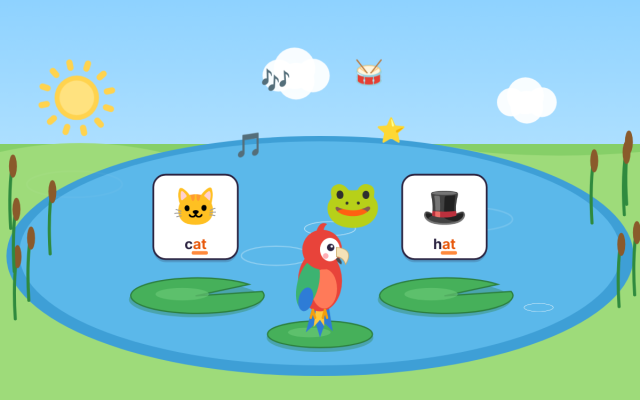
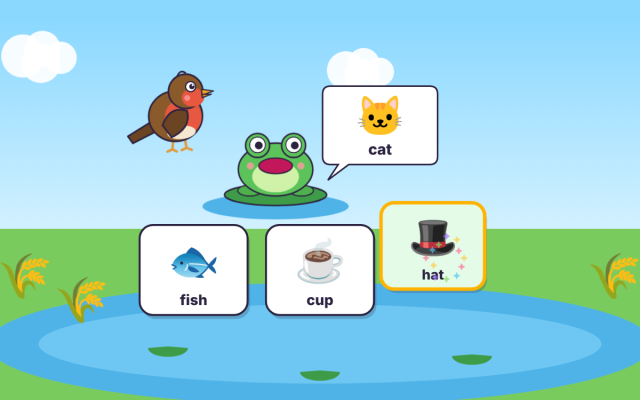
Guided by Wren the bird, children collect ideas with their five senses, swap plain words like 'went' for powerful doing words, and add describing words and sound words (onomatopoeia) that paint a picture. They build a list poem, finish rhyming lines that sound right and make sense, and write an acrostic poem with a word going down the side.
Then they practise performing: pausing at commas and full stops, letting their voice rise for a question, and picking a pace listeners can follow. To finish, they write and perform a poem of their own.
Questions and answers
How do you write a poem for kids?
Start by choosing something you know and like, then collect ideas by thinking about what you can see, hear, smell, touch and taste. Pick words that paint a clear picture, put one idea on each line, then read it back to check it makes sense.
Do poems have to rhyme?
No, poems do not have to rhyme. List poems and acrostic poems often work well without any rhymes, and when a poem does rhyme, the rhyming word still has to make sense in the line.
What is an acrostic poem?
An acrostic poem is a poem where a word is written down the side and each line starts with one of its letters. In a poem about a cat, for example, the lines start with C, A and T, and every line is about the cat.
What age is this poetry writing game for?
The game is designed for children aged 6 to 8 and matches the Year 2 English curriculum in England for writing poetry and reading writing aloud. Older children who want extra practice with poems can enjoy it too.
What is included in the Writing Poems game and how long does it take?
The game has seven chapters and an eight-question Poetry Star Quiz, and takes about 45 minutes to play all the way through. Each chapter lasts around five minutes, so children can play one at a time and return to any chapter from the garden map.


 TapLearn