Why it's hard to tell from home
It's natural to compare. A cousin reads chapter books, a classmate knows all their times tables, and suddenly your child seems slow. But children don't learn in a straight line. Some read early and count late. Some make a sudden jump in Year 2 after a slow Year 1. The youngest children in a class can be almost a year younger than the oldest, and that difference shows most in the early years.
What you see at home is also only part of the picture. A child who refuses to read to you may read happily at school, and the other way round.
What "on track" looks like
The national curriculum sets out what children are expected to learn in each year in English and maths. Schools use it to judge whether a child is working at the expected standard for their age. Our year guides describe it in plain English:
Remember that these are end-of-year expectations. In October, nobody is expected to know everything on the list.
Some signs that a skill may need attention:
- Your child often guesses words from the first letter or the picture rather than sounding them out.
- They still count on their fingers for facts most of their class know by heart, such as number bonds to 10.
- They avoid a subject they used to enjoy, or get upset by homework that seems simple.
- The school report or a parents' evening mentions "working towards" in a subject.
None of these means something is wrong. They are reasons to look a little closer.
Talk to the teacher first
Ask for a short chat rather than waiting for parents' evening. Useful questions:
- Is my child working at the expected level for their year in reading, writing and maths?
- Which specific skills are secure, and which are they still practising?
- Is anything already in place to help?
- What one thing could we do at home that would make the most difference?
Teachers would much rather hear from you early. If you're not sure what the words on a report mean, see what "working towards", "expected" and "greater depth" mean.
Practical next steps at home
- Find the specific gap. "Behind in maths" is too broad to act on. "Not yet confident with number bonds to 10" is something you can practise.
- Go back a step. Gaps usually come from something earlier that never quite settled. Practising the Year 2 skill can unlock the Year 3 one.
- Keep it short and regular. Ten minutes most days beats an hour on Sunday.
- Notice what is secure. Tell your child what they can do. Confidence matters as much as practice.
- Check in again with the teacher after half a term or so.
TapLearn's skills report shows, chapter by chapter, which skills look secure and which your child is still practising, along with common mix-ups to watch for. It can be a useful thing to bring to a conversation with the teacher.
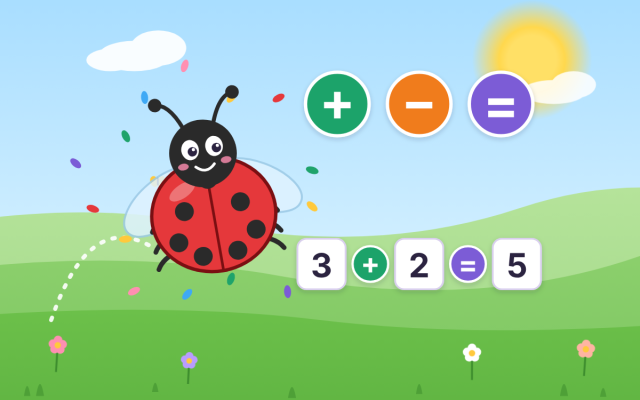
Number Bonds to 20: A Ladybird Meadow Maths Game
Learn number bonds to 20 and the subtraction facts that go with them, by flipping counters, balancing scales…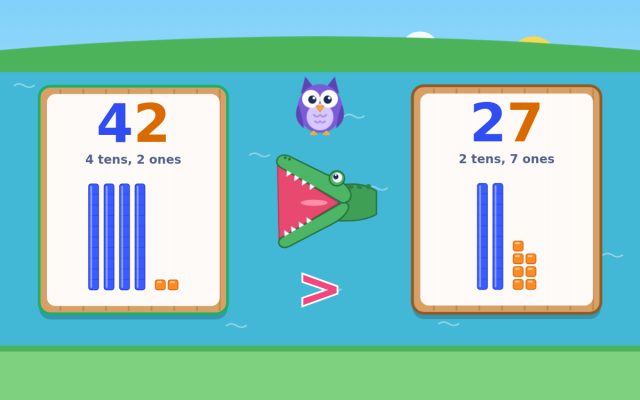
Place Value: Tens and Ones Adventure with Ollie the Owl
Learn place value with tens and ones: bundle cubes into tens, build and split numbers to 100, and compare the…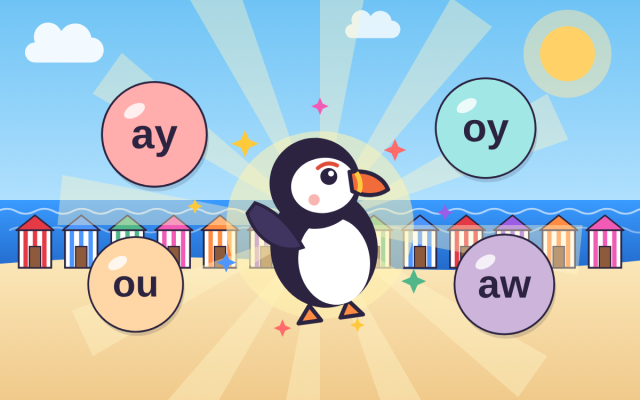
Digraphs and Trigraphs: A Letter Teams Island Adventure
Learn digraphs and trigraphs like ay, oy, ir and are, plus split digraphs, by joining letter teams, popping s…
Year 2 Common Exception Words: An Island Word Hunt
Learn to read and spell the Year 2 common exception words by spotting each tricky part, waking silent letters…If you have wider concerns about how your child learns, speech, attention or wellbeing, ask to speak to the school's SENCo (special educational needs co-ordinator) or your GP.
 TapLearn