Start with the school website and newsletters
Schools in England are expected to publish the content of their curriculum for each year group and subject, along with how parents can find out more. Look for a "Curriculum" section on the school website. Useful things to search for:
- Curriculum maps or long-term plans: which topics each year group covers in each term.
- Termly overviews or class letters: often sent at the start of each term, with the topics and sometimes the key words.
- Knowledge organisers: one-page summaries of a topic, common in history, geography and science.
- The calculation policy: the written methods the school uses in maths. Our guide to how maths is taught explains the common ones.
- The phonics or reading scheme: schools with Key Stage 1 must list the scheme they use.
Class newsletters, class pages and the school app are often the most up to date. They're worth a quick look each week, even if you just skim the headings.
Questions that get more than "nothing"
"What did you do today?" often gets "nothing", mostly because it's a hard question to answer at the end of a long day. Specific questions work better, especially later on, in the car, at bath time or at bedtime:
- "What made you laugh today?"
- "What was the trickiest thing you did in maths?"
- "Who did you sit with at lunch, and what did you talk about?"
- "What's the story your class is reading about at the moment?"
- "If you were the teacher tomorrow, what would you teach?"
- "Can you show me something you learned this week?"
Telling your child about your own day first often gets the conversation going.
Parents' evening and talking to the teacher
Parents' evening is short, so go in with two or three questions:
- What is my child working on in reading, writing and maths right now?
- What are they secure with, and what are they still practising?
- What's one thing we could do at home that would help?
- Which topics are coming up next term?
You don't have to wait for parents' evening. A short message through the school's usual route is fine, and most teachers would rather you asked than worried.
The national curriculum, year by year
The national curriculum sets out what children in England should learn. Maths and science are set out year by year. English is set out for Year 1, Year 2, Years 3 and 4, and Years 5 and 6, with spelling and grammar given by year. Subjects such as history and geography are set out by key stage, so schools choose which topics to teach and when. Reception follows the Early Years Foundation Stage instead.
This is why your child may be learning about the Romans while a cousin at another school is on the Stone Age. Neither of them is behind. For a summary of each year, start with our guides, for example what children learn in Year 3, or with how school years and key stages work.
A new national curriculum is planned for first teaching from September 2028. Until then, schools keep teaching the current one.
Using TapLearn as a guide
TapLearn has a roadmap for each subject in each school year, set out in short chapters that follow the national curriculum. Because schools teach in different orders, use the roadmap as a map rather than a timetable. When a newsletter mentions a topic, find it in the roadmap or the chapter library, or ask Ask Flip about a homework question to find the chapter that explains it.
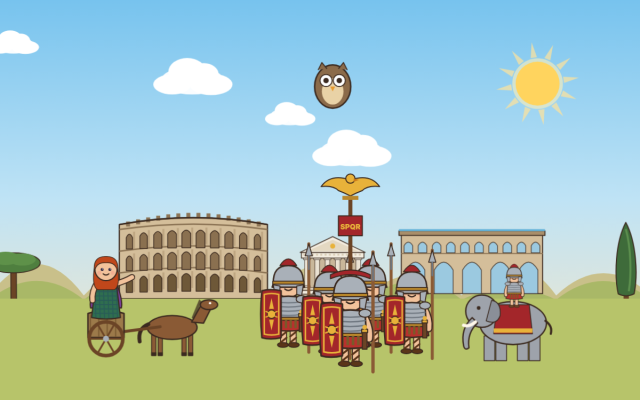
Romans in Britain: March with the Legions from Rome
Discover the Romans in Britain, from Caesar and Claudius to Boudica, by kitting out a legionary, conquering m…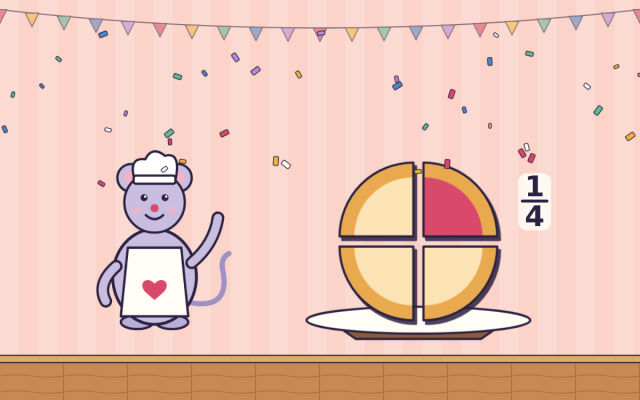
Year 3 Fractions: Bake and Share with Pip the Baker
Learn Year 3 fractions by cutting pies, snapping chocolate into tenths, comparing slices and adding fractions…
 TapLearn