Find the gap first
"Behind in maths" can mean many things: not yet secure with place value, unsure of times tables, or confident with numbers but stuck on word problems. Each needs different help, so the first job is to narrow it down.
- Ask the teacher which specific skills your child hasn't secured yet and what the class is doing next.
- Look at recent work: homework, spelling tests, the reading record. Patterns often jump out, such as the same spelling mistake again and again.
- Watch your child work on a few questions and ask them to explain their thinking. You'll learn more from how they get an answer than from whether it's right.
If you'd like to know whether there's a gap at all, read is my child behind? first.
Go back a step
Most gaps come from an earlier skill that never quite settled. A Year 4 child struggling with column subtraction may really need more practice with place value. A Year 3 child who spells slowly may still be unsure of some phonics sounds from Year 2.
So look at the previous year's expectations, not just the current year's. TapLearn's roadmaps show each subject year by year, so you can find where a skill begins and work forward from there. Going back is not going backwards: it builds the foundation the rest stands on, and children often move quickly once it's in place.

Place Value: Build Numbers to 1,000 with Digit the Robot
Learn place value with hundreds, tens and ones to 1,000. Turn ones into tens in a block machine, build number…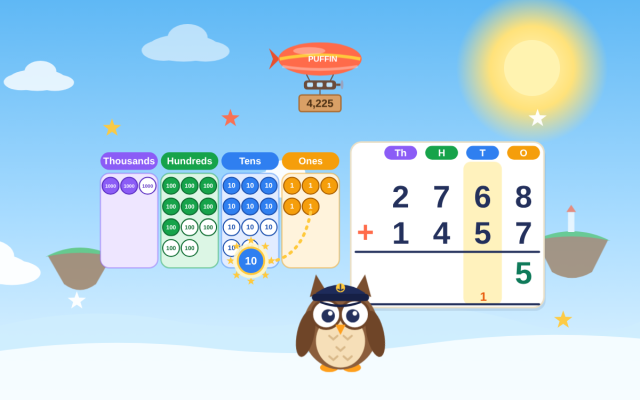
Column Addition and Subtraction: A Sky Harbour Adventure
Learn column addition and subtraction with up to 4 digits, exchanging, estimating and checking, by helping To…
Number Bonds to 20: A Ladybird Meadow Maths Game
Learn number bonds to 20 and the subtraction facts that go with them, by flipping counters, balancing scales…
Year 2 Phonics: Blend, Read and Spell on Word Island
Learn Year 2 phonics: blend new words, try alternative sounds, read long words and suffixes, and spell with n…
Year 3 Spelling Words: A Spellwood Quest with Quill
Learn Year 3 spelling words and why each is spelt that way by tapping letters, building words and typing them…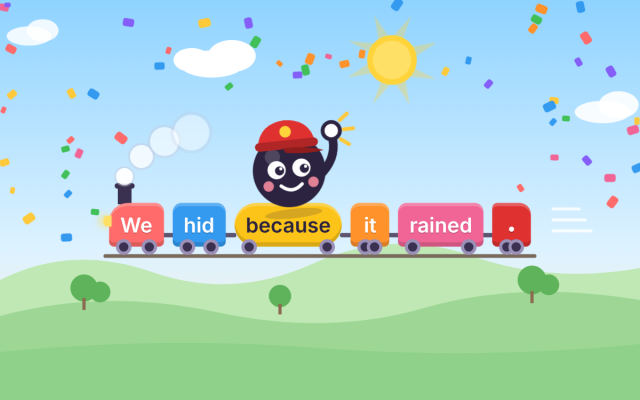
Writing Sentences: All Aboard the Sentence Express
Learn the skills of writing sentences that are clear and correct by building word trains, fixing capitals and…Little and often
- Ten minutes most days is plenty. Short sessions keep it manageable for both of you.
- One skill at a time. Stay with it until it's secure, then add the next.
- Come back to it. Revisit a skill a few days later, then a week or two after that. This spaced practice helps it stick.
- Weave it into the day. Count change at the shop, read a recipe, spell words for the shopping list, work out how long until dinner.
Keep reading for pleasure going alongside any catch-up. Reading to your child, and with them, supports both English and maths word problems.
Celebrate what's secure
Children who feel behind can start to believe they're "no good" at a subject. Notice and name what they can do: "You know all your number bonds to 10 now." Show them how far they've come since last month. Confidence makes the next step much easier.
TapLearn's skills report lists skills as secure or practising, with mix-ups to watch for, so you can see progress over time and share it with the teacher.
Do we need a tutor?
Not necessarily, and not first. Try a few weeks of focused practice on the specific gap and check in with the teacher. If the gap isn't closing, the teacher may suggest extra support in school, and that is a good time to think about other options together. If you have wider concerns about how your child learns, ask to speak to the school's SENCo.
For ideas that fit around work and family life, see how to help your child learn at home when you're busy.
 TapLearn