Everyday Materials: Pip the Magpie's Treasure Hunt
Learn what everyday objects are made of and name wood, plastic, glass, metal, water and rock, then test and sort materials with Pip the magpie.
Online game, chapter 1 free · Year 1 (KS1) · ages 5–7 · national curriculum in England · no adverts · plays on a phone, tablet or computer · no sign-up to start.
An online science game for Year 1 (KS1). It covers the national curriculum in England, Year 1 science: “Distinguish between an object and the material from which it is made”, and 3 more statements listed under the chapters.
5 short chapters, about 30 minutes in all. Children can stop after any chapter.
Start playing for free. Plays in the browser on phones, tablets and computers: no app, no adverts.
Free for teachers: every chapter on the whiteboard with a free teacher account.
Last updated · Checked against the national curriculum in England by the TapLearn team
What you'll learn
The difference between an object and the material it is made from
Naming wood, plastic, glass, metal, water and rock
Describing materials as hard or soft, bendy or stiff, stretchy, rough or smooth
Spotting shiny or dull, transparent or opaque, waterproof or absorbent materials
Sorting materials into groups by their properties
Why one object can be made from more than one material
Chapter by chapter
Objects and materials: what a thing is and what it is made ofStart playing for free
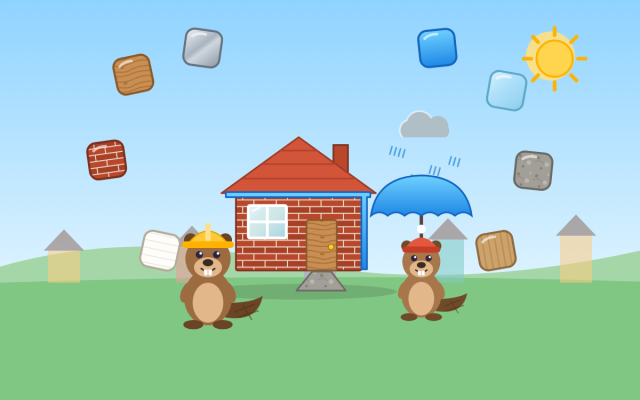
Learn to tell an object from the material it is made of by tapping metal, wooden and plastic spoons, wooden treasures and a pair of scissors made from two materials.
Year 1 science · 1
Naming everyday materials: wood, plastic, glass, metal, water and rock
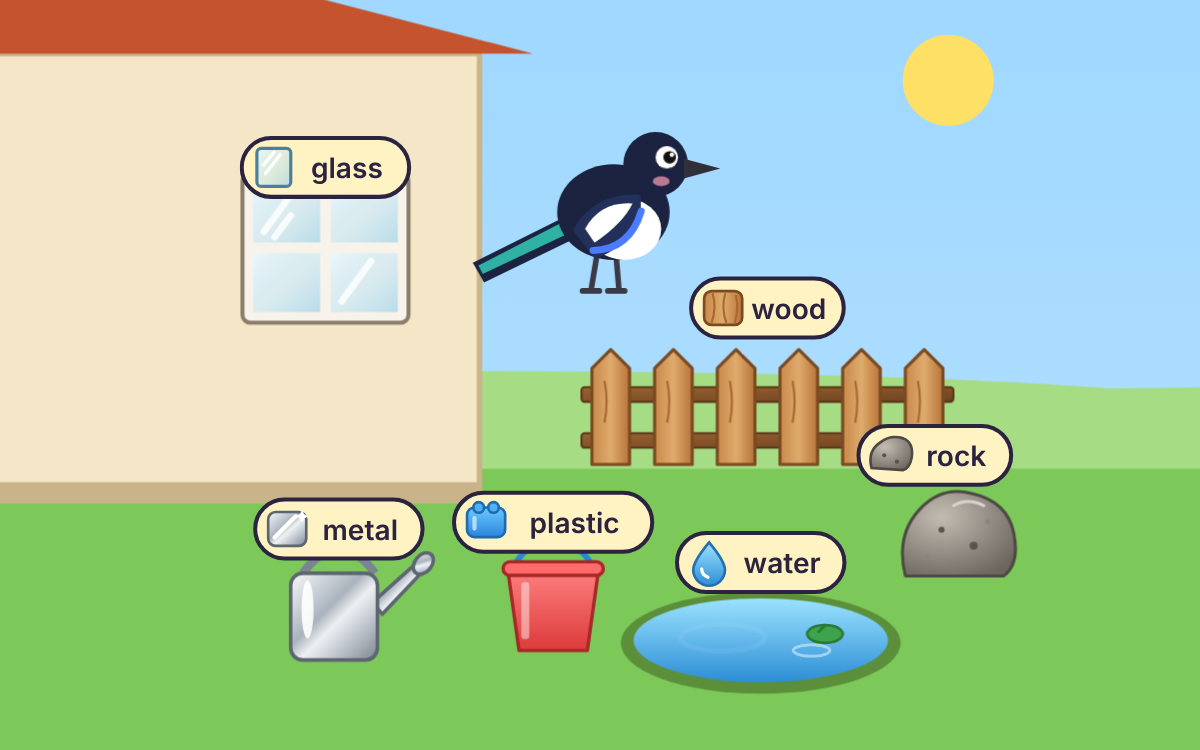
Identify and name wood, plastic, glass, metal, water and rock on a garden hunt, find out where each comes from, and tell a glass bottle from a plastic one.
Year 1 science · 2
Describing how materials feel: hard or soft, bendy or stiff, stretchy, rough or smooth
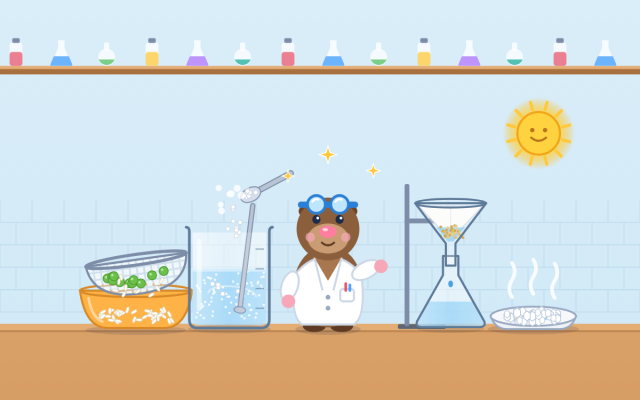
Describe simple physical properties by squeezing, bending, stretching and stroking materials in a test lab, and discover that the same material, such as plastic, can be bendy or stiff.
Year 1 science · 3
Describing how materials look and soak: shiny or dull, see-through or not, waterproof or absorbent
Use a torch, a peep test and water drops to describe materials as shiny or dull, transparent or opaque, and waterproof or absorbent.
Year 1 science · 3
Comparing and grouping materials by their properties
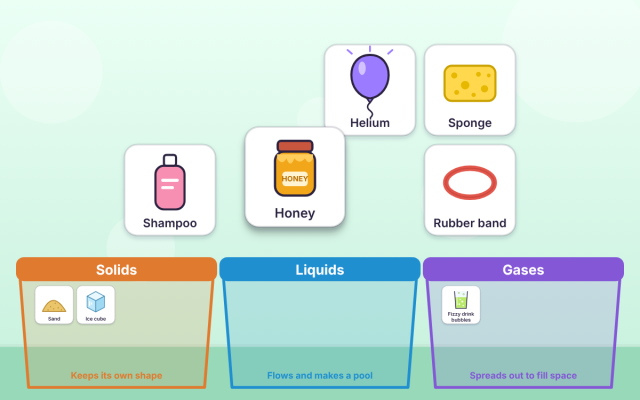
Compare and group materials by dragging them into hard and soft or see-through and not see-through baskets, place a shiny, hard spoon where two groups overlap, and work out a sorting rule.
What the chapters cover in the national curriculum in England:
Year 1 science: Distinguish between an object and the material from which it is made
Year 1 science: Identify and name a variety of everyday materials, including wood, plastic, glass, metal, water, and rock
Year 1 science: Describe the simple physical properties of a variety of everyday materials
Year 1 science: Compare and group together a variety of everyday materials on the basis of their simple physical properties
About this adventure
Everyday Materials is an interactive science game that teaches children aged 5 to 7 the difference between an object and the material it is made from, how to name common materials, and how to describe and sort them by their properties.
Pip the magpie collects treasures, and the player helps her work out what each one is made of. They tap spoons made of metal, wood and plastic, hunt for glass, water and rock in a garden, and squeeze, bend, stretch and stroke things in a test lab to find out whether they are hard or soft, bendy or stiff, stretchy, rough or smooth.
With a torch, a peep test and a dropper of water, children discover shiny and dull, see-through (transparent) and not see-through (opaque), and waterproof and absorbent materials. Finally they drag treasures into groups and finish with a ten-question challenge.
Questions and answers
What is the difference between an object and a material?
An object is a thing we can touch and use, such as a spoon or a chair. A material is what the object is made from, such as metal or wood. One object can be made from more than one material.
What are everyday materials, in simple words?
Everyday materials are the stuff the things around us are made from. In Year 1, children learn to name wood, plastic, glass, metal, water and rock, and spot them in places like the kitchen, the garden and the classroom.
What are the properties of materials for Year 1?
Properties are describing words that say what a material is like. Year 1 children use pairs such as hard or soft, bendy or stiff, stretchy, rough or smooth, shiny or dull, see-through or not, and waterproof or absorbent.
What age is this everyday materials game for?
The game is made for children aged 5 to 7, matching the Year 1 everyday materials unit in the national curriculum for England. Every line is read aloud, so children who are still learning to read can play on their own.
What does the game include and how long does it take?
The game has five short chapters and a ten-question Treasure Challenge, and takes about 30 minutes to play from start to finish. Children can choose any chapter from the treasure tree and come back to it whenever they like.
We count visits to make TapLearn better.We use one cookie, only on this site, to see how families find and use it. No adverts, and nothing is shared.One cookie, only on this site. No adverts.How we measure

 TapLearn