
Properties of Materials: Test Like a Scientist with Rivet
Learn the properties of materials, from hardness to magnetism, by scratching, stirring, sparking and testing in a robot's science lab.
- Ages 9–11
- About 60 min
- Some thinking
- Materials & Matter
Learn the properties of materials, from hardness to magnetism, by scratching, stirring, sparking and testing in a robot's science lab.
Year 5 science · 1 Year 5 science · 2
Year 5 science · 1
Year 5 science · 1
Year 5 science · 1 Year 5 science · 2
Year 5 science · 1
Year 5 science · 1
Year 5 science · 2 Year 5 science · 1
What the chapters cover in the national curriculum in England:
Properties of Materials is an interactive science game that teaches children aged 9–11 how to compare and group everyday materials by hardness, solubility, transparency, conductivity and magnetism, and why we choose metal, wood or plastic for different jobs. It follows the Year 5 Science curriculum for England.
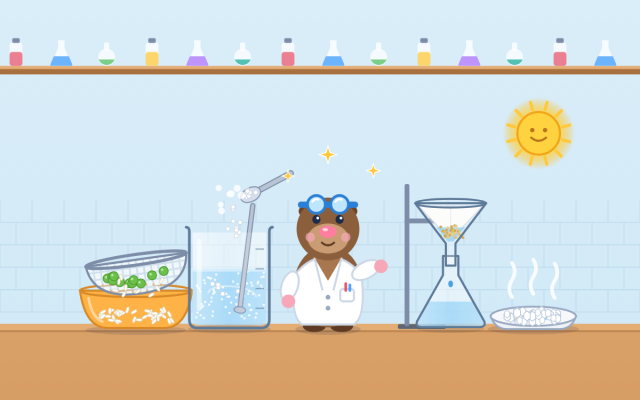
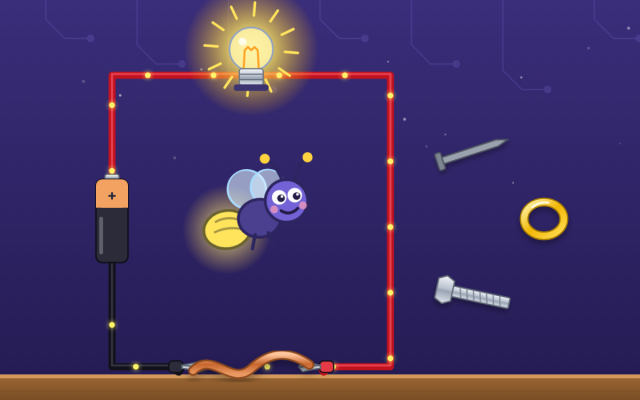
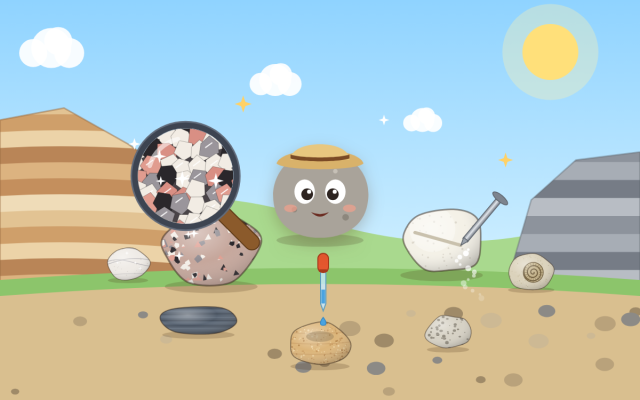
Guided by Rivet the robot, children run their own tests. They scratch blocks with a nail, shine a torch through glass and tracing paper, stir solids into water, clip materials into a circuit and drag a magnet over metals. They also sort materials into a Venn diagram and plan a fair test.
Along the way they learn key words: transparent, translucent and opaque; soluble and insoluble; conductor and insulator. They find out that a dissolved solid is still in the water, that only some metals are magnetic, and that a fair test changes just one thing.
Properties are the ways a material behaves, such as how hard it is, whether it dissolves in water, whether light passes through it, whether it carries heat or electricity, and whether a magnet attracts it. Scientists test these properties to decide what each material is good for.
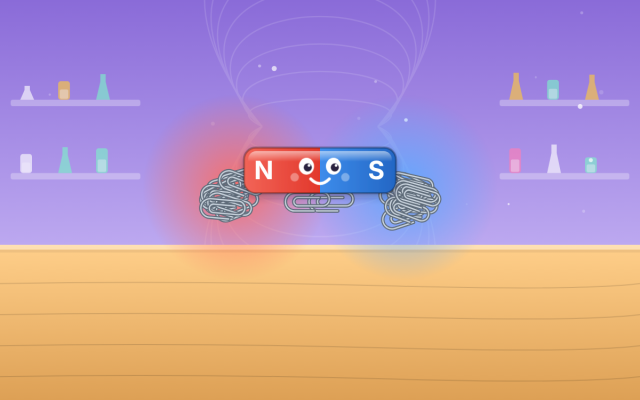
No, only some metals are magnetic. Iron, nickel and steel, which is mostly iron, are attracted to a magnet, but aluminium, copper and gold are not. Wood, plastic and glass are never attracted to a magnet.
Dissolving happens when a solid, like sugar, mixes into a liquid and breaks into pieces too tiny to see, while melting happens when heat turns a solid into a liquid. A dissolved solid is still in the water, which is why sweet tea tastes sweet.
The game is designed for children aged 9 to 11 and matches the Year 5 Science objectives on properties of materials in England. Younger children who enjoy science can play with an adult, and two short warm-ups recap earlier ideas about materials and circuits.
The game has seven test stations, each with a short quick check, plus a ten-question final challenge, and takes about an hour to play in full. Children can start at any station and come back to finish the rest later.
 TapLearn
Getting it ready…
Great work on chapter 1! To open the next chapters, ask a grown-up to take a look.
To play this game, ask a grown-up to take a look. There are lots of free games you can play right now too!
Create a free family account and your child can play every chapter of every game for 7 days, with no card needed. Their progress is kept. After that, the free plan is free for ever, and membership is £6.99 a month if you'd like to keep every chapter.
That's all the learning time for today. Great work! Flip will be ready to play again tomorrow.