Uses of Everyday Materials: Build a Town with Bea the Beaver
Learn how to choose the right material for a job, from glass windows to brick walls, by building a town and testing materials with Bea the Beaver.
Online game, chapter 1 free · Year 2 (KS1) · ages 6–8 · national curriculum in England · no adverts · plays on a phone, tablet or computer · no sign-up to start.
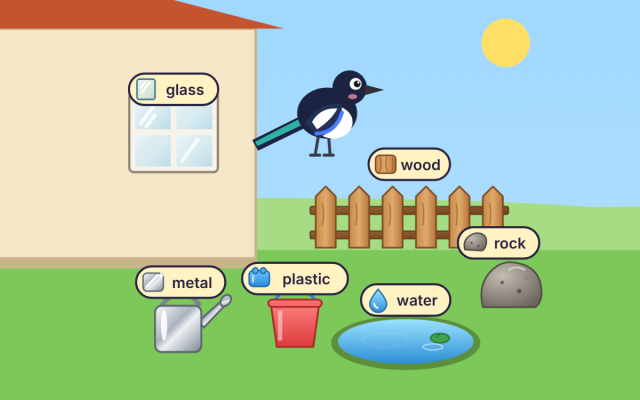
An online science game for Year 2 (KS1). It covers the national curriculum in England, Year 2 science: “Identify and compare the suitability of a variety of everyday materials, including wood, metal, plastic, glass, brick, rock, paper and cardboard for particular uses”.
4 short chapters, about 25 minutes in all. Children can stop after any chapter.
Start playing for free. Plays in the browser on phones, tablets and computers: no app, no adverts.
Free for teachers: every chapter on the whiteboard with a free teacher account.
Last updated · Checked against the national curriculum in England by the TapLearn team
What you'll learn
Why glass is used for windows: it is transparent
Which materials are waterproof and which soak up water
How to spot an unsuitable material and say what goes wrong
That one object can be made from different materials
How a fair test compares materials for the same job
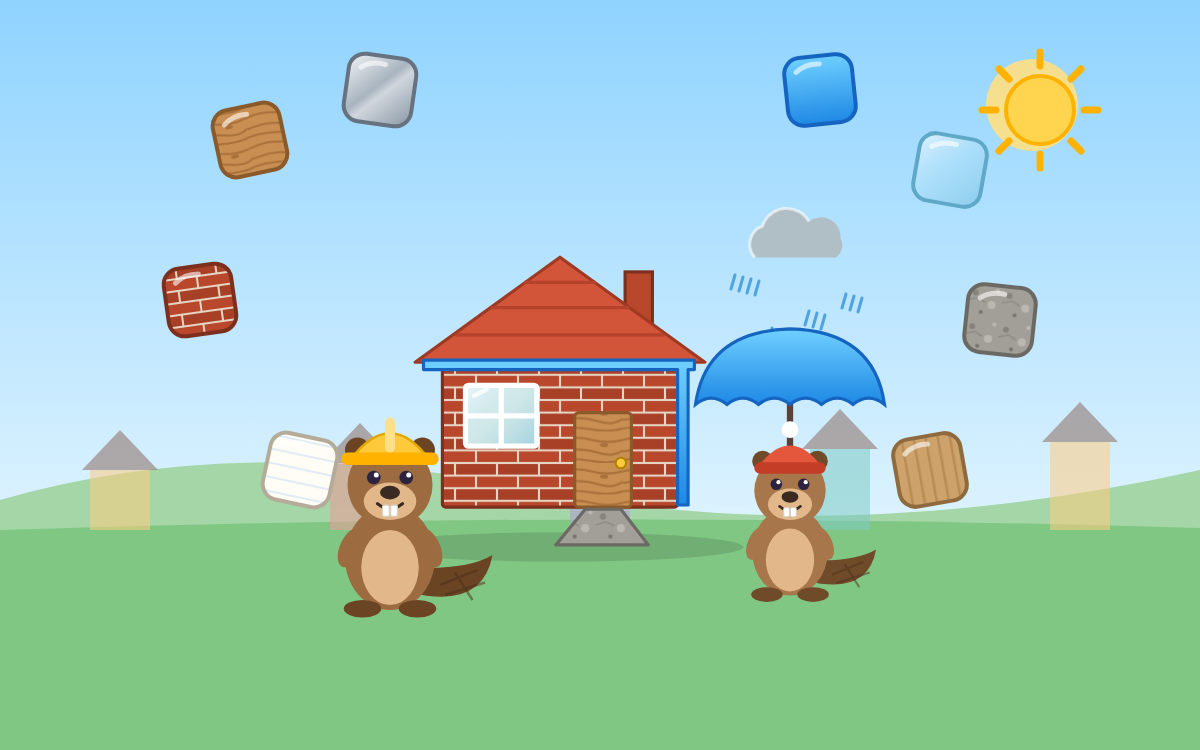
Choose a suitable material for each part of Bea's house, such as brick for strong walls and transparent glass for the window, and hear why each property suits the job.
Year 2 science · 1
Spotting the wrong material for a job
Test silly objects like a paper umbrella and a brick kite, explain what goes wrong using property words, then pick a more suitable material and test it again.
Year 2 science · 1
One object, many materials
Compare wooden, metal and plastic spoons and see-through glass and plastic cups to learn that one object can be made from different materials, and one material can do many jobs.
Year 2 science · 1
Testing materials to find the best one
Run simple fair tests with a watering can and a toy truck, record the results, and use them to choose the most suitable material for a kennel roof and a bridge.
What the chapters cover in the national curriculum in England:
Year 2 science: Identify and compare the suitability of a variety of everyday materials, including wood, metal, plastic, glass, brick, rock, paper and cardboard for particular uses
About this adventure
Uses of Everyday Materials is an interactive science game that teaches children aged 6–8 (Year 2) how to choose a suitable material for a job and explain why, using wood, metal, plastic, glass, brick, rock, paper and cardboard.
Players help Bea the Beaver build her house one part at a time, then put her cousin's silly inventions to the test: a paper umbrella in the rain, a cardboard boat on the river and a brick kite in the wind. They spot what goes wrong and pick a better material.
Along the way children learn property words such as transparent (you can see through it), waterproof, absorbent, strong and flexible. They discover that one object, like a spoon, can be made from different materials, and run simple fair tests with a watering can and a toy truck to compare materials.
Questions and answers
Why are different materials used for different jobs?
Each job needs certain properties, so we choose a material that has them. A window must let light in, so it is made of transparent glass, while a wall must be strong and hard, so it is made of brick.
Why is paper a bad material for an umbrella?
Paper is absorbent, so it soaks up rain, goes soggy and tears. An umbrella needs a waterproof material, such as plastic or a waterproof fabric, so the rain runs off.
Can the same object be made from different materials?
Yes, many objects can be made from more than one material. Spoons, for example, can be wood, metal or plastic, and each one suits a different use, such as a wooden spoon for stirring hot soup.
What age is this materials game for?
It is made for children aged 6 to 8 and follows the Year 2 science topic on uses of everyday materials in England. Older children who want a quick refresher on material properties can enjoy it too.
What does the materials game include and how long does it take?
It has a short warm-up, four chapters and a 10-question challenge, which take about 25 minutes in total. Every line is read aloud, and children can start any chapter from the town map.
We count visits to make TapLearn better.We use one cookie, only on this site, to see how families find and use it. No adverts, and nothing is shared.One cookie, only on this site. No adverts.How we measure

 TapLearn