What you'll learn
- Why melting, freezing, evaporating and condensing are reversible changes
- How evaporating gets a dissolved solid back from a solution
- When to use a sieve and when to use a filter
- Why burning makes new materials such as ash, smoke and gases
- That vinegar and bicarbonate of soda make carbon dioxide gas
- How to sort changes by asking whether a new material is made
Chapter by chapter
- Changes of state: melting, freezing, evaporating and condensing are reversible Free to try
Year 5 science · 1
- Dissolving: a reversible change, getting the solid back by evaporating
Year 5 science · 1
- Mixing: a reversible change, separating mixtures with a sieve and a filter
Year 5 science · 1
- Burning: an irreversible change that makes new materials
Year 5 science · 2
- Acid on bicarbonate of soda: an irreversible change that makes a new gas
Year 5 science · 2
- Reversible or irreversible? Sorting changes and explaining why
Year 5 science · 1 Year 5 science · 2
- The Big Lab Test (10 questions) (10 questions)
What the chapters cover in the national curriculum in England:
- Year 5 science: Demonstrate that dissolving, mixing and changes of state are reversible changes
- Year 5 science: Explain that some changes result in the formation of new materials, and that this kind of change is not usually reversible, including changes associated with burning and the action of acid on bicarbonate of soda
About this adventure
Reversible and Irreversible Changes is an interactive science game that teaches children aged 8–11 which changes can be undone and which make new materials, following the Year 5 Properties and Changes of Materials curriculum. Professor Bunsen guides them through six lab benches, with voice narration and short steps to follow.
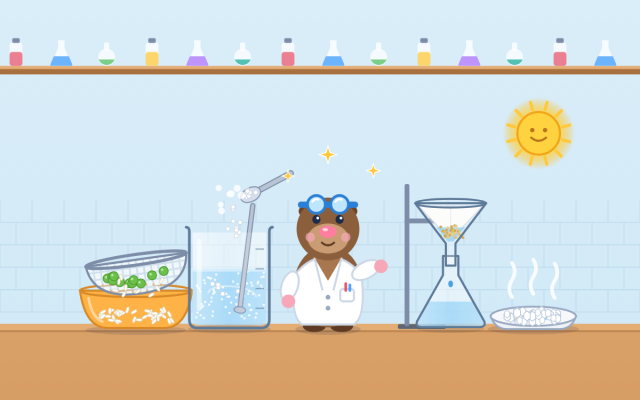
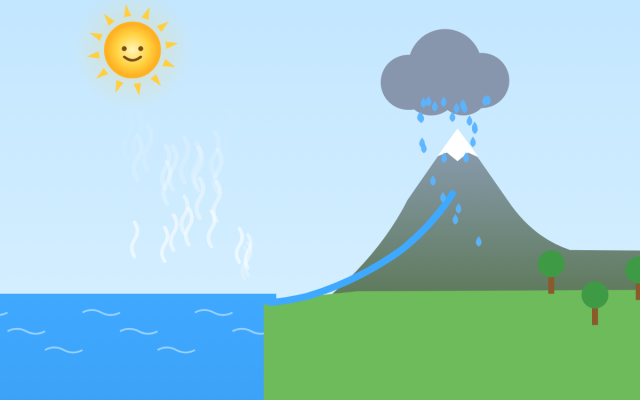
Children hold buttons to heat and cool, pour, stir, sieve and filter. They see that melting, freezing, evaporating, condensing, dissolving and mixing are reversible changes, because the original material can be got back. Scales show that dissolved salt is still in the water, and evaporating the water brings it back as crystals.
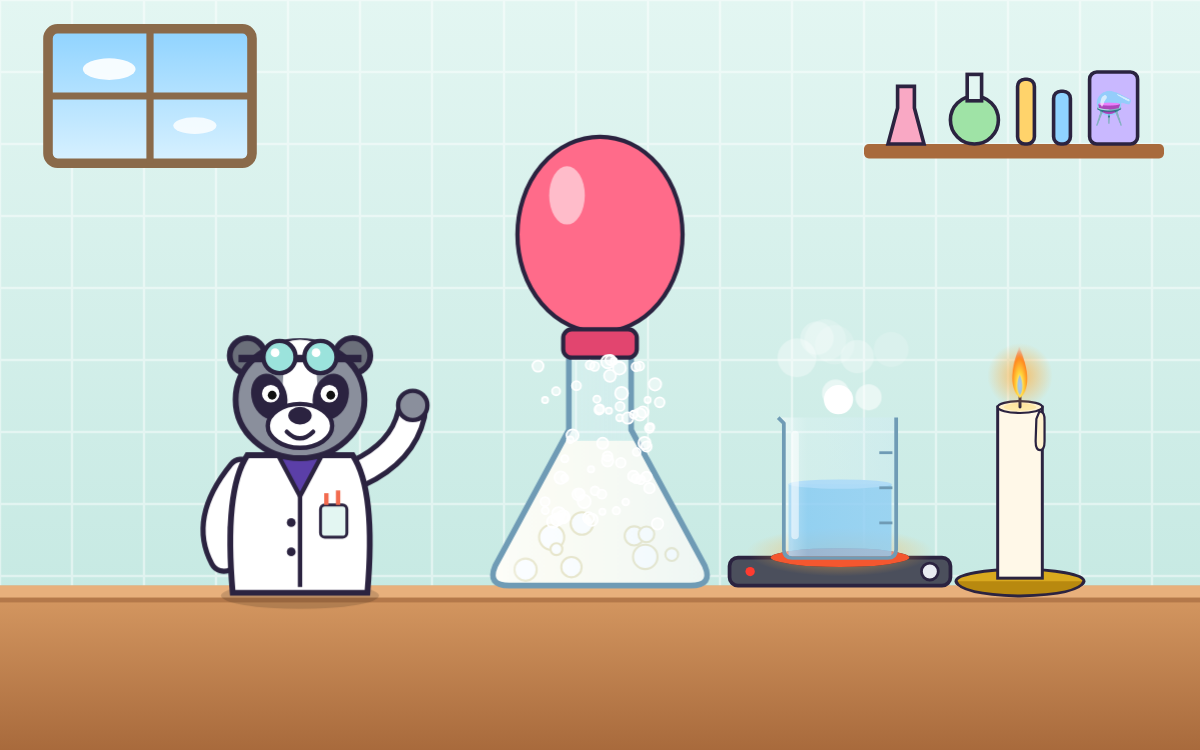
They then watch paper burn on a safe tray, try an Undo Machine that cannot turn ash back into paper, and catch carbon dioxide in a balloon when vinegar, an acid, meets bicarbonate of soda. Finally they learn to ask one question: is a new material made?
Questions and answers
What is the difference between a reversible and an irreversible change?
A reversible change can be undone so you get the original material back, like melting chocolate and letting it set again. An irreversible change makes new materials, like burning paper into ash, so the original material cannot come back.
Is dissolving salt in water a reversible change?
Yes, dissolving is a reversible change. The salt is still in the water in pieces too tiny to see, and if the water evaporates the salt is left behind as crystals.
What happens when you mix vinegar and bicarbonate of soda?
Vinegar is an acid, and when it meets bicarbonate of soda the mixture fizzes and makes a new gas called carbon dioxide. Because new materials are made, the change is irreversible.
What age is this reversible and irreversible changes game for?
It is written for children aged 8 to 11 and matches the Year 5 science curriculum in England, where pupils learn about properties and changes of materials in Key Stage 2.
What does the game include and how long does it take?
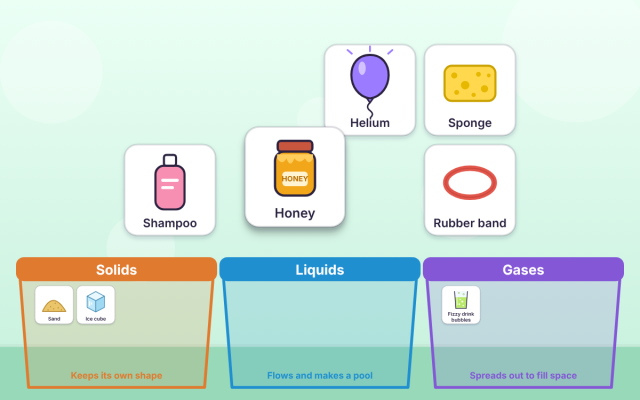
The game has six chapters, an optional warm-up on solids, liquids and gases, and a 10-question final test. Playing everything takes about 40 minutes, and each chapter can be played on its own.
 TapLearn