What you'll learn
- A solid keeps its own shape and can be held
- Powders like sand and flour are solids made of tiny grains
- A liquid flows and takes the shape of its container
- Pouring a liquid changes its shape but not the amount
- A gas spreads out to fill all the space it is in
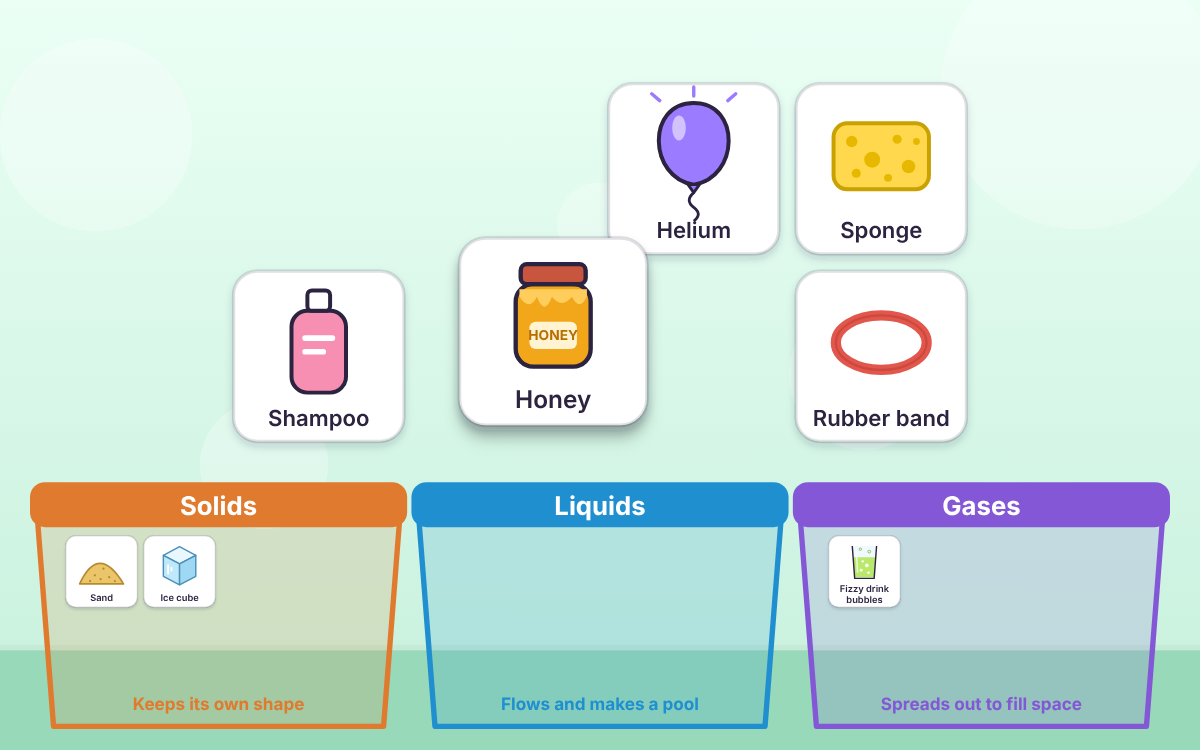
- How to sort tricky materials like honey and sponge correctly
Chapter by chapter
- Solids: materials that keep their shape Free to try
Year 4 science · 1
- Liquids: materials that flow and take the shape of their container
Year 4 science · 1
- Gases: materials that spread out to fill a space
Year 4 science · 1
- Comparing and grouping materials into solids, liquids and gases
Year 4 science · 1
- Solids, liquids and gases challenge (10 questions)
What the chapters cover in the national curriculum in England:
- Year 4 science: Compare and group materials together, according to whether they are solids, liquids or gases
About this adventure
Solids, Liquids and Gases is an interactive science game that teaches children aged 7–10 how to compare and group materials as solids, liquids or gases, matching the Year 4 national curriculum for England.
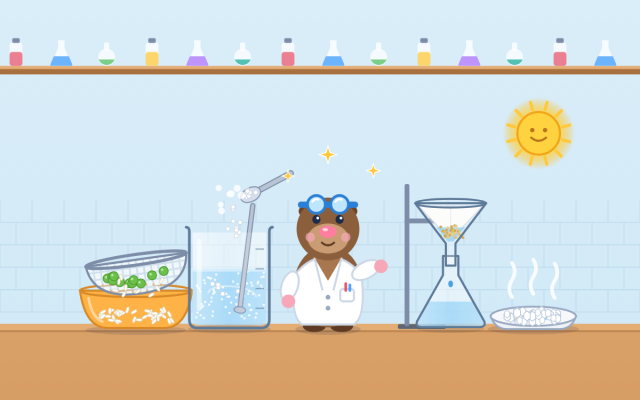
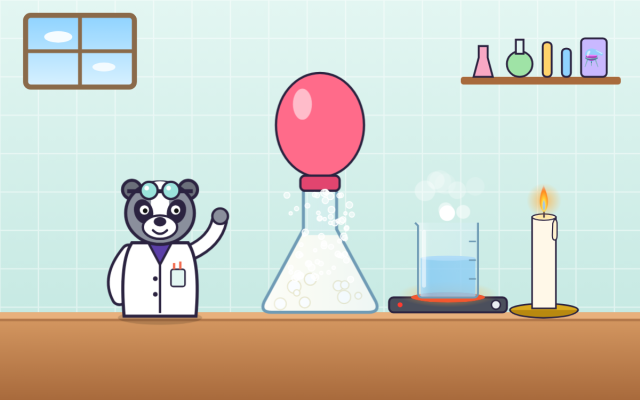
Guided by Professor Fizz, a talking flask, children run small experiments on screen. They pour sand to see it make a pile while water makes a pool, tilt a glass to watch the surface stay level, and push an upside-down jar into water to prove it was full of air.
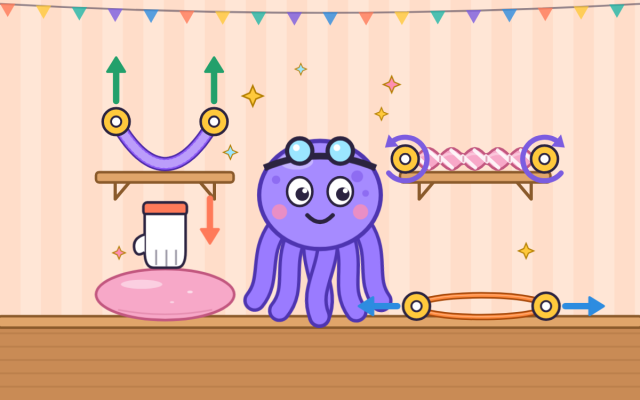
Along the way they learn the key properties: a solid keeps its own shape, a liquid flows and takes the shape of its container while the amount stays the same, and a gas spreads out to fill all the space. Tricky cases such as flour, honey, a sponge and fizzy-drink bubbles help them sort materials by behaviour, not looks.
Questions and answers
What is the difference between a solid, a liquid and a gas?
A solid keeps its own shape, a liquid flows and takes the shape of its container, and a gas spreads out to fill all the space it is in. Scientists call these the three states of matter.
Is sand a solid or a liquid?
Sand is a solid, even though it can be poured. Each grain is a tiny solid with its own shape, so poured sand makes a pile rather than spreading out into a flat pool like water does.
Is air really a gas if you can't see it?
Yes, air is a gas and a real material that takes up space. If you push an upside-down cup into water, the trapped air stops the water getting in until you tilt the cup and bubbles escape.
What age is this solids, liquids and gases game for?
The game is designed for children aged 7 to 10. It matches the Year 4 states of matter topic in England's national curriculum, and younger or older children can also use it to learn or revise the basics.
What does the game include and how long does it take?
The game has an optional warm-up, four chapters of on-screen experiments and sorting, and a 10-question final challenge. Playing everything takes about 35 minutes, and each chapter can be played on its own.

 TapLearn