Animal Habitats for Reception: Explore Wild Places with Poppy the Puffin
Learn which animal habitats suit crabs, sloths, camels and penguins, and how the seaside, jungle, desert and icy poles differ from home.
Online game, chapter 1 free · Reception (EYFS) · ages 4–5 · Early Years (EYFS) framework · no adverts · plays on a phone, tablet or computer · no sign-up to start.
An online science game for Reception (EYFS). It covers the national curriculum in England, Reception understanding the world: “Know some similarities and differences between the natural world around them and contrasting environments, drawing on their experiences and what has been read in class”.
6 short chapters, about 40 minutes in all. Children can stop after any chapter.
Start playing for free. Plays in the browser on phones, tablets and computers: no app, no adverts.
Free for teachers: every chapter on the whiteboard with a free teacher account.
Last updated · Checked against the national curriculum in England by the TapLearn team
What you'll learn
What the weather, plants and animals are like near home
That sea water is salty and the tide goes in and out
That the jungle is hot and rainy, but the desert is dry
That a camel's hump stores fat, not water
Polar bears live in the Arctic, penguins near the South Pole
How to say what is the same as home and what is different
Chapter by chapter
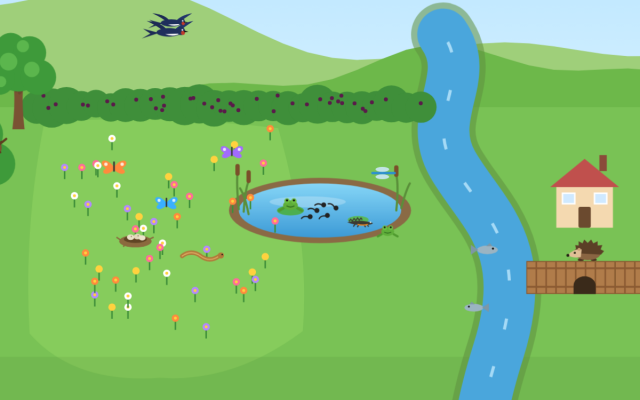
Where I live: the plants, animals and weather near homeStart playing for free
Reception understanding the world · 1
The seaside: salty sea, tides, rock pools and seaside animals
Reception understanding the world · 1
The jungle: a hot, rainy forest and the animals that live there
Reception understanding the world · 1
The desert: a dry, sunny place, cactus plants and camels
Reception understanding the world · 1
The icy poles: polar bears in the Arctic, penguins in Antarctica
Reception understanding the world · 1
Same and different: comparing wild places with where I live
What the chapters cover in the national curriculum in England:
Reception understanding the world: Know some similarities and differences between the natural world around them and contrasting environments, drawing on their experiences and what has been read in class
About this adventure
Animal Habitats is an interactive game that teaches children aged 4–5 how the seaside, the jungle, the desert and the icy poles differ from where they live, and which animals and plants belong in each place. A habitat is the natural home where an animal or plant lives.
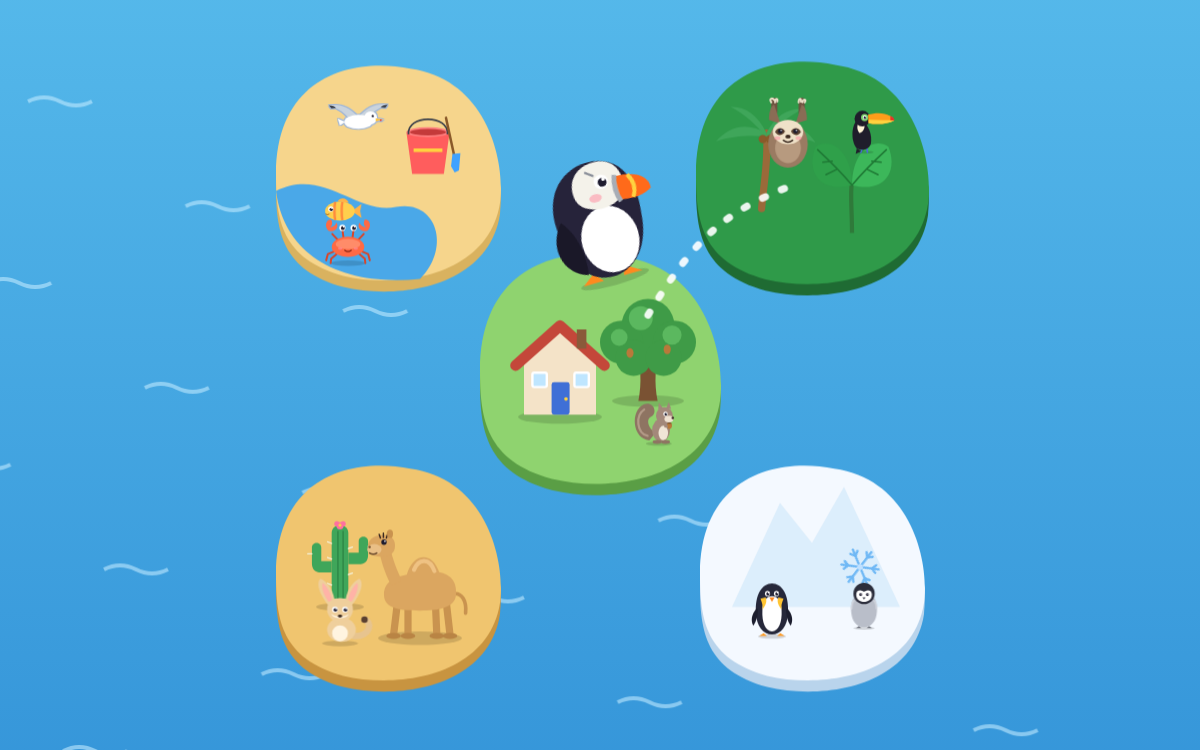
Children fly with Poppy the puffin from a UK park to four wild places. They send the tide out to find a crab and a starfish in a rock pool, grow a rainy jungle, plant a cactus in the dry sand, and sort polar bears to the Arctic and penguins to Antarctica.
At every stop they tap Same or Different to compare the weather, plants and animals with home. Poppy reads each instruction aloud with captions, and children answer by tapping or dragging pictures.
Questions and answers
What is an animal habitat, in simple words?
An animal habitat is the natural home where an animal lives and finds food, water and shelter. A crab's habitat is a salty rock pool at the seaside, while a camel's habitat is the dry, sandy desert.
Do polar bears and penguins live together?
No, polar bears and penguins never meet in the wild. Polar bears live only in the Arctic, near the North Pole, and penguins live in the southern half of the world, mostly near the South Pole in Antarctica.
What is inside a camel's hump?
A camel's hump is full of fat, not water. The fat is a food store that gives the camel energy when food is hard to find, and the hump shrinks and droops when the fat is used up.
What age is the Animal Habitats game for?
The game is for children aged 4 to 5 and matches the Reception (EYFS) Understanding the World goal about contrasting environments. Every instruction is read aloud with captions, so children who cannot read yet can play on their own.
What does the Animal Habitats game include and how long does it take?
The game has six chapters, each with an animated introduction, hands-on activities and quick picture questions, followed by a 10-question Explorer Challenge. Playing everything takes about 40 minutes, and children can start at any place on the map.
We count visits to make TapLearn better.We use one cookie, only on this site, to see how families find and use it. No adverts, and nothing is shared.One cookie, only on this site. No adverts.How we measure
 TapLearn