Learn the days of the week, the months of the year and words like yesterday, tomorrow, first and last by riding six time-themed fairground rides.
Online game, chapter 1 free · Year 1 (KS1) · ages 5–7 · national curriculum in England · no adverts · plays on a phone, tablet or computer · no sign-up to start.
An online maths game for Year 1 (KS1). It covers the national curriculum in England, Year 1 maths: “Sequence events in chronological order using language”, and 1 more statement listed under the chapters.
6 short chapters, about 35 minutes in all. Children can stop after any chapter.
Start playing for free. Plays in the browser on phones, tablets and computers: no app, no adverts.
Free for teachers: every chapter on the whiteboard with a free teacher account.
Last updated · Checked against the national curriculum in England by the TapLearn team
What you'll learn
Put events in order using first, next, then and last
Use before, after, morning, afternoon and evening to talk about a day
Say the seven days of the week in order, starting with Monday
Work out yesterday and tomorrow from any day of the week
Say the twelve months of the year in order
Read a calendar and compare days, weeks, months and years
Chapter by chapter
Putting events in order: first, next, then and lastStart playing for free
Put everyday events, such as making a sandwich or getting ready for bed, in chronological order using first, next, then and last, by tapping picture cards onto a puppet stage.
Year 1 maths · 1
Before and after; morning, afternoon and evening
Move the sun across the sky to learn when morning, afternoon and evening happen, sort daily activities into the right time of day, and use before and after to describe a morning routine.
Year 1 maths · 1
The days of the week in order
Say the seven days of the week in order on a carousel, see that Monday comes round again after Sunday, and sort the days into school days and the weekend.
Year 1 maths · 2
Yesterday, today and tomorrow
Find yesterday and tomorrow for any day on a strip of the seven days, including across the weekend, and decide whether an event happened yesterday or will happen tomorrow.
Year 1 maths · 1Year 1 maths · 2
The months of the year in order
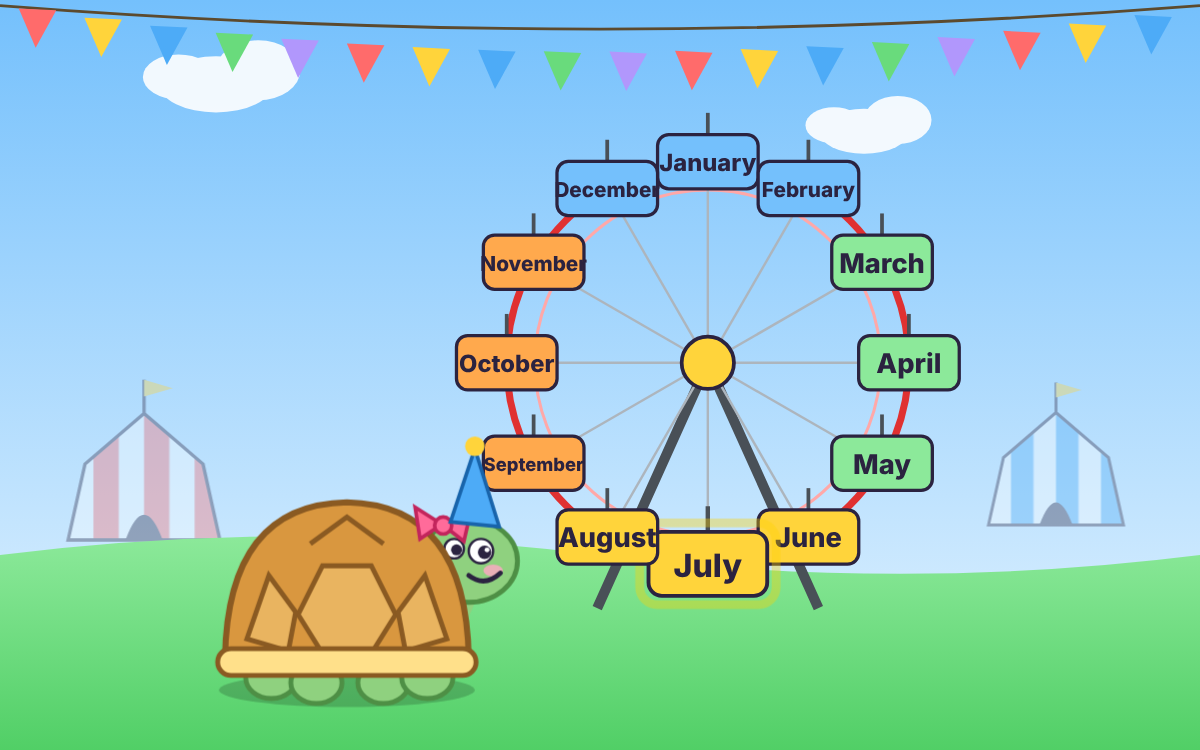
Fill a Big Wheel with the twelve months of the year in order, see that January follows December, and say which month comes just before or after another.
Year 1 maths · 2
Days, weeks, months and years on a calendar
Read a month calendar to find the day for a date, learn that 7 days make a week and 12 months make a year, and order a day, week, month and year from shortest to longest.
What the chapters cover in the national curriculum in England:
Year 1 maths: Sequence events in chronological order using language
Year 1 maths: Recognise and use language relating to dates, including days of the week, weeks, months and years
About this adventure
Days, Weeks, Months and Years is an interactive maths game that teaches children aged 5–7 (Year 1) to put events in order and use the language of time and dates, including the days of the week and the months of the year.
Tilly the tortoise guides the player round her Time Fair. They tap picture cards into order on a puppet stage, move the sun from morning to evening, fill a carousel with the seven days and a Big Wheel with the twelve months, find yesterday and tomorrow on a day strip, and read a real month calendar.
Every ride starts with a short spoken introduction and ends with a recap and a fun fact, such as why Thursday is named after Thor. Hints after a wrong answer point to the common mix-ups, like swapping yesterday and tomorrow or forgetting that Monday follows Sunday.
Questions and answers
How do I teach my child the days of the week?
Say the seven days in order together each morning, starting with Monday, and talk about yesterday, today and tomorrow. Point out that after Sunday the week starts again with Monday, just like going round on a carousel.
How many days are in a week and how many months are in a year?
There are 7 days in a week, from Monday to Sunday, and 12 months in a year, from January to December. A month is about four weeks long and has 28 to 31 days.
What do yesterday and tomorrow mean, in simple words?
Yesterday is the day before today, and tomorrow is the day after today. If today is Wednesday, then yesterday was Tuesday and tomorrow will be Thursday.
At what age do children learn the months of the year?
Children in England learn the days of the week and the months of the year in Year 1 maths, when they are 5 or 6. This game is pitched at Year 1 and suits children aged 5 to 7.
What is in the game and how long does it take?
The game has six short rides, one for each part of the topic, followed by a 12-question challenge. Playing everything takes about 35 minutes, and each ride can also be played on its own.
We count visits to make TapLearn better.We use one cookie, only on this site, to see how families find and use it. No adverts, and nothing is shared.One cookie, only on this site. No adverts.How we measure

 TapLearn