Nets of 3D Shapes: Fold, Test and Build in the Fold Factory
Learn how nets of 3D shapes fold into cubes, prisms and pyramids, then unfold solids, test cube nets and design your own nets on a factory workbench.
Online game, chapter 1 free · Year 6 (KS2) · ages 9–11 · national curriculum in England · no adverts · plays on a phone, tablet or computer · no sign-up to start.
An online maths game for Year 6 (KS2). It covers the national curriculum in England, Year 6 maths: “Recognise, describe and build simple 3-D shapes, including making nets”.
5 short chapters, about 35 minutes in all. Children can stop after any chapter.
Start playing for free. Plays in the browser on phones, tablets and computers: no app, no adverts.
Free for teachers: every chapter on the whiteboard with a free teacher account.
Last updated · Checked against the national curriculum in England by the TapLearn team
What you'll learn
Count faces, edges and vertices, including the hidden ones
Tell prisms from pyramids and name them by their base
Recognise which 2D shapes make the net of each 3D shape
Why a cone's net uses a sector, not a triangle
Test whether six squares will fold into a cube
Complete nets so edges that meet are the same length
Chapter by chapter
Count faces, edges and vertices, and name prisms and pyramidsStart playing for free
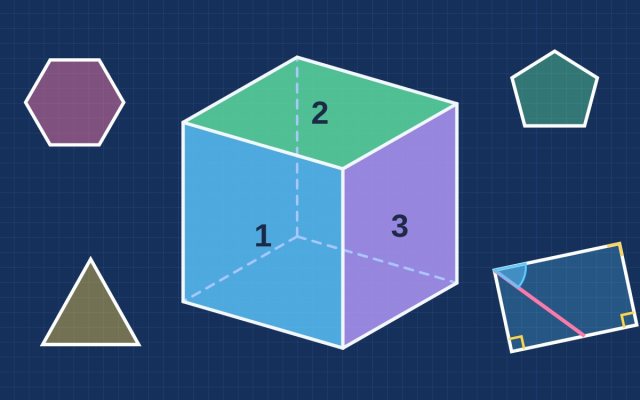
Learn to count the faces, edges and vertices of 3D shapes, including the hidden ones, and to tell prisms from pyramids, naming each one by its end faces or its base.
Year 6 maths · 1
Unfold 3D shapes to find their nets
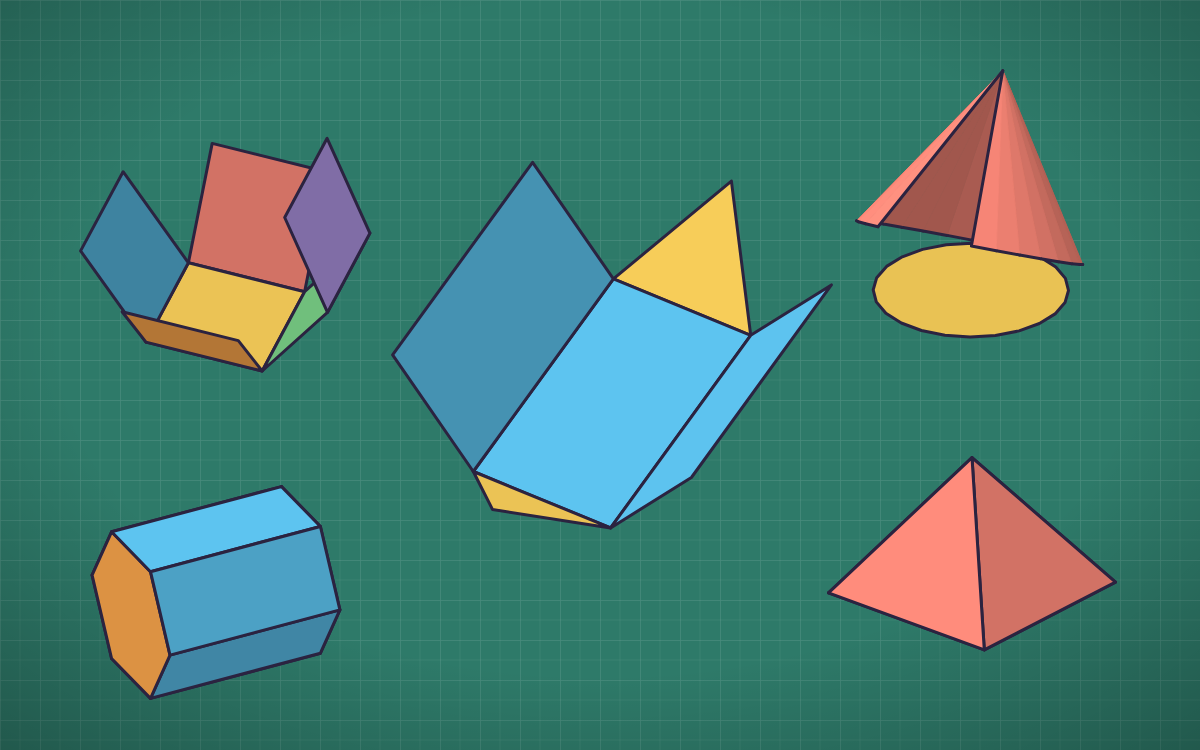
Drag a slider to unfold a cube, cuboid, triangular prism, square-based pyramid, cylinder and cone, spotting the 2D shapes in each net and finding out why a sphere has no net.
Year 6 maths · 1
Match nets to the 3D shapes they make
Match nets to the 3D shapes they fold into, and choose the right net for a given shape, by counting faces and checking their shapes before watching each net fold up.
Year 6 maths · 1
Test which nets fold into a cube
Predict whether arrangements of six squares will fold into a cube, watch them fold to check, and work out which faces end up opposite each other, including on a dice.
Year 6 maths · 1
Complete and build your own nets
Complete cube, prism and cuboid nets, design original cube nets, and work out how many faces a net needs, so nothing overlaps and edges that meet are the same length.
What the chapters cover in the national curriculum in England:
Year 6 maths: Recognise, describe and build simple 3-D shapes, including making nets
About this adventure
Nets of 3D Shapes is an interactive maths game that teaches children aged 9–11 how flat nets fold into 3D shapes, matching the Year 6 goal to recognise, describe and build simple 3D shapes, including making nets.
Players paint and count the faces, edges and vertices of solids, then tell prisms (two matching end faces joined by rectangles) from pyramids (one base with triangles meeting at the apex). They drag a slider to unfold cubes, cuboids, prisms, pyramids, cylinders and cones, discovering that a cylinder's curved surface opens into a rectangle and a cone's into a sector.
Later stations ask them to predict which arrangements of six squares fold into a cube, find opposite faces, and complete or design nets so nothing overlaps and edges that meet are the same length. Every prediction is checked with a live folding animation.
Questions and answers
What is a net of a 3D shape?
A net is a flat 2D shape that folds up to make a 3D shape, with every face joined edge to edge. For example, the net of a cube is six squares arranged so they fold up with no gaps or overlaps.
How many nets does a cube have?
A cube has exactly 11 different nets. Each one is an arrangement of six joined squares; arrangements with five squares in a row, or a 2 by 2 block of squares, can never fold into a cube.
What does the net of a cone look like?
The net of a cone is a circle for the base and a sector, which is a slice of a larger circle, for the curved surface. Many children expect a triangle, but only a curved sector wraps smoothly round the circular base.
What age is this nets of 3D shapes game for?
It is designed for children aged 9 to 11, especially Year 6 in England, where pupils learn to recognise, describe and build simple 3D shapes, including making nets. Confident Year 5 children can enjoy it too.
What does the game include and how long does it take?
The game has five chapters and a 10-question final challenge, and takes about 35 minutes to play through. Children can start any chapter from the factory floor, and an optional warm-up refreshes 2D shape names first.
We count visits to make TapLearn better.We use one cookie, only on this site, to see how families find and use it. No adverts, and nothing is shared.One cookie, only on this site. No adverts.How we measure

 TapLearn