Comparing Length, Weight and Capacity: Bramble's Picnic
Learn to compare length, weight and capacity: line up worms, load balance scales and pour drinks to find what is longer, heavier and holds more.
Online game, chapter 1 free · Reception (EYFS) · ages 4–5 · Early Years (EYFS) framework · no adverts · plays on a phone, tablet or computer · no sign-up to start.
An online maths game for Reception (EYFS). It covers the national curriculum in England, Reception maths: “Compare length, weight and capacity”, and 1 more statement listed under the chapters.
4 short chapters, about 25 minutes in all. Children can stop after any chapter.
Start playing for free. Plays in the browser on phones, tablets and computers: no app, no adverts.
Free for teachers: every chapter on the whiteboard with a free teacher account.
Last updated · Checked against the national curriculum in England by the TapLearn team
What you'll learn
Line up the ends before deciding which is longer or shorter
Use tall and taller for things that stand up
On balance scales the heavier side goes down
Bigger things are not always heavier
Describe a cup as empty, half full, nearly full or full
Pour from one container into another to see which holds more
Chapter by chapter
Longer, shorter and taller: lining up to compare lengthsStart playing for free
Compare lengths and heights by lining up the ends, using longer, shorter, taller, longest and shortest, and straighten a curly ribbon to see its real length.
Reception maths · 1Reception maths · 2
Heavier and lighter: comparing weights with balance scales
Compare weights by holding things and with balance scales, learning that the heavier side goes down, that big things can be light, and making the scales balance with blocks.
Reception maths · 1
Full, empty and in between: how full is the cup?
Pour juice and tip it out to make a cup empty, nearly empty, half full, nearly full or full, and see what happens when a full cup spills over.
Reception maths · 1
Holds more, holds less: comparing how much containers hold
Find which container holds more or less by filling one and pouring it into another, discovering that a tall, thin vase can hold less than a short, wide bowl.
Reception maths · 1Reception maths · 2
Bramble's Picnic Challenge: compare lengths, weights and containers (8 questions)
What the chapters cover in the national curriculum in England:
Reception maths: Compare length, weight and capacity
Reception maths: In addition, it is important that the curriculum includes rich opportunities for children to develop their spatial reasoning skills across all areas of mathematics including shape, space and measures
About this adventure
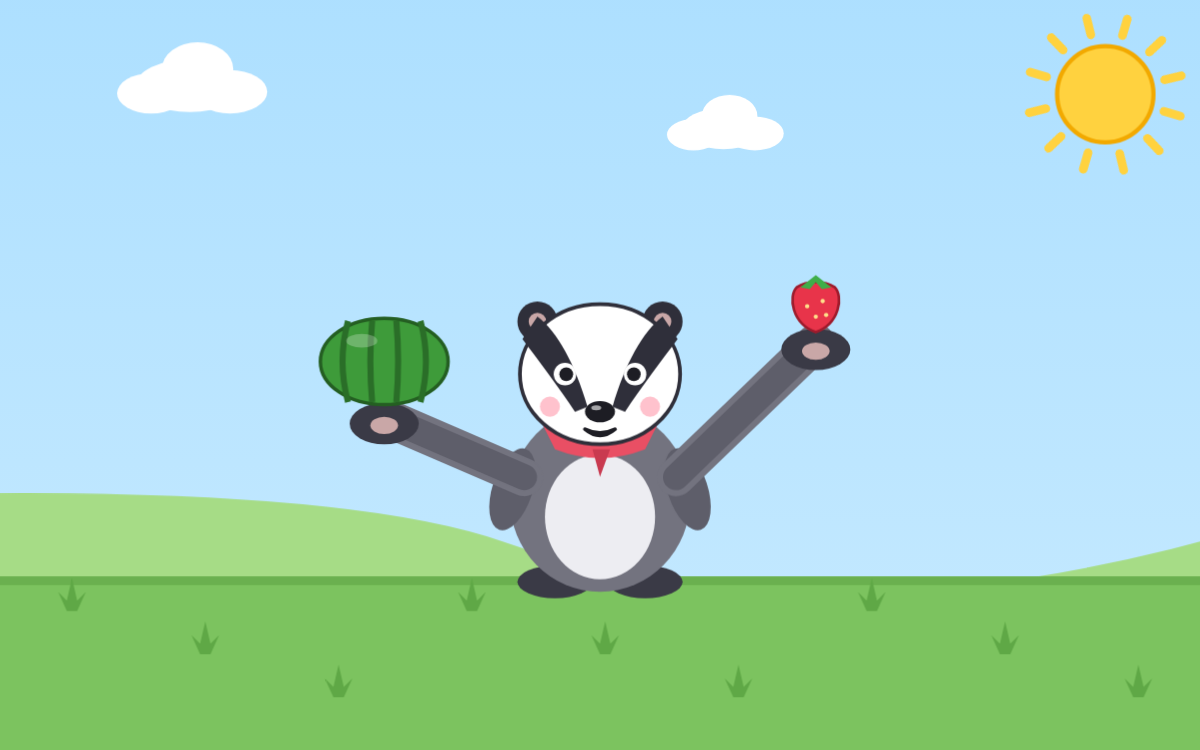
Comparing Length, Weight and Capacity is an interactive maths game that teaches Reception children aged 4–5 to compare things using words like longer, shorter, heavier, lighter, full, empty, holds more and holds less. Children help Bramble the badger pack a picnic, comparing by looking, lifting and pouring rather than by measuring with units.
They slide worms to a log to line up the ends, straighten a curly ribbon and grow sunflowers to find the tallest. They test fruit and toys on balance scales, finding that the heavier side goes down and that a big beach ball can be lighter than a small stone.
At the picnic table they pour juice until a cup is half full or nearly full, then fill a tall vase and pour it into a wide bowl to see that a taller container does not always hold more. Bramble narrates every step.
Questions and answers
How do you teach a 4 year old to compare lengths?
Line the two things up so they start in the same place, then look at the other ends. The one that goes further is longer. Straighten anything bendy first, because a curly ribbon can be longer than it looks.
How do balance scales show which is heavier?
The side with the heavier object goes down and the side with the lighter object goes up. When both sides are level, the objects weigh the same, so the scales balance.
Does a taller container always hold more?
No. A short, wide bowl can hold more than a tall, thin vase. The fair way to check is to fill one container and pour it into the other: if the second one isn't full yet, it holds more.
What age is this comparing measures game for?
It is made for Reception children aged 4–5 and follows the EYFS goal to compare length, weight and capacity. Older children who need a refresher on the comparison words can enjoy it too.
What is in the game and how long does it take?
There are four chapters on length, weight, full and empty, and capacity, each with short practice, plus an eight-question Picnic Challenge. Playing everything takes about 25 minutes, and every instruction is read aloud.
We count visits to make TapLearn better.We use one cookie, only on this site, to see how families find and use it. No adverts, and nothing is shared.One cookie, only on this site. No adverts.How we measure
 TapLearn