What you'll learn
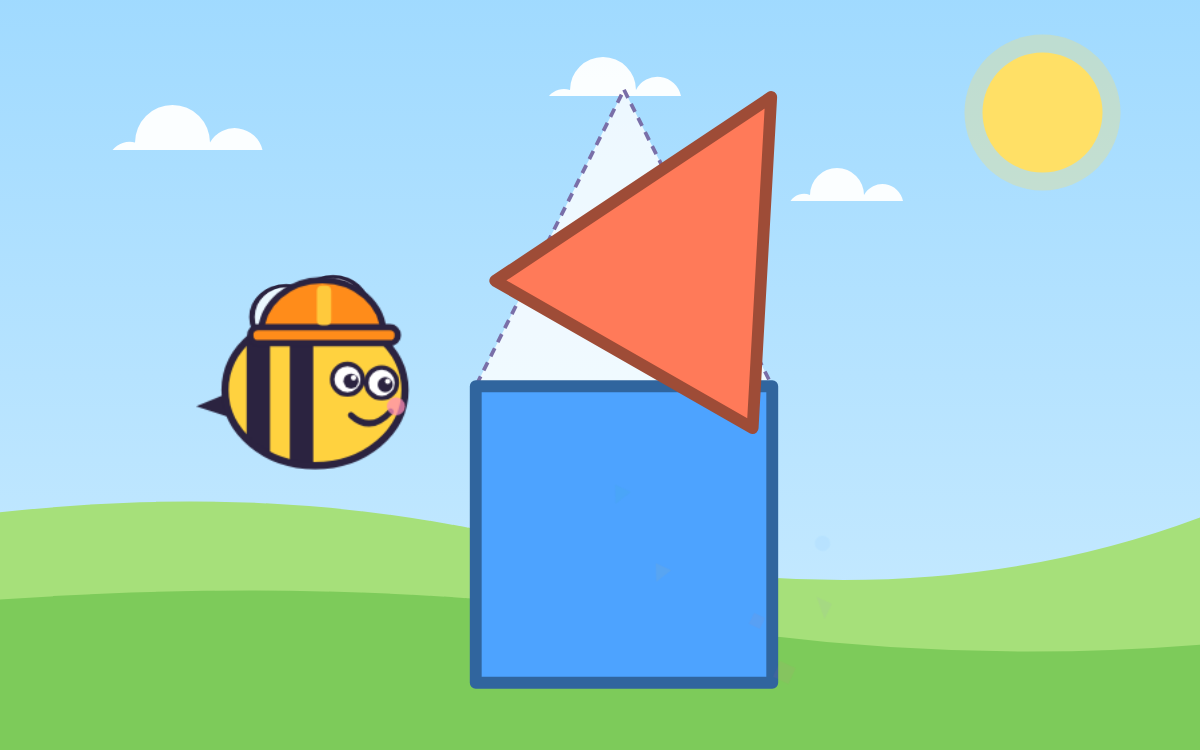
- How to rotate a shape so it fits a matching space
- That turning a shape does not change it: a triangle stays a triangle
- How to choose the right shape and size to make a picture
- How two matching right-angled triangles compose a square
- How to decompose a shape by cutting it into smaller shapes
- How to spot and count smaller shapes hiding inside a bigger shape
Chapter by chapter
- Select and rotate shapes: turning shapes to fit Free to try
Reception maths · 1 Reception maths · 2
- Select, rotate and manipulate shapes to make pictures
Reception maths · 1 Reception maths · 2
- Compose shapes: putting shapes together to make new shapes
Reception maths · 3 Reception maths · 2
- Decompose shapes: finding smaller shapes inside bigger shapes
Reception maths · 3 Reception maths · 2
- Spatial reasoning: turn, fit and build shape puzzles
Reception maths · 2 Reception maths · 1 Reception maths · 3
- Shape Builder Challenge (8 questions) (8 questions)
What the chapters cover in the national curriculum in England:
- Reception maths: Select, rotate and manipulate shapes to develop spatial reasoning skills
- Reception maths: In addition, it is important that the curriculum includes rich opportunities for children to develop their spatial reasoning skills across all areas of mathematics including shape, space and measures
- Reception maths: Compose and decompose shapes so that children recognise a shape can have other shapes within it, just as numbers can
About this adventure
Shape Puzzles: Turn, Fit and Build is an interactive maths game that teaches children aged 4–5 to turn shapes so they fit, join shapes to make new ones and find smaller shapes inside bigger ones, following EYFS Reception maths. Bea the builder bee reads every instruction aloud, so children who are not reading yet can play on their own.
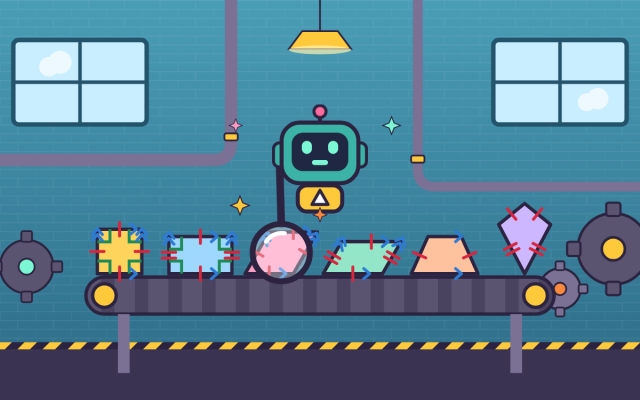
Children tap a shape to rotate it and drag it into its space, posting shapes into a shape sorter and building pictures from outlines. They compose shapes, putting two matching right-angled triangles together to make a square, and decompose them by tapping a dotted line to cut a shape into parts.
Along the way they discover that an upside-down triangle is still a triangle, and that a shape can have other shapes inside it, just as 5 can be made of 3 and 2. These are the early spatial reasoning skills that later maths builds on.
Questions and answers
What does composing and decomposing shapes mean?
Composing shapes means putting smaller shapes together to make a new shape, and decomposing means splitting a shape into smaller shapes. For example, two matching right-angled triangles compose a square, and cutting a square from corner to corner decomposes it into two triangles.
Is a triangle still a triangle if you turn it upside down?
Yes, turning a shape never changes what it is, so an upside-down triangle is still a triangle with 3 sides and 3 corners. Many young children think a shape changes when it is turned, so the game lets them turn shapes themselves and see.
Why is spatial reasoning important for young children?
Spatial reasoning, picturing how shapes move and fit together, is linked by research to later success in maths. The EYFS framework asks Reception settings to give children rich chances to develop it, through activities such as puzzles, turning shapes and building pictures.
What age is this shape puzzle game for?
The game is made for Reception children aged 4 to 5 and follows the DfE's Development Matters guidance for maths in that year. Every instruction is spoken aloud and shown as a caption, and older children can use it for a quick shape recap.
What does the shape puzzle game include and how long does it take?
It has five chapters, each with an animated introduction, guided activities and a recap, plus an 8-question Builder Challenge and an optional shape-name warm-up. Playing everything takes about 40 minutes, and children can pick any chapter from the Shape Town map.
 TapLearn