Converting Units for Year 6: All Aboard the Unit Express
Learn converting units for Year 6: metric measures to 3 decimal places, time, and miles to km, by sliding digits and climbing unit ladders.
Online game, chapter 1 free · Year 6 (KS2) · ages 10–11 · national curriculum in England · no adverts · plays on a phone, tablet or computer · no sign-up to start.
An online maths game for Year 6 (KS2). It covers the national curriculum in England, Year 6 maths: “Use, read, write and convert between standard units, converting measurements of length, mass, volume and time from a smaller unit of measure to a larger unit, and vice versa, using decimal notation to up to 3 decimal places”, and 2 more statements listed under the chapters.
5 short chapters, about 35 minutes in all. Children can stop after any chapter.
Start playing for free. Plays in the browser on phones, tablets and computers: no app, no adverts.
Free for teachers: every chapter on the whiteboard with a free teacher account.
Last updated · Checked against the national curriculum in England by the TapLearn team
What you'll learn
Why a smaller unit means a bigger number when converting
Convert metric units by multiplying or dividing by 10, 100 or 1,000
Convert measures with up to three decimal places, like 1.375 m to mm
Convert units of time, knowing 1.5 hours is 90 minutes
Use 5 miles ≈ 8 km to convert miles and kilometres both ways
Solve measure problems by changing to the same unit first
Chapter by chapter
Convert metric units of length, mass and capacityStart playing for free
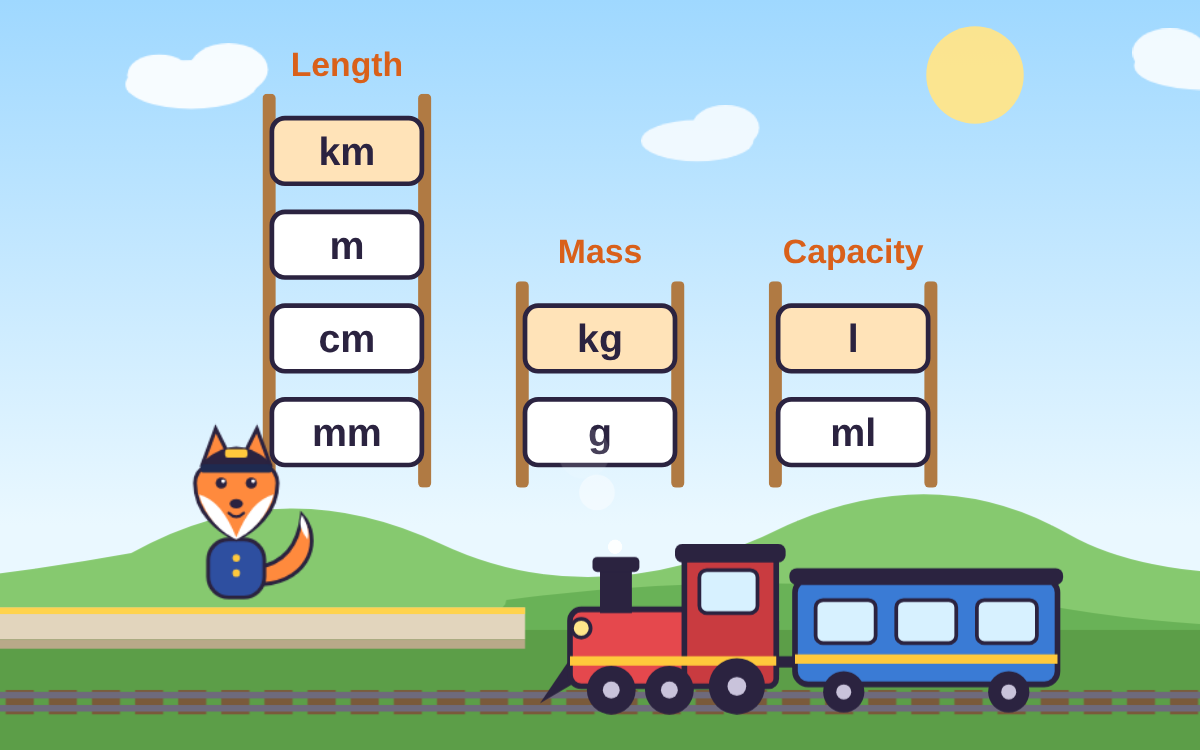
Learn when to multiply and when to divide to convert km, m, cm and mm, kg and g, and l and ml, by building a unit ladder and splitting a metre into centimetres.
Year 6 maths · 1
Convert measures with up to 3 decimal places
Convert measures with up to three decimal places, such as 1.375 m to 1,375 mm and 45 ml to 0.045 l, by sliding digits on a place value chart and using zeros as place holders.
Year 6 maths · 1
Convert units of time, including decimal hours
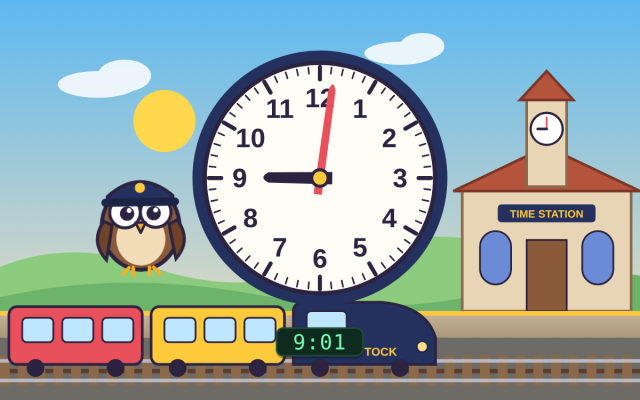
Convert between seconds, minutes, hours, days, weeks and years using 60, 24 and 7, and see on an hour bar why 1.5 hours is 90 minutes, not 1 hour 50 minutes.
Year 6 maths · 1
Convert between miles and kilometres
Convert between miles and kilometres using 5 miles ≈ 8 km: drive a car 5 miles at a time, then divide by 5 and multiply by 8 for any distance (the double number line).
Year 6 maths · 2
Solve measure problems by converting units
Solve measure problems by converting to the same unit first: compare 0.8 kg with 750 g, order lengths in different units, fill 250 ml cups from 1.5 l and find differences in time and distance.
What the chapters cover in the national curriculum in England:
Year 6 maths: Use, read, write and convert between standard units, converting measurements of length, mass, volume and time from a smaller unit of measure to a larger unit, and vice versa, using decimal notation to up to 3 decimal places
Year 6 maths: Convert between miles and kilometres
Year 6 maths: Solve problems involving the calculation and conversion of units of measure, using decimal notation up to 3 decimal places where appropriate
About this adventure
Converting Units is an interactive maths game that teaches children aged 10–11 (Year 6) how to convert between units of length, mass, capacity and time, and between miles and kilometres.
Riding the Unit Express with Juno the fox conductor, players build a unit ladder to see when to multiply and when to divide, slide digits on a place value chart to convert measures with up to three decimal places, and split an hour bar to see why 1.5 hours is 90 minutes. They drive along a double number line using the fact that 5 miles is about 8 kilometres.
At the last station they solve measure problems by changing everything to the same unit first. Typed answers come with hints that target classic mistakes, such as writing 2 kg 50 g as 2.5 kg.
Questions and answers
How do you convert units of measurement?
To change to a smaller unit you multiply, because you need more of them; to change to a bigger unit you divide. With metric units you multiply or divide by 10, 100 or 1,000, so 3.5 kg × 1,000 = 3,500 g.
How do you convert miles to kilometres in Year 6?
Year 6 children use the fact that 5 miles is approximately 8 kilometres. Divide the miles by 5, then multiply by 8, so 30 miles is about 48 km. To go back, divide the kilometres by 8 and multiply by 5.
Is 1.5 hours the same as 1 hour 50 minutes?
No, 1.5 hours is 1 hour 30 minutes, or 90 minutes. Time is not counted in tens: half an hour is half of 60 minutes, which is 30 minutes, not 50.
What age is this converting units game for?
It is written for children aged 10 to 11 in Year 6, following the national curriculum in England for measurement. Confident Year 5 pupils and older children revising before secondary school can use it too.
What does the Unit Express game include and how long does it take?
It has an optional warm-up, five chapters and a ten-question Final Challenge, and takes about 35 minutes to play through. Each chapter has a spoken introduction, hands-on activities, typed answers with hints and a short recap with a fun fact.
We count visits to make TapLearn better.We use one cookie, only on this site, to see how families find and use it. No adverts, and nothing is shared.One cookie, only on this site. No adverts.How we measure

 TapLearn