Properties of Shapes for Year 5: Crack Cases as a Shape Detective
Learn the properties of shapes: name 3-D shapes from flat drawings, use rectangle rules to find missing lengths and angles, and sort regular polygons.
Online game, chapter 1 free · Year 5 (KS2) · ages 9–10 · national curriculum in England · no adverts · plays on a phone, tablet or computer · no sign-up to start.
An online maths game for Year 5 (KS2). It covers the national curriculum in England, Year 5 maths: “Identify 3-D shapes, including cubes and other cuboids, from 2-D representations”, and 2 more statements listed under the chapters.
4 short chapters, about 40 minutes in all. Children can stop after any chapter.
Start playing for free. Plays in the browser on phones, tablets and computers: no app, no adverts.
Free for teachers: every chapter on the whiteboard with a free teacher account.
Last updated · Checked against the national curriculum in England by the TapLearn team
What you'll learn
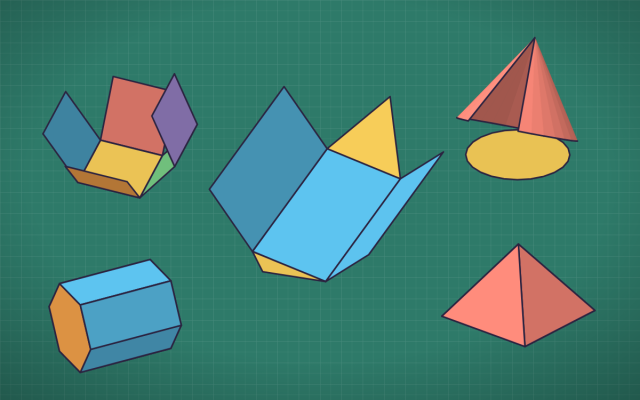
Name cubes, cuboids, prisms and pyramids from flat 2-D drawings
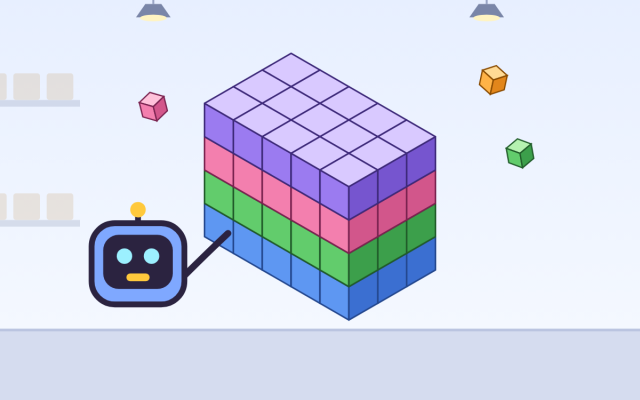
Count hidden faces, edges and vertices shown by dashed lines
Know a rectangle has four right angles and equal opposite sides
Find missing lengths in rectangles and rectilinear shapes
Find a missing angle by taking the known part from 90°
Tell regular from irregular polygons by checking sides and angles
Chapter by chapter
Naming 3-D shapes from flat drawingsStart playing for free
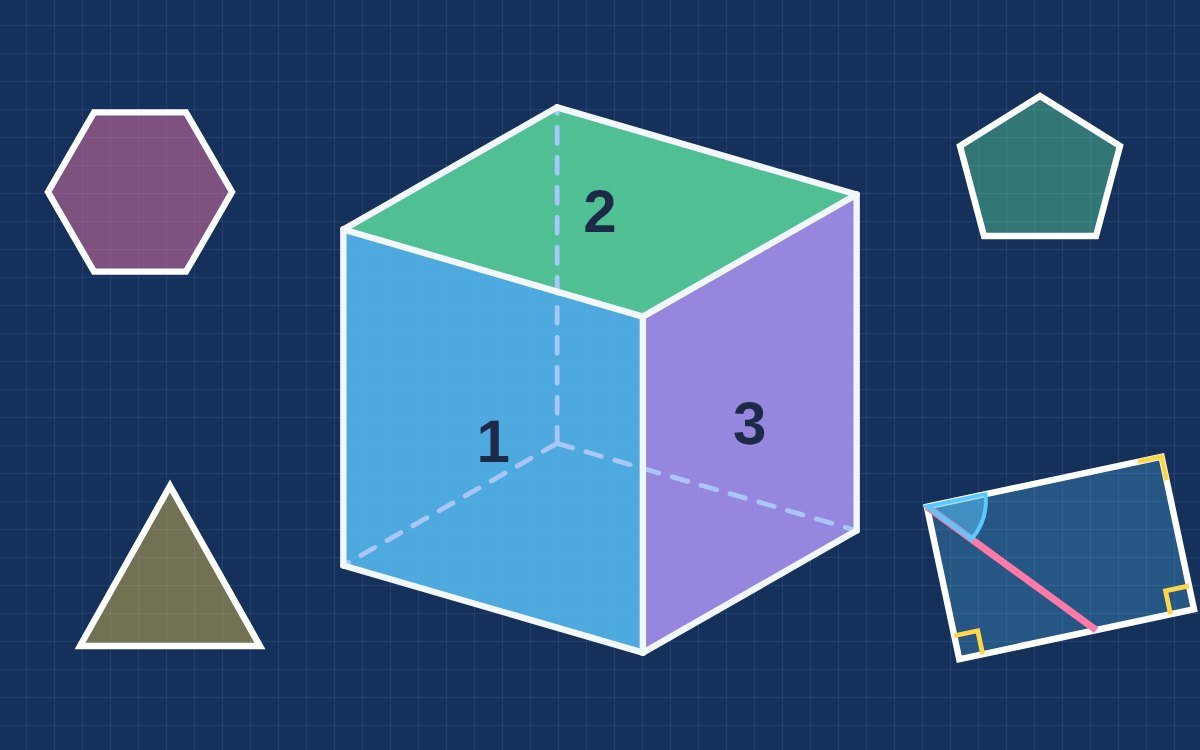
Learn to identify 3-D shapes, including cubes and cuboids, from 2-D drawings by spinning a cube to find hidden faces, edges and vertices, then naming prisms, pyramids and cylinders from their drawings.
Year 5 maths · 1
Rectangle rules and missing lengths
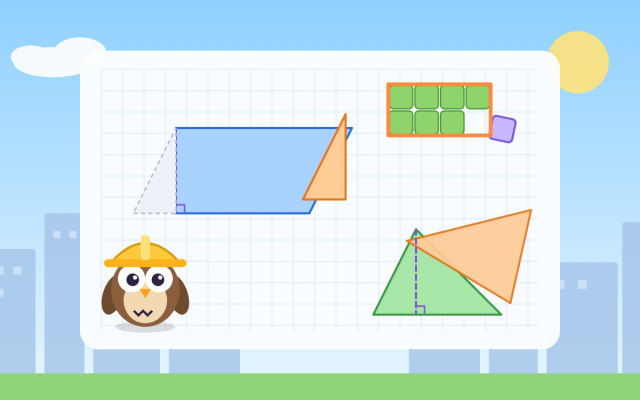
Use the properties of rectangles, four right angles and equal, parallel opposite sides, to find missing lengths in rectangles, squares and rectilinear shapes, and learn that the diagonals are equal and bisect each other.
Year 5 maths · 2
Missing angles in rectangles
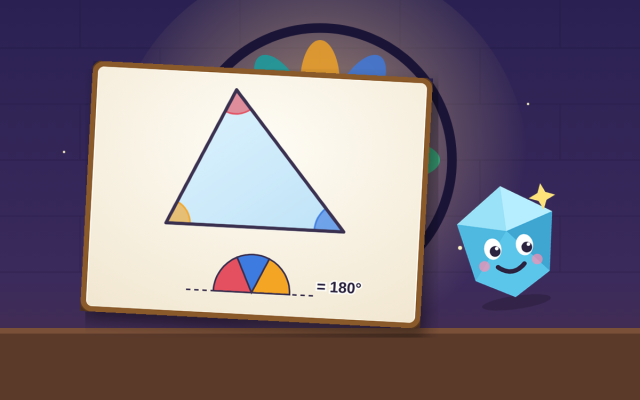
Use the fact that every corner of a rectangle is 90° to find missing angles when a corner is split by one or two lines, including in rectangles that have been turned.
Year 5 maths · 2
Regular and irregular polygons
Distinguish regular from irregular polygons by reasoning about equal sides and equal angles, checking shapes like the rhombus and rectangle, reshaping a hexagon and sorting triangles, pentagons and octagons.
What the chapters cover in the national curriculum in England:
Year 5 maths: Identify 3-D shapes, including cubes and other cuboids, from 2-D representations
Year 5 maths: Use the properties of rectangles to deduce related facts and find missing lengths and angles
Year 5 maths: Distinguish between regular and irregular polygons based on reasoning about equal sides and angles
About this adventure
Properties of Shapes is an interactive maths game that teaches children aged 9–10 (Year 5) to recognise 3-D shapes from 2-D drawings, use the properties of rectangles to find missing lengths and angles, and tell regular from irregular polygons.
As a shape detective, the player spins a cube to hunt for its hidden faces and vertices, learns that dashed lines show hidden edges, and stretches a cube into a cuboid. They drag the corner of a rectangle to see that opposite sides always stay equal, split L-shaped rectilinear shapes into rectangles, and slice a 90° corner to find missing angles.
In the polygon lab they check both sides and angles, drag a hexagon out of shape and sort polygons into regular and irregular. Every answer is typed or chosen, with a hint after a first mistake and a short explanation each time.
Questions and answers
What is the difference between a regular and an irregular polygon?
A regular polygon has all its sides equal and all its angles equal, like a square or an equilateral triangle. If either the sides or the angles are not all equal, the polygon is irregular, so a rhombus and a rectangle are both irregular.
How do you find a missing length in a rectangle?
Use the rule that opposite sides of a rectangle are equal, so the missing side matches the side across from it. For L-shapes made of rectangles, add or take away lengths that run the same way to find the missing side.
How many faces, edges and vertices does a cube have?
A cube has 6 faces, 12 edges and 8 vertices. A drawing of a cube usually shows only 3 faces, 9 edges and 7 vertices, so the rest are hidden at the back, often shown with dashed lines.
What age is this properties of shapes game for?
It is made for children aged 9 to 10, in Year 5 of the national curriculum in England. It also works well as revision for Year 6 children who want to check their geometry facts before moving on.
What does the game include and how long does it take?
It has an optional warm-up, four chapters and a 10-question final challenge, taking about 40 minutes in total. Each chapter can be played on its own, with voice-over, hints and explanations throughout.
We count visits to make TapLearn better.We use one cookie, only on this site, to see how families find and use it. No adverts, and nothing is shared.One cookie, only on this site. No adverts.How we measure

 TapLearn