Why children learn grammar terms
The national curriculum for England sets out the grammar and punctuation for each year, and the terms children should know, in English appendix 2: vocabulary, grammar and punctuation. Naming features helps children talk about their writing and make deliberate choices, so they are mostly taught to use these features in their own writing, not just to label them.
In Year 6, the terms are tested in the English grammar, punctuation and spelling test (often called SPaG or GPS), on Monday 10 May 2027. See our Year 6 SATs 2027 guide. The curriculum is being reviewed, with changes planned for 2028, but these are the terms schools teach now.
The terms below are grouped by when they usually come up. Schools may introduce some a little earlier or later.
Years 1 and 2
Noun phrase and expanded noun phrase
A noun phrase is a group of words built around a noun. An expanded noun phrase adds detail, usually with adjectives: "the dog" becomes "the scruffy brown dog". From Year 4, children also add detail after the noun: "the scruffy dog with muddy paws".
Conjunction (coordinating and subordinating)
A conjunction joins words or clauses. Coordinating conjunctions such as and, but and or join two equal parts: "I wanted to play, but it was raining." Subordinating conjunctions such as because, when, if and although start a part that depends on the rest of the sentence: "We stayed in because it was raining." Children use both in Year 2 and learn the word "conjunction" in Year 3.
Apostrophes
Apostrophes do two jobs. They show missing letters in contractions ("can't", or "it's" for "it is") and they show belonging ("the girl's coat"). Year 2 covers contractions and belonging for one owner; Year 4 adds plurals ("the girls' coats", belonging to more than one girl).
Years 3 and 4
Preposition
A preposition links a noun or pronoun to the rest of the sentence, often showing place or time: "under the bridge", "after lunch", "during the film".
Present perfect
A verb form made with has or have, for something in the past that still matters now: "She has lost her key" (and still hasn't found it), compared with the simple past "She lost her key".
Pronoun
A word used instead of a noun, to avoid repeating it: he, she, it, we, they. Possessive pronouns, such as mine and theirs, show belonging. "Sam ate his lunch, then he went outside."
Determiner
A word before a noun (and any adjectives) that tells you which one or how many: a, an, the, this, those, my, some, every, three. "Those three red balloons."
Fronted adverbial
A word or phrase at the start of a sentence that tells you when, where or how something happened, usually followed by a comma: "Later that day, we went to the beach." It's one of the most searched grammar terms, and it's simpler than it sounds.
Year 5
Relative clause
A clause that adds information about a noun, usually starting with a relative pronoun such as who, which, that, where, when or whose: "My aunt, who lives in Leeds, is coming to stay."
Modal verb
A verb that shows how likely or necessary something is: can, could, may, might, will, would, shall, should, must. "It might rain" is less certain than "It will rain".
Parenthesis
Extra information added to a sentence, marked off by a pair of brackets, dashes or commas. The sentence still makes sense without it: "Our cat (a very lazy tabby) sleeps all day."
Year 6
Active and passive voice
In the active voice, the subject does the action: "The dog chased the ball." In the passive voice, the subject has the action done to it: "The ball was chased by the dog." The passive is useful when the doer is unknown or unimportant: "The window was broken."
Subjunctive
A formal verb form used for wishes, demands and situations that aren't real. The most familiar example is "If I were you…" rather than "If I was you". Another: "The teacher insisted that he be on time."
Colon and semi-colon
A colon introduces something, such as a list or an explanation: "You'll need three things: a pen, a ruler and a rubber." A semi-colon joins two closely linked sentences that could each stand alone: "It was late; everyone was tired." Semi-colons can also separate items in a long, complicated list.
How to help at home
- Ask your child to teach you a term from school. Explaining it helps them remember it.
- Spot features in books, signs and adverts: "Can you find a fronted adverbial on this page?"
- Play with sentences out loud: make "the cat" longer and longer, or turn an active sentence into a passive one.
- Don't worry if you weren't taught these terms yourself; many parents weren't. Plain definitions like these, or the glossary on GOV.UK, are all you need.
Expanded Noun Phrases: Paint Picture Town with Words
Learn how expanded noun phrases describe and specify, like the blue butterfly, by dragging describing words t…
Prepositions and Conjunctions: A Busy Day with Pip
Learn prepositions and conjunctions for time, place and cause, then help Pip the robin and Mo the kitten buil…
Present Perfect Tense: A Time Detective Game with Max
Learn when to say 'has gone' and when to say 'went' with the present perfect tense, then solve time mysteries…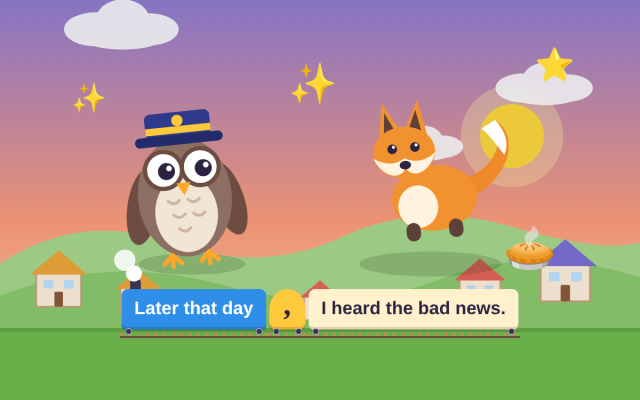
Fronted Adverbials: All Aboard the Sentence Train
Learn how to start sentences with fronted adverbials that say when, where or how, then build sentence trains…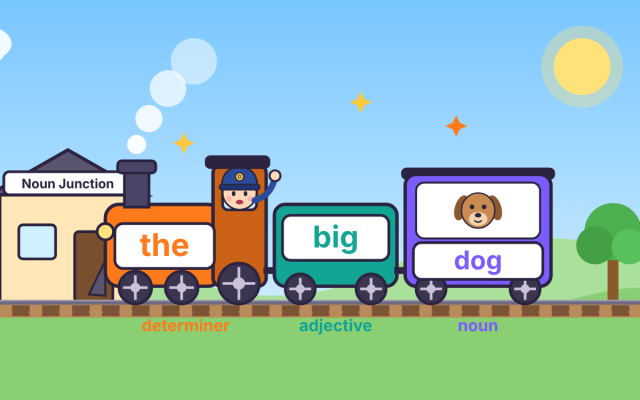
Determiners for Year 4: Ride the Determiner Express
Learn what determiners are, from a, an and the to my, some and every, by building word trains and spotting de…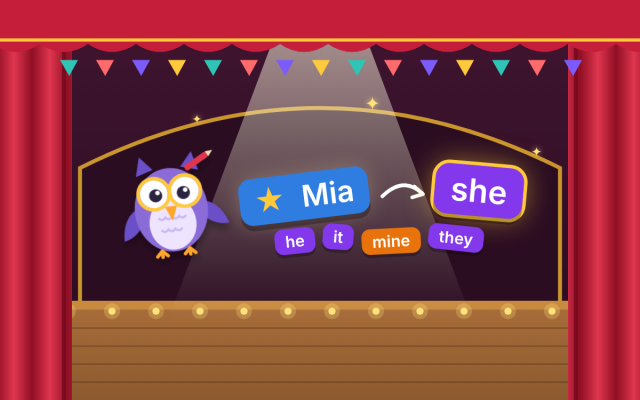
Pronouns for Kids: Clear Writing Adventure in Pronoun Town
Learn when to use a noun or a pronoun, including possessive pronouns like mine and theirs, by fixing echoes,…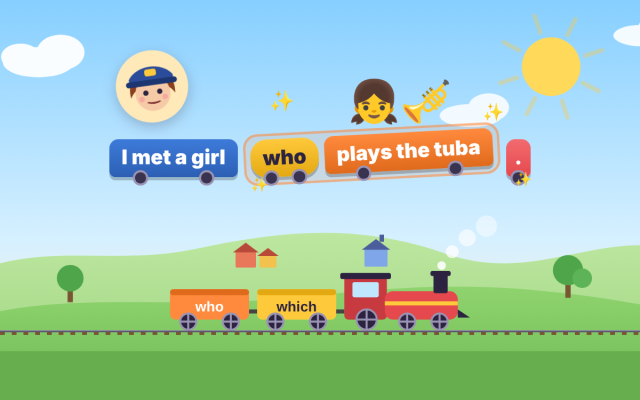
Relative Clauses: All Aboard the Relative Railway
Learn how relative clauses add information with who, which, where, when, whose and that by hooking word carri…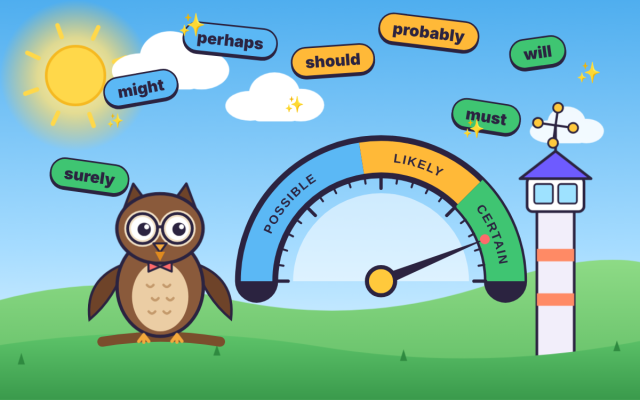
Modal Verbs and Possibility: The Maybe-Meter Game
Learn how modal verbs like might, should, will and must, and adverbs like perhaps and surely, show possibilit…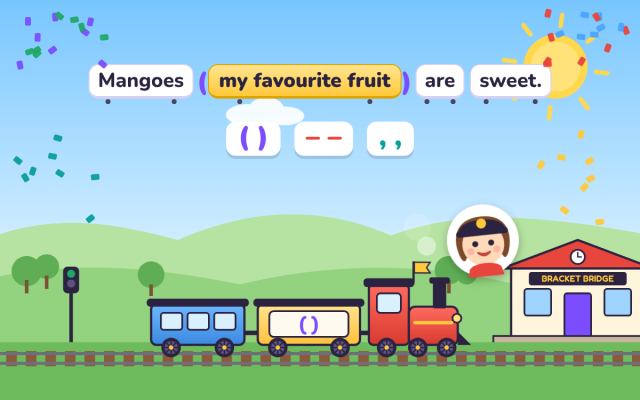
Parenthesis: Brackets, Dashes and Commas on a Word Train
Learn how to use parenthesis with brackets, dashes and commas, then add extra information to sentences by cou…
Active and Passive Voice: Showtime at the Voice Theatre
Learn active and passive voice: find the subject and object, then flip sentences around on a theatre stage wi…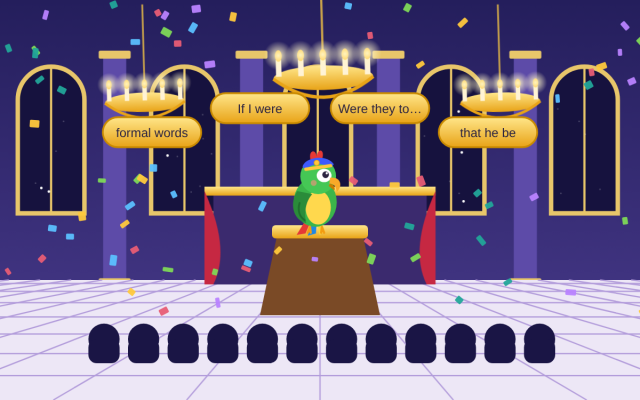
The Subjunctive Form: Help Percy Speak Like Royalty
Learn the subjunctive form, from If I were you to Were they to come, by helping Percy the parrot turn chatty…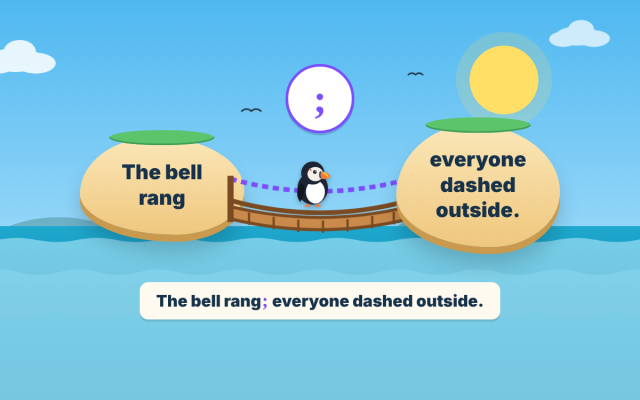
 TapLearn