What you'll learn
- What an adverbial is and how it tells us when, where or how
- How to move an adverbial to the front of a sentence
- Where the comma goes after a fronted adverbial, as in 'Later that day,'
- Why a missing comma can change what a sentence means
- How to write their own sentences that open with a fronted adverbial
- How to spot a determiner, a pronoun and a possessive pronoun
Chapter by chapter
- Adverbials: words that say when, where or how
Years 3–4 english · 1 Year 4 english · 2
- Fronted adverbials: putting when, where or how at the front
Years 3–4 english · 1 Year 4 english · 3
- Commas after fronted adverbials
Years 3–4 english · 4 Year 4 english · 3
- Writing sentences with fronted adverbials and commas
Years 3–4 english · 1 Years 3–4 english · 4 Year 4 english · 3
- Word jobs: determiner, pronoun and possessive pronoun
Year 4 english · 2
- Big Challenge: fronted adverbials, commas and word jobs (10 questions)
What the chapters cover in the national curriculum in England:
- Years 3–4 english: Develop their understanding of the concepts set out in English appendix 2 by: using fronted adverbials
- Year 4 english: Terminology: determiner, pronoun, possessive pronoun, adverbial
- Year 4 english: Sentence: fronted adverbials
- Years 3–4 english: Indicate grammatical and other features by: using commas after fronted adverbials
About this adventure
Fronted Adverbials: All Aboard the Sentence Train is an interactive grammar game that teaches children aged 7–10 how to start a sentence with a fronted adverbial that says when, where or how, followed by a comma. It follows Year 4 English in the national curriculum for England.
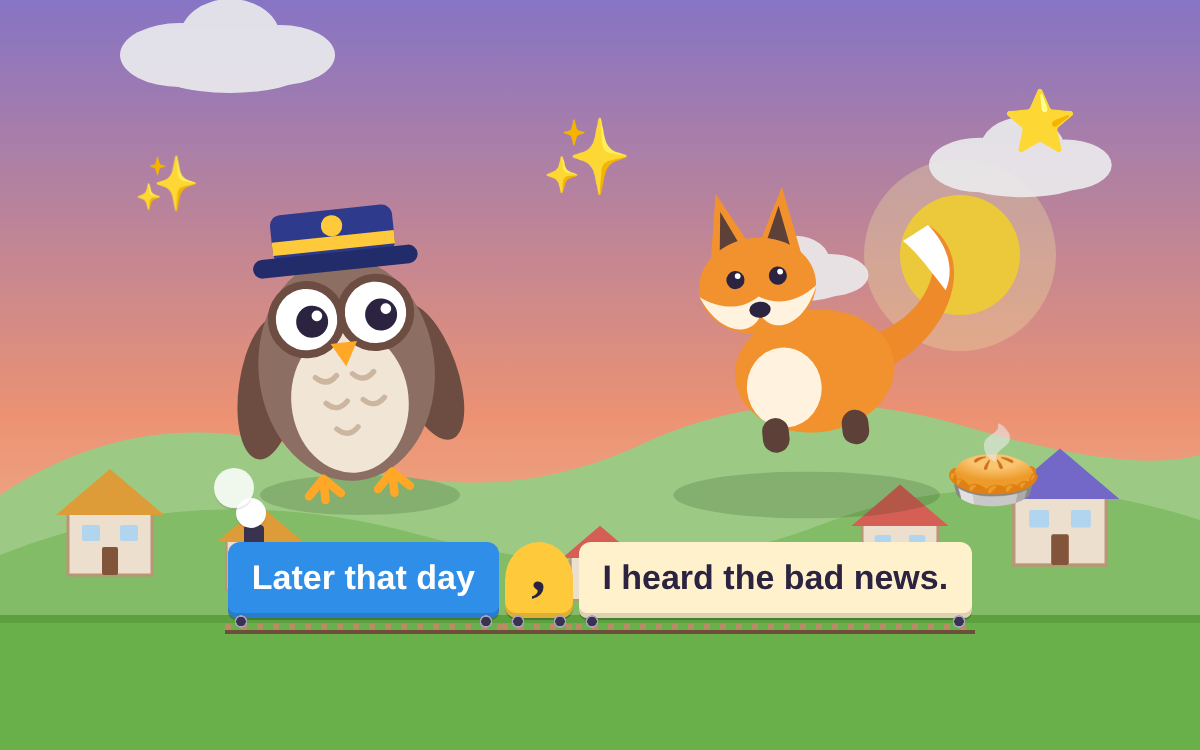
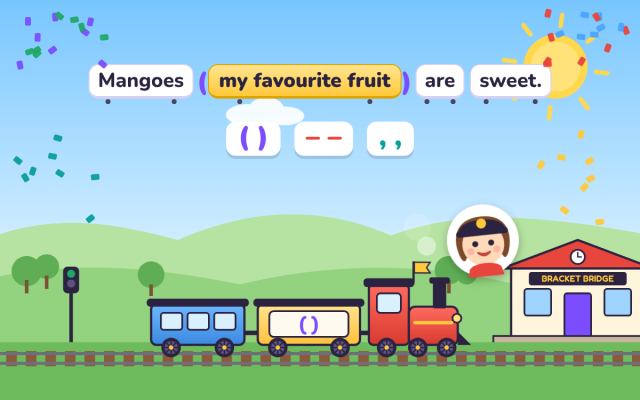
Every sentence is a train. Children tap carriages to send an adverbial to the front, where it becomes the engine, and couple it on with a yellow comma hook while the scene behind acts out what the sentence says. Along the way they sort adverbials of time, place and manner, place commas, build sentences and type an opening of their own.
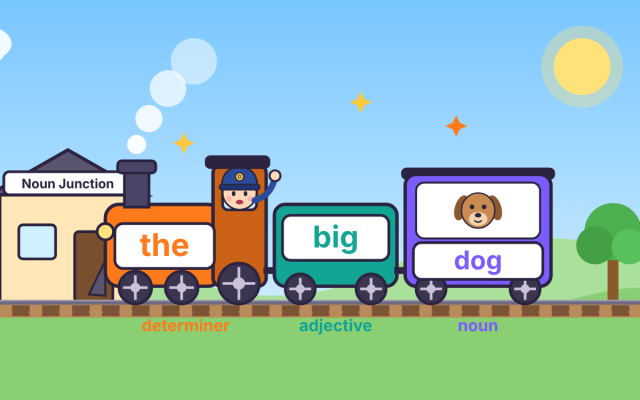
The game also explains the word jobs pupils meet in Year 4: determiner, pronoun and possessive pronoun. A narrator reads every instruction aloud, and a ten-question Big Challenge checks what children have learnt.
Questions and answers
What is a fronted adverbial?
A fronted adverbial is a word or group of words at the start of a sentence that tells us when, where or how something happens. In 'Later that day, I heard the bad news.', the words 'Later that day' tell us when.
Where does the comma go after a fronted adverbial?
The comma goes straight after the last word of the fronted adverbial, before the rest of the sentence begins. For example: 'In the attic, Gran found a map.' The comma shows the reader exactly where the opening words end.
What are some examples of fronted adverbials for kids?
Good examples include 'After lunch,' and 'Once upon a time,' for when, 'Under the bridge,' and 'Deep in the jungle,' for where, and 'Very slowly,' or 'Without a word,' for how. Each one is followed by a comma.
What age is this fronted adverbials game for?
The game is designed for children aged 7 to 10 and matches Year 4 English in England, where fronted adverbials and the comma after them are taught. An optional warm-up on capital letters, verbs and adverbs helps children who need a refresher first.
How long does the fronted adverbials game take, and what is included?
Playing everything takes about 40 minutes. There are five short chapters, each with an animated introduction, hands-on tasks and spoken instructions, plus a ten-question Big Challenge. Children can start at any chapter and return to the station menu whenever they like.


 TapLearn