How formal language differs from informal speech and chatty writing
What a question tag is and why formal writing leaves it out
Why imagined situations use the subjunctive were, as in If I were
How to start a very formal sentence with Were instead of if
Which verb form follows demands like insist that, as in that he be
How to tell a subjunctive were from the ordinary past tense
Chapter by chapter
Formal or informal? Question tags, chatty words and formal wordsFree to try
Year 6 english · 1Years 5–6 english · 2
The subjunctive were: If I were you and I wish it were
Years 5–6 english · 2Year 6 english · 1
Very formal sentences that start with were: Were they to come
Years 5–6 english · 2Year 6 english · 1
The subjunctive after formal demands: insist that he be
Years 5–6 english · 2
Putting it together: a formal speech with subjunctive forms
Years 5–6 english · 2Year 6 english · 1
The Crown Challenge (10 questions) (10 questions)
What the chapters cover in the national curriculum in England:
Year 6 english: Sentence: the difference between structures typical of informal speech and structures appropriate for formal speech and writing
Years 5–6 english: Develop their understanding of the concepts set out in English appendix 2 by: recognising vocabulary and structures that are appropriate for formal speech and writing, including subjunctive forms
About this adventure
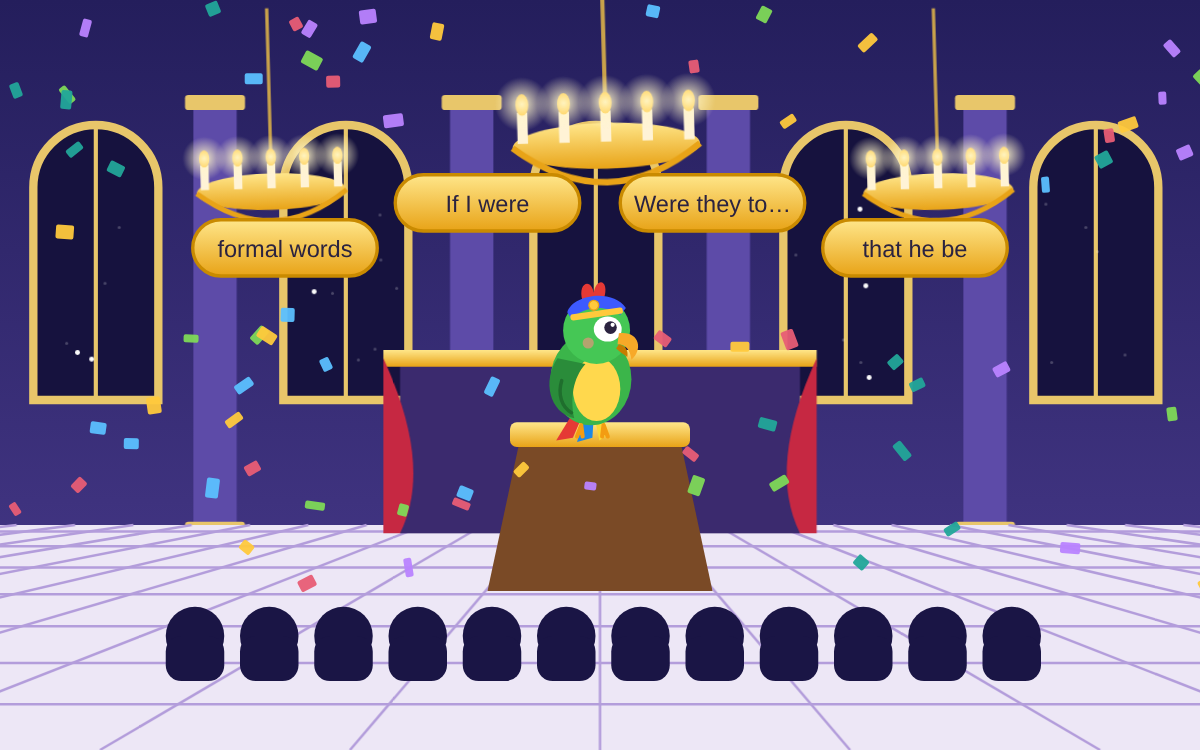
The Subjunctive Palace is an interactive grammar game that teaches children aged 10–11 the subjunctive form and the difference between formal and informal English, matching the Year 6 KS2 English curriculum in England. Duchess Wren reads every step aloud with captions while players help Percy, a chatty parrot, become the Royal Messenger.
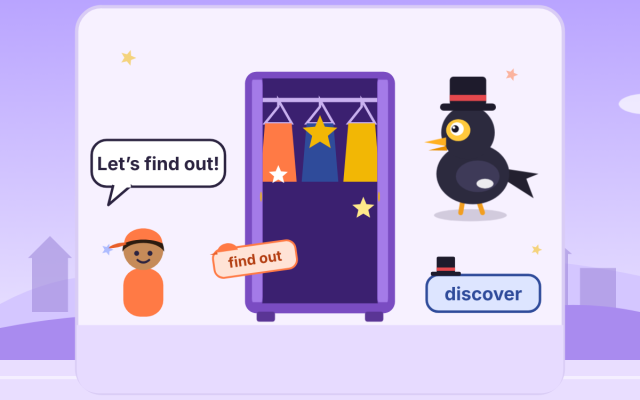
Players sort chatty and formal sentences, spot question tags such as isn't he?, and swap words like find out for discover. They then meet the subjunctive, a special verb form for very formal writing and speech. It uses were for imagined situations (If I were you), puts were in place of if (Were they to come), and uses the plain verb after demands (We insist that he be on time). Along the way they type answers on a palace keyboard, build sentences from word tiles and polish a speech for the royal court.
Questions and answers
What is the subjunctive form, in simple words?
The subjunctive is a special verb form used in very formal writing and speech. In English you mostly see it as were for imagined situations, like If I were you, and as the plain verb after demands, like We insist that he be on time.
Is it If I was or If I were?
In formal writing, If I were is correct when the situation is imagined or untrue, such as If I were a king. If I was is common in everyday chat, and it is also right for something that really happened in the past.
What does Were they to come mean?
Were they to come means the same as If they were to come. It is a very formal way to imagine something that might happen: were moves to the front of the sentence and if is left out.
What age is this subjunctive game for?
The game is for children aged 10 to 11 and matches Year 6 of the KS2 English curriculum, where the subjunctive and formal language are taught. Optional warm-ups first refresh was and were and how verbs match their subject.
What does the subjunctive game include and how long does it take?
It has five chapters with animated introductions, hands-on activities, typed answers and a three-question check, plus a 10-question Crown Challenge. Playing everything takes about 50 minutes, and children can pick any chapter from the palace map.
Can we count your visit? We'd like to use one cookie, only on this site, to see how families find and use TapLearn, so we can make it better. No adverts, and nothing is shared. How we measure
Create a free family account and your child can play every chapter of every game for 7 days, with no card needed. Their progress is kept. After that, the free plan is free for ever, and membership is £6.99 a month if you'd like to keep every chapter.
 TapLearn